

More than a decade before Rosa Parks’ infamous refusal to give up her bus seat to a white passenger in 1955, a group of Howard University students led a bus protest that challenged and helped to abolish Virginia’s Jim Crow laws in the 1940s.
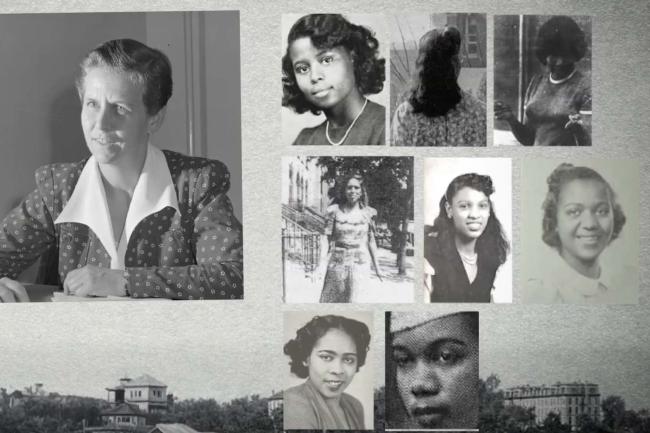
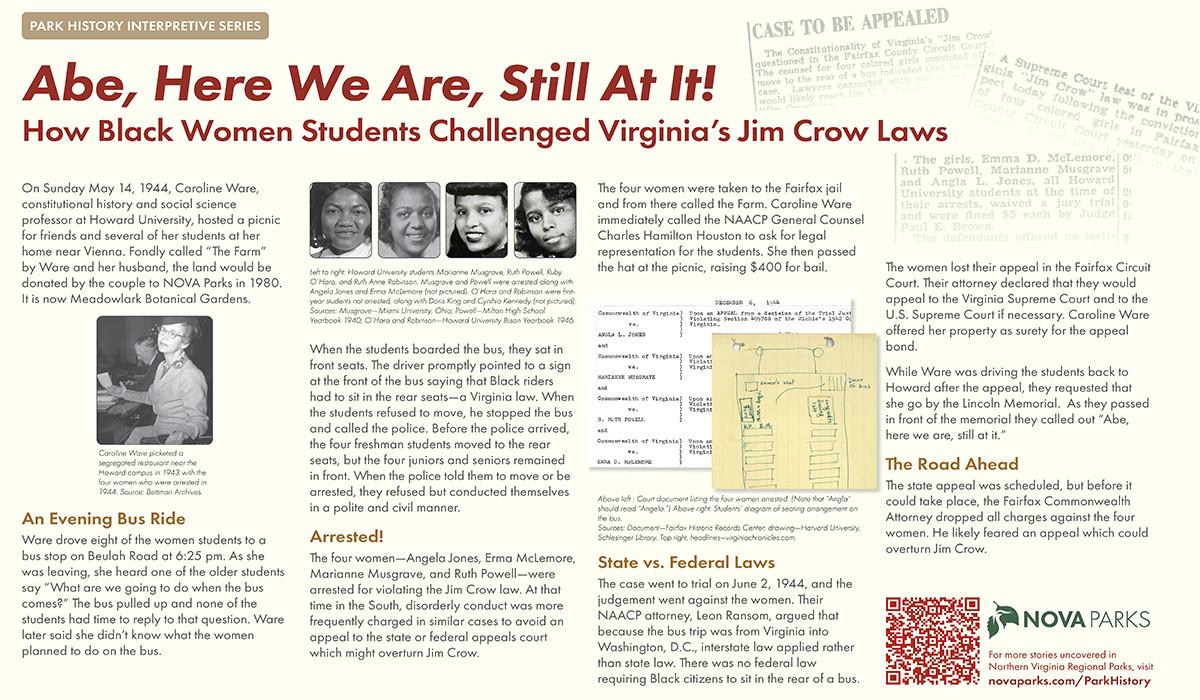
On May 14, 1944, eight Howard students traveled by bus from D.C. to Vienna, Virginia where former Howard School of Social Work professor Caroline F. Ware hosted a picnic at her home, a sprawling 74-acre estate she referred to as “The Farm.” As the students made their way back to Howard’s campus after the end of the semester celebration, they joined together for a protest that defied Virginia’s segregated bus laws with their refusal to sit in the back of the bus.
The eight students — Ruby Elizabeth O’Hara, Ruth Ann Robinson, Erma Deloris McLemore, Angela L. Jones, Cynthia Kennedy, Marianne Musgrave, Blanche Ruth Powell, and Doris King — are among the trailblazing activists that challenged segregation laws well before the Civil Rights Movement began to take shape in the 1950s. When the students refused the move to the rear of the bus, the driver called the police. The group decided that the four upperclassman students (Jones, McLemore, Musgrave, and Powell) would remain in the front of the bus and would carry on with their protest efforts. The four women were arrested for refusing police officers’ demands that they move to the back of the bus.
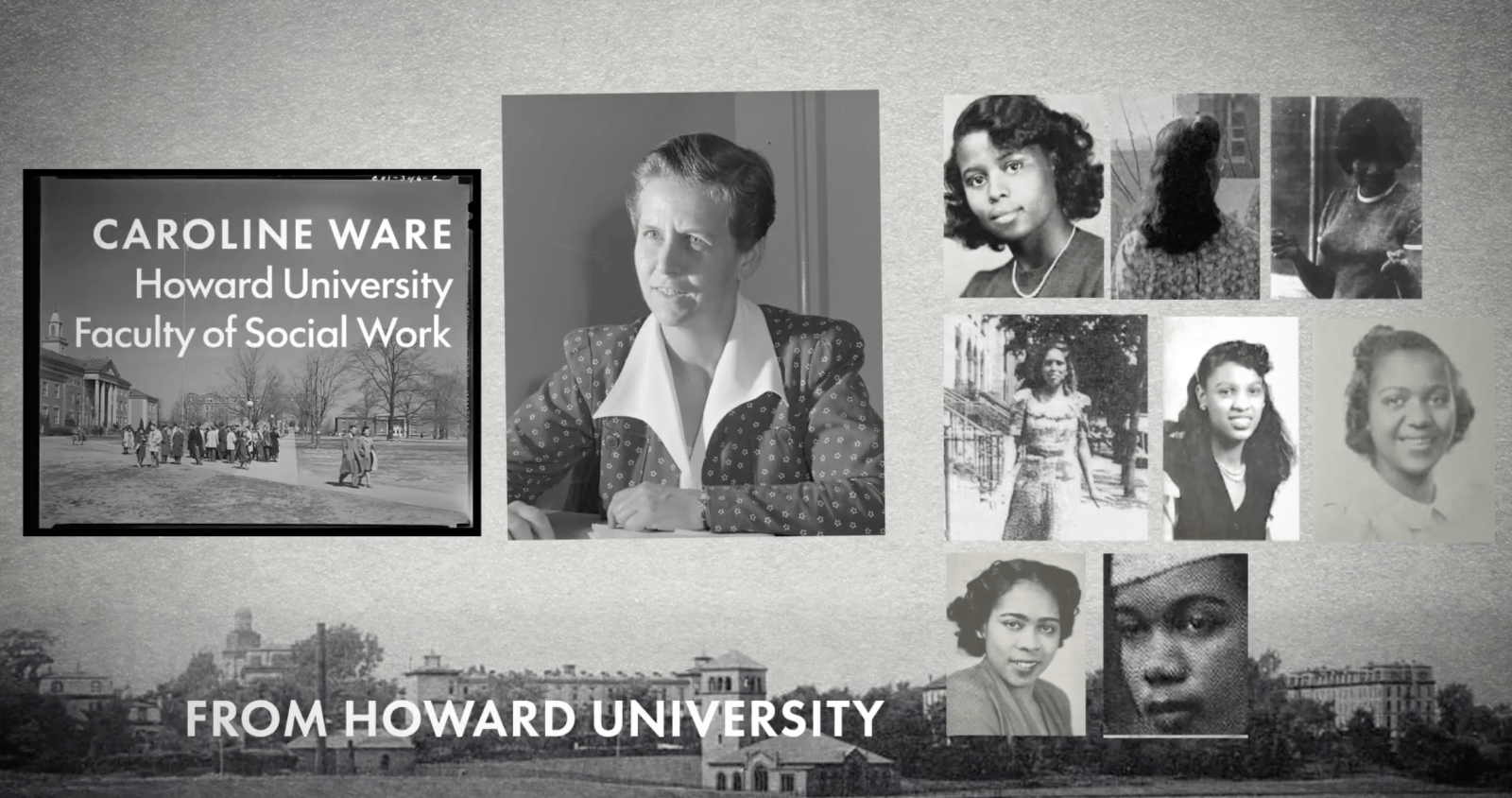
The group’s court case went to trial in June 1944, and the judgement went against the women who were charged with violating Virginia’s Jim Crow laws. They were represented by Leon Ransom and Charles Hamilton Houston, NAACP lawyers and faculty members in Howard’s School of Law. The women sought to fight their conviction at the U.S. Supreme Court. Before their case was heard for a state level appeal, the Fairfax commonwealth’s attorney dropped the charges — most likely fearing that the case would make its way to the Supreme Court and the Jim Crow law would be overturned.
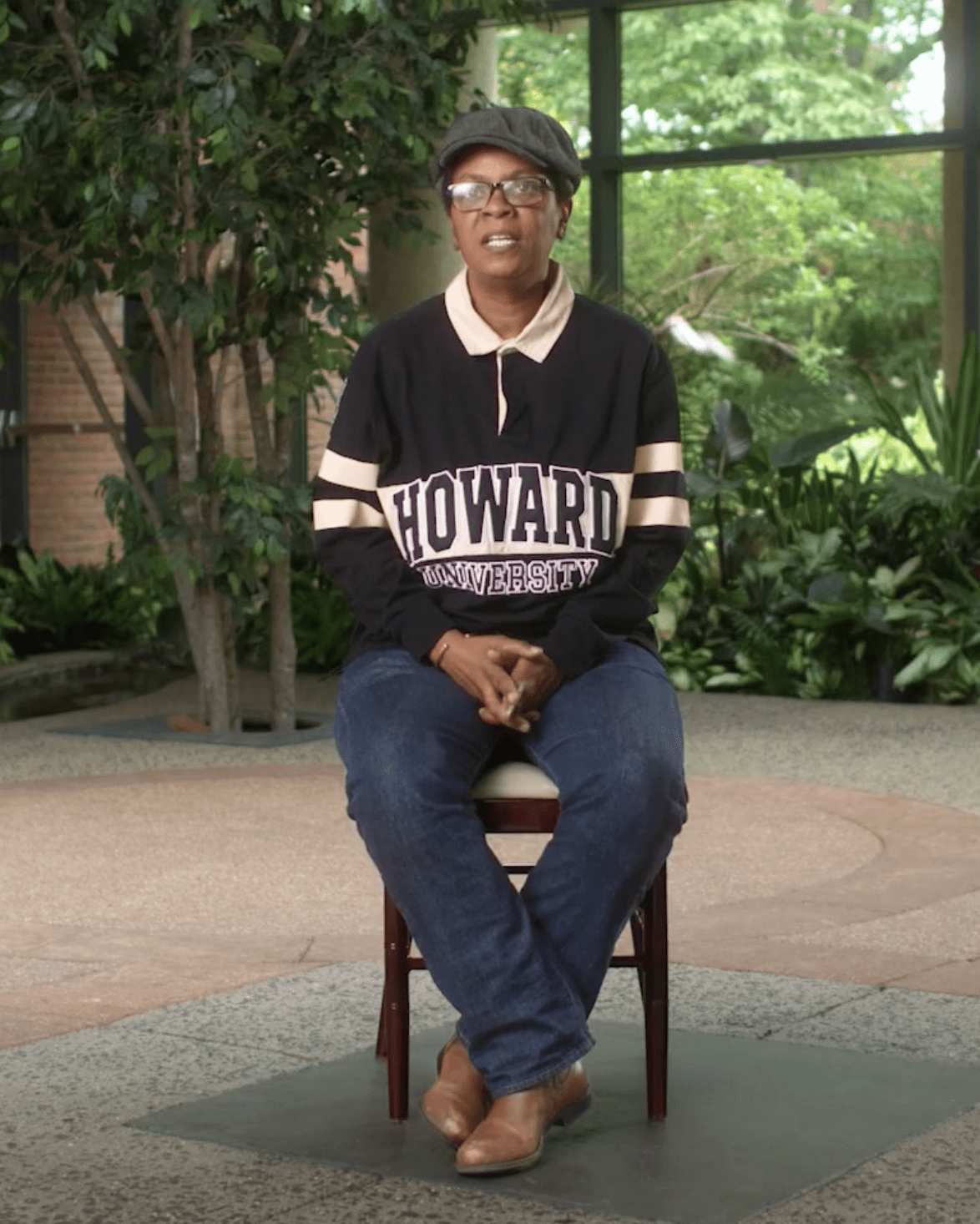
The story of the group’s heroic protest was highlighted in the short documentary “The Student Bus Protest That Challenged Jim Crow.” Sonja N. Woods, university historian in Howard’s Moorland-Spingarn Research Center, is featured in the documentary sharing the details of this lesser-known civil rights story.
“The students were able to show the nonsense of this law to have segregated buses,” Woods said in the documentary. “It’s a predecessor to some of the more well-known civil rights demonstrations and protests.”
Activists Against Segregation
The documentary, produced by NOVA Parks, reveals the details of the Howard students’ bus protest and how the university contributed to the larger fight for equality for Black people in America prior to the Civil Rights Movement. The documentary connects the protest story to the history of how Virginia’s Meadowlark Botanical Gardens came to be. Caroline Ware and her husband, economist Gardiner Means, donated The Farm’s land to NOVA Parks (formerly the Northern Virginia Regional Park Authority) in 1980. The land donation led to the development and opening of Meadowlark Botanical Gardens in 1987. Until now, many of the Botanical Gardens’ visitors were unfamiliar with the land’s connection to a defining moment in Virginia’s civil rights history.
Woods told The Dig that the bus protest wasn’t an outlier event for the students who traveled to Ware’s home that fateful day in 1944.
“Many of these young ladies were active in desegregation demonstrations in Washington, D.C., and they were also members of the Howard University NAACP chapter,” said Woods.
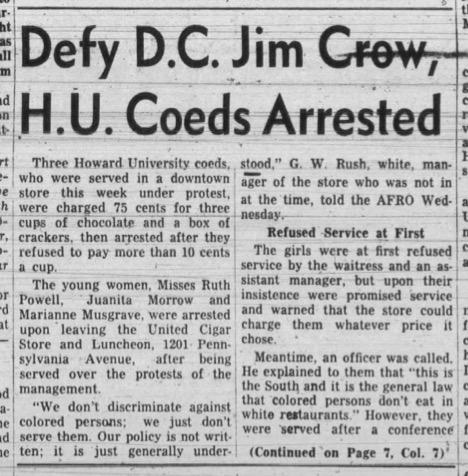
Prior to the 1944 bus protest, several of the students involved in the event took part in other anti-segregation protests in the D.C. area. In 1943, Blanche Ruth Powell and Marianne Musgrave were a part of the group of protesters who picketed an establishment that refused to serve Black patrons, called the United Cigar Store and Luncheon. As a result of this demonstration, Howard’s NAACP chapter was revived and its Civil Rights Committee was formed, Woods explained.
She added that during that time, students were discouraged by university administrators in organizing protests and demonstrations. Administrators were concerned that such actions would impact the university’s congressional funding opportunities.
“There was a series of meetings between leaders of student organizations and the faculty committee, and it was decided that if they were going to do demonstrations to protest certain lack of public accommodations in D.C. or in the area, they would not do it as Howard students,” said Woods.
She continued: “The students knew they wanted to protest bus segregation. They were riding from D.C. into Virginia, and you can sit anywhere you want on the bus because D.C. had different laws than Virginia. But, coming back, they decided that they were going to protest these segregated buses, and that's what they did.”
The Howard-led Virginia bus boycott helped pave the way for other Black bus riders to oppose the state’s Jim Crow laws. Two years after the protest, the 1946 Morgan v. Virginia Supreme Court case ruled that Virginia’s state law enforcing segregation on interstate buses was unconstitutional. Today, an interpretive sign memorializing the student protest can be found at Meadowlark Botanical Gardens.
“We think about the Civil Rights Movement as a 20th century thing — we were fighting for civil rights as soon as we got here,” said Woods. “This bus protest was a small episode of that long arc of civil rights history.”
Keep Reading
-
 Legacy and Lineage
Howard University Honors Retirees, Inaugurates Academic Year at 159th Opening Convocation
Sep 25, 2026 6 minutes -
 Culture Creators: Arts and Entertainment
‘A Different World’ Stars Come Home to Howard Ahead of Netflix Sequel Premiere
Sep 25, 2026 4 minutes -
 *Legacy and History
Cathy Hughes School of Communications Honoring Legacy Through ‘55 for 55’ Celebration
Oct 15, 2026 4 minutes