

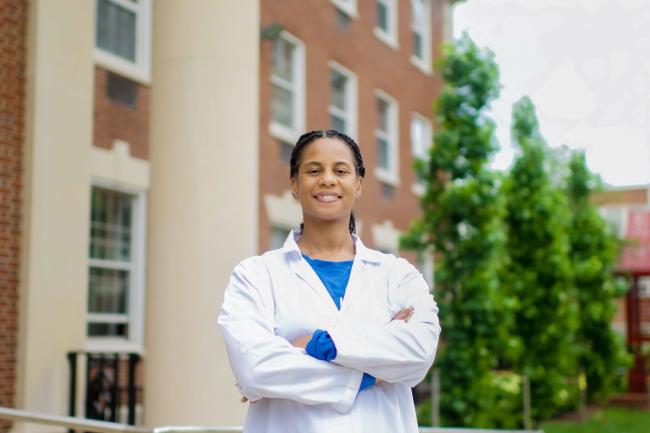
Cancer remains one of the most studied diseases in the world, yet it continues to be one of the deadliest. At Howard University, researchers across multiple disciplines are working to change that.
In labs, offices, and at Howard University Hospital, new ideas about how to detect, treat, and understand cancer are taking shape. Howard professors Kofi Deh, Jacqueline Smith, and Anietie Andy are approaching cancer research through imaging, chemistry, and artificial intelligence, with a shared goal of expanding who cancer research serves. Their work is supported by grants and collaborations, including a multi-institutional U54 pilot through a Howard University–Johns Hopkins University partnership and funding focused on AI data-sharing systems.
Last month, as part of Research Month programming coordinated by the Howard University Office of Research, scholars also participated in an American Cancer Society funding opportunities information session, aimed at helping early-career researchers navigate grant pathways and expand support for cancer research.
Howard leaders say those investments are also helping strengthen opportunities for early-career researchers by supporting grant development, interdisciplinary collaboration, and pathways toward independent research funding.
According to Carla Williams, Ph.D., interim director of the Howard University Cancer Center, those efforts create opportunities that extend beyond the laboratory.
“When faculty secure funding, they create paid research positions and hands-on opportunities for students, pulling them into work that shapes careers and aligns with Howard’s broader mission of expanding access and opportunity,” Williams said.
Kofi Deh: Reimagining Cancer Imaging for Equity
Kofi Deh, Ph.D., an assistant professor in the Department of Physics and Astronomy, works at the intersection of medical physics, imaging, and AI to improve how cancer is detected and understood.
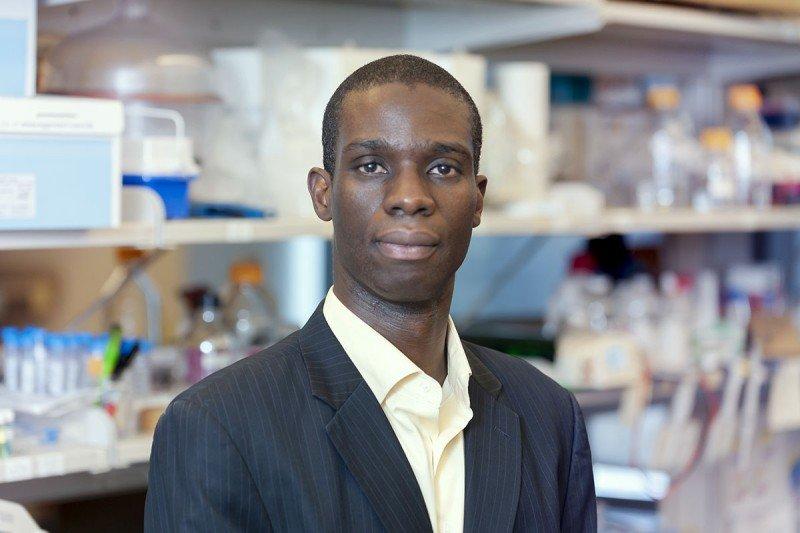
A medical physicist, Deh develops advanced MRI methods designed to make cancer imaging more informative, practical, and accessible. His work is motivated in part by persistent disparities in who benefits from, and has access to, the best diagnostic tools and care.
“Too often, access to the best imaging and treatment depends on a patient’s resources and where they receive care,” Deh said.
One area of his research uses advanced MRI techniques, including Chemical Exchange Saturation Transfer imaging, to probe tumor biology in ways that conventional scans may not capture. Another focuses on federated learning, an approach that allows hospitals to improve AI models collaboratively without sharing sensitive patient data.
Supported by national funding and multi-institutional collaborations, Deh’s long-term goal is to translate innovations developed in the lab into broader access to advanced imaging and cancer care at Howard and beyond.
Jacqueline Smith: The Right Molecule for the Job
Jacqueline Smith, Ph.D., an associate professor of chemistry, is focused on precision at the molecular level.
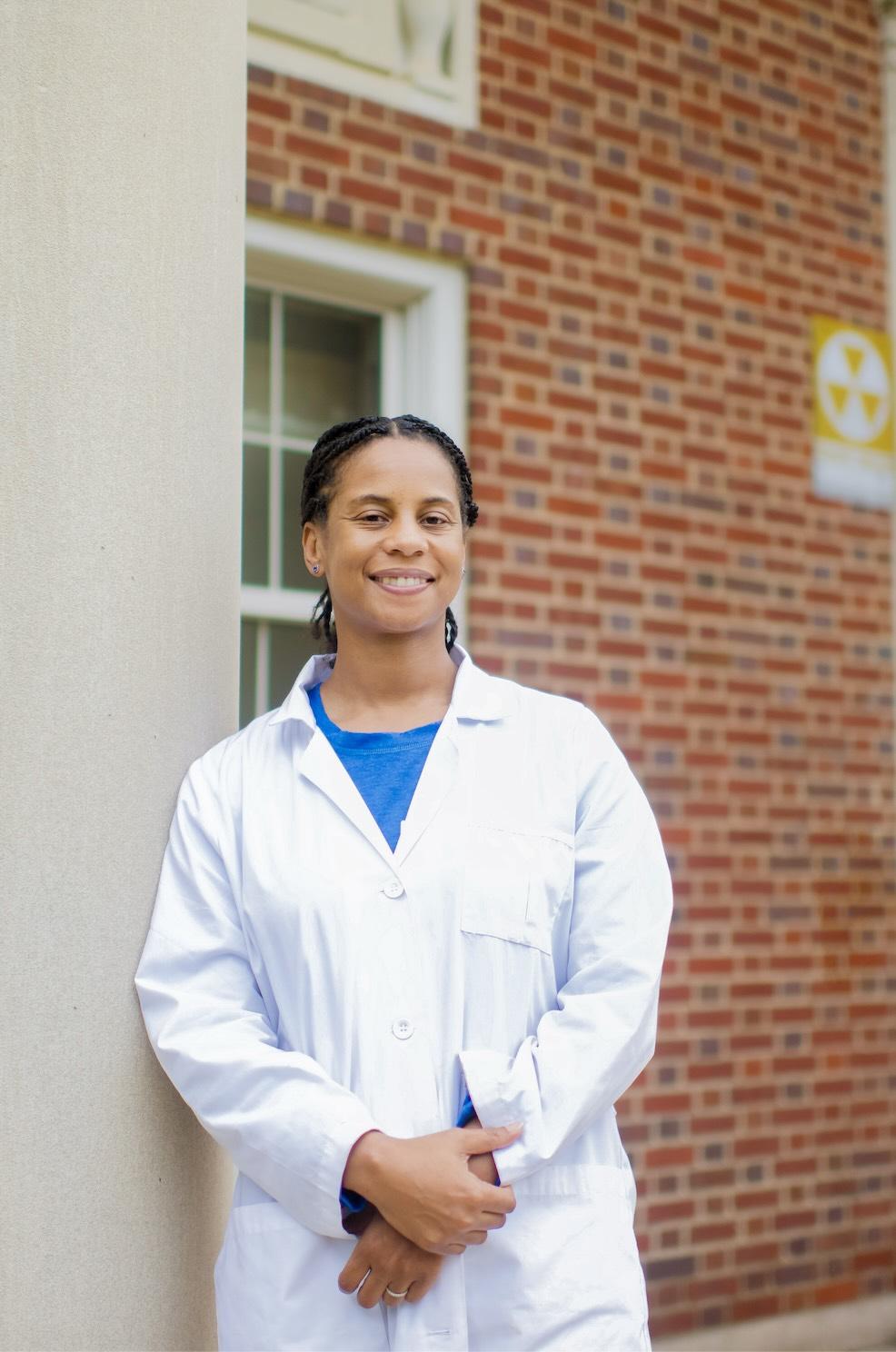
In the Smith Research Lab, her team is developing small molecules designed to target cancer cells with far greater specificity than conventional treatments. The goal is selectivity, destroying tumors without damaging healthy tissue.
Smith's research targets proteins that cancer cells depend on, including those linked to metastasis. Other projects explore drug delivery systems that use proteins on cancer cell surfaces to guide therapies directly to tumors, as well as trackable molecules that confirm whether drugs reach their intended targets.
Through a Howard-Hopkins Cancer Center pilot award, Smith is also examining how these molecular targets differ among patient groups and how they intersect with neighborhood conditions, linking laboratory science to broader questions of health disparities.
With two National Science Foundation grants already in place, Smith is now pursuing funding from the American Cancer Society and the American Association for Cancer Research, with the long-term goal of securing a National Institutes of Health R01 grant to expand her lab and scale her work.
Anietie Andy: Teaching Machines to Read the Whole Patient
Anietie Andy, Ph.D., is focused on something less visible but equally complex: the full story of a patient.
Andy is an assistant professor in the College of Engineering and Architecture. He also directs the Howard University Natural Language Processing Group. In his research, he develops AI models that combines medical data, imaging, lab results, and clinical notes to better predict cancer risk.
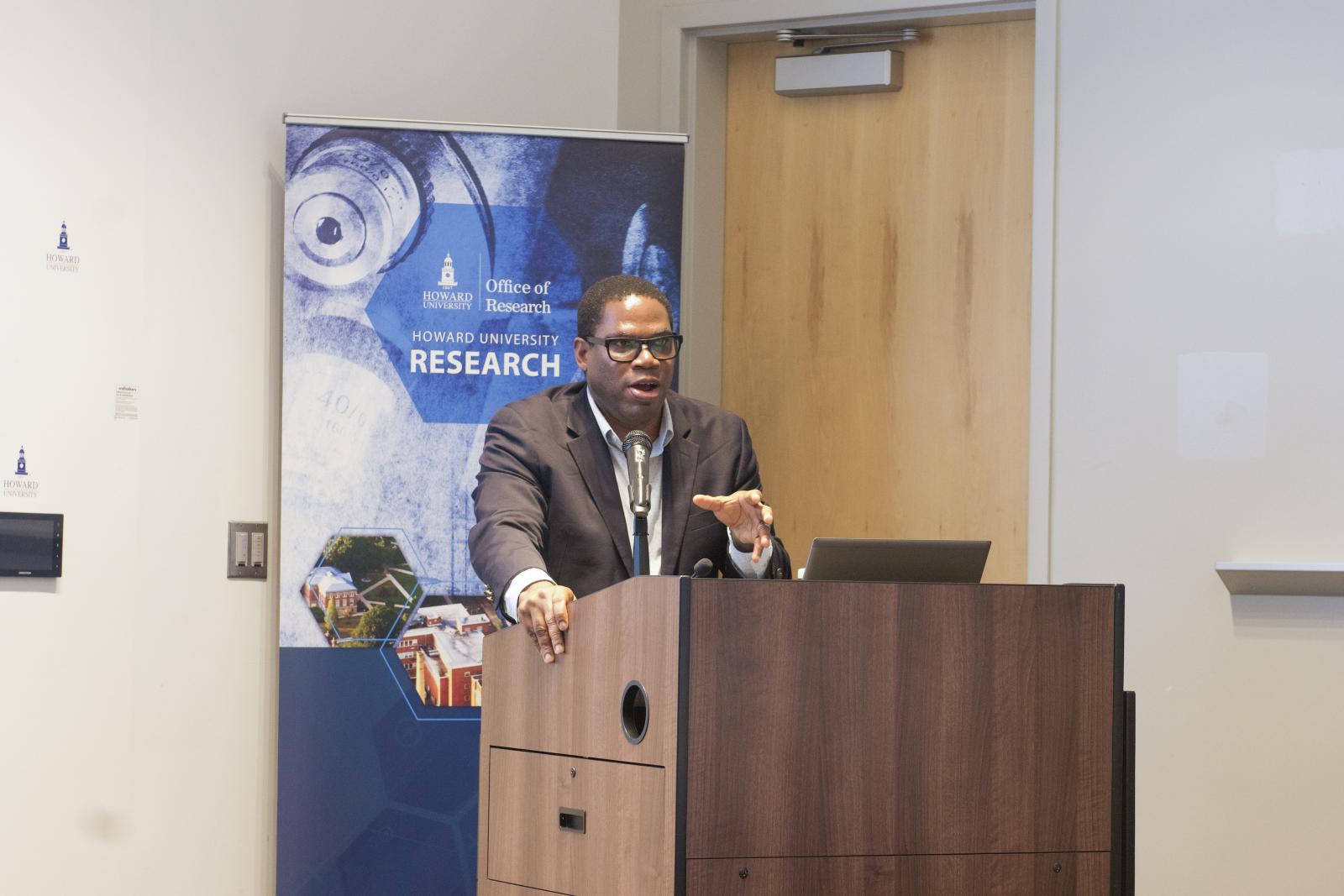
“If you look at all these modalities, it tells you a complete picture about the patient,” he said, “as opposed to looking at just the structured data, or just the images.”
Working with collaborators at Howard’s College of Medicine, Andy is building systems that treat hospital data not as a byproduct of care, but as a resource for discovery. His work, focused on diseases like breast and colon cancer, is being developed into a National Institutes of Health R01 proposal.
Central to that effort is the Howard University AI in Healthcare Center, a cross-disciplinary research center Andy helped to build that brings clinicians, engineers, and data scientists into regular collaboration.
“The sky’s the limit to what we can achieve with that,” he said.
###
Keep Exploring
Research Rewind: Super-Resolve Imaging Using AI May Help Detect Disease Early
Howard University Experts Discuss Multidisciplinary AI Research, Tech, Genesis Mission, and more During Research Month 2026
Keep Reading
-
 Epiphanies, Discovery, and Research
On Clinical Trials Day, Howard University Emphasizes Trust and Participation in Research
May 20, 2026 2 minutes -
 Epiphanies, Discovery, and Research
Howard University Medical Simulation Center Expands Accreditation in Human Simulation
May 18, 2026 2 minutes -
 Epiphanies, Discovery, and Research
Dr. Mae Jemison Encourages Bigger Thinking in Science and Discovery at Howard University
May 15, 2026 4 minutes