

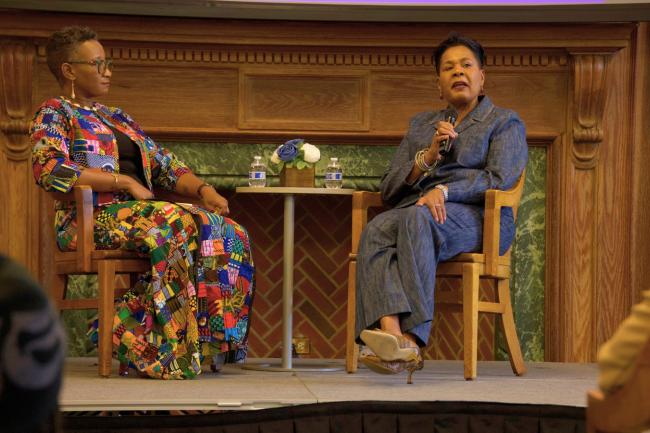
Howard University’s Center for Women, Gender, and Global Leadership (CWGGL) welcomed Her Excellency Paula-Mae Weekes, former president of the Republic of Trinidad and Tobago, to the University for a special fireside chat event exploring how global leaders can navigate times of uncertainty.
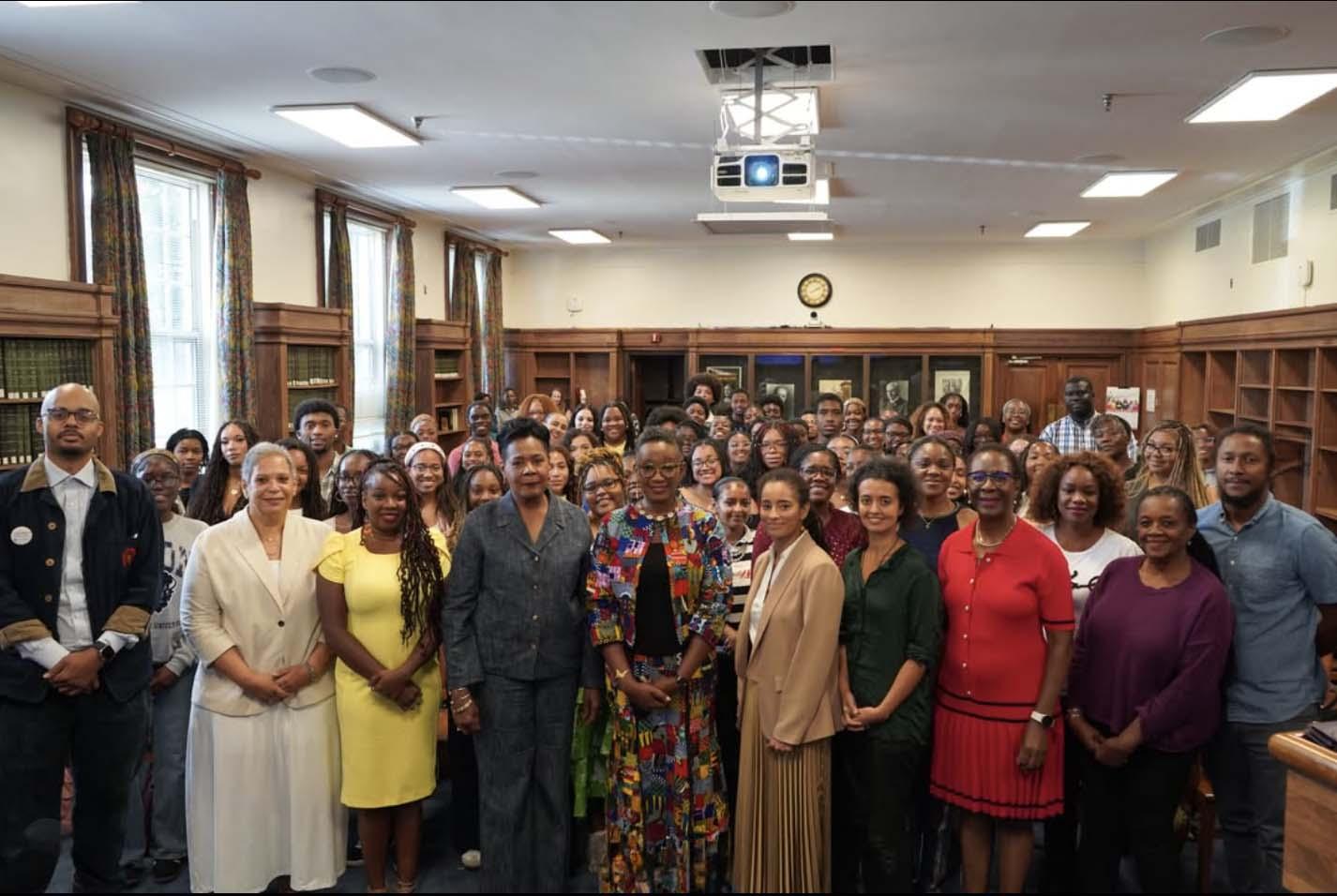
Weekes, the first woman to serve as the president of Trinidad and Tobago (from 2018 to 2023), joined the Howard community for a conversation on women in leadership and how the University can prepare the next generation of globally minded leaders. Students, faculty, staff, and the broader D.C. community filled the historic Browsing Room in Howard’s Founders Library Aug. 25 to hear Weekes’ remarks about her journey to becoming Trinidad and Tobago’s sixth president and her thoughts on the current state of global leadership.
Howard’s Interim President and President Emeritus Wayne A. I. Frederick (B.S. ’92; M.D. ‘94, MBA ‘11), FACS, opened the event with remarks welcoming Weekes to the University and spoke to the impact of her leadership.
“Her journey to becoming an international leader represents decades of public service,” Frederick shared with the audience. “When she became president, she described her approach to leadership through the idea of being a ‘humble first servant’— a meaningful philosophy at a moment when trust in public institutions was eroding. Her presence at Howard also grew directly from the scholarship taking place on this campus.”
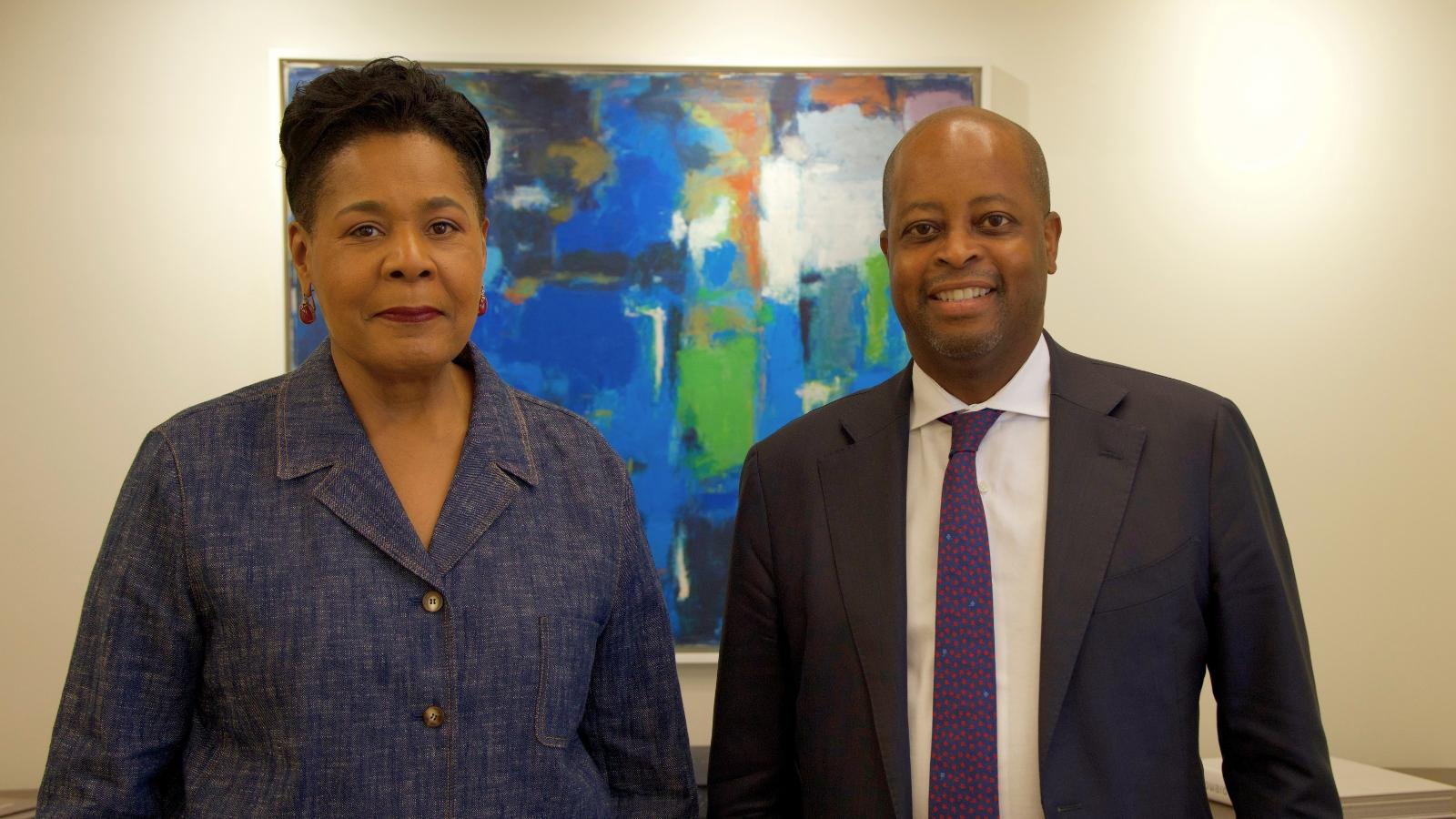
Frederick also candidly shared how much Weeke’s visit to Howard meant to him as a native of Trinidad and Tobago. In 2020, Frederick was the sole recipient of the Order of the Republic of Trinidad and Tobago, the highest honor the country bestows to nationals or non-nationals.
“As a son of Trinidad and Tobago, welcoming President Weekes carries a personal significance,” Frederick said. “Her story reminds us that the path toward leadership is rarely predictable. She has described herself as an ‘accidental lawyer,’ having once imagined teaching English in Martinique. Yet law ultimately led her to the judiciary, the presidency, and now continued international service — including her appointment by the United Nations to co-chair the U.N. high-level panel on the teaching profession. There is something fitting about that journey coming full circle toward education.”
Women, Power, and Public Leadership
Political science professor Dr. J. Jarpa Dawuni, the CWGGL’s founding director, moderated the “Women, Power, and Public Leadership” fireside chat event with Weekes. Audience members tuned into the intimate conversation in which Weekes spoke about her formative years growing up in Trinidad and Tobago, her early career as a lawyer and judge, and her work in support of other women and girls. The event took place on the same day that His Majesty Otumfuo Osei Tutu II, Asantehene of the Ashanti Kingdom in Ghana, visited Howard’s campus. Both events showcased the breadth of the University’s global reach and its significance as a cultural and academic cornerstone.
During the discussion, Weekes shared her insight into how current global leaders can regain and maintain the trust of their constituents, saying that “there is indeed a lack of trust in institutions. Being frank with your constituency is always important. If a leader can become a trusted voice in the particular environment, that, to me, would be the first step towards reestablishing some sort of trust.”
The former president transparently shared with the audience that even with all of the work she’s done in Trinidad and Tobago’s criminal court system and as the country’s president, she considered herself to be “an accidental leader.”
“I never considered myself to be a leader,” Weekes quipped. “I was large and loud and some people followed me … I can be extremely persuasive. As I was an accidental attorney, I think I became an accidental leader. I found myself in leadership roles without intending to do so. My mother always used to say, ‘If you want something done, do It yourself,’ and so that was my attitude towards getting things done.”
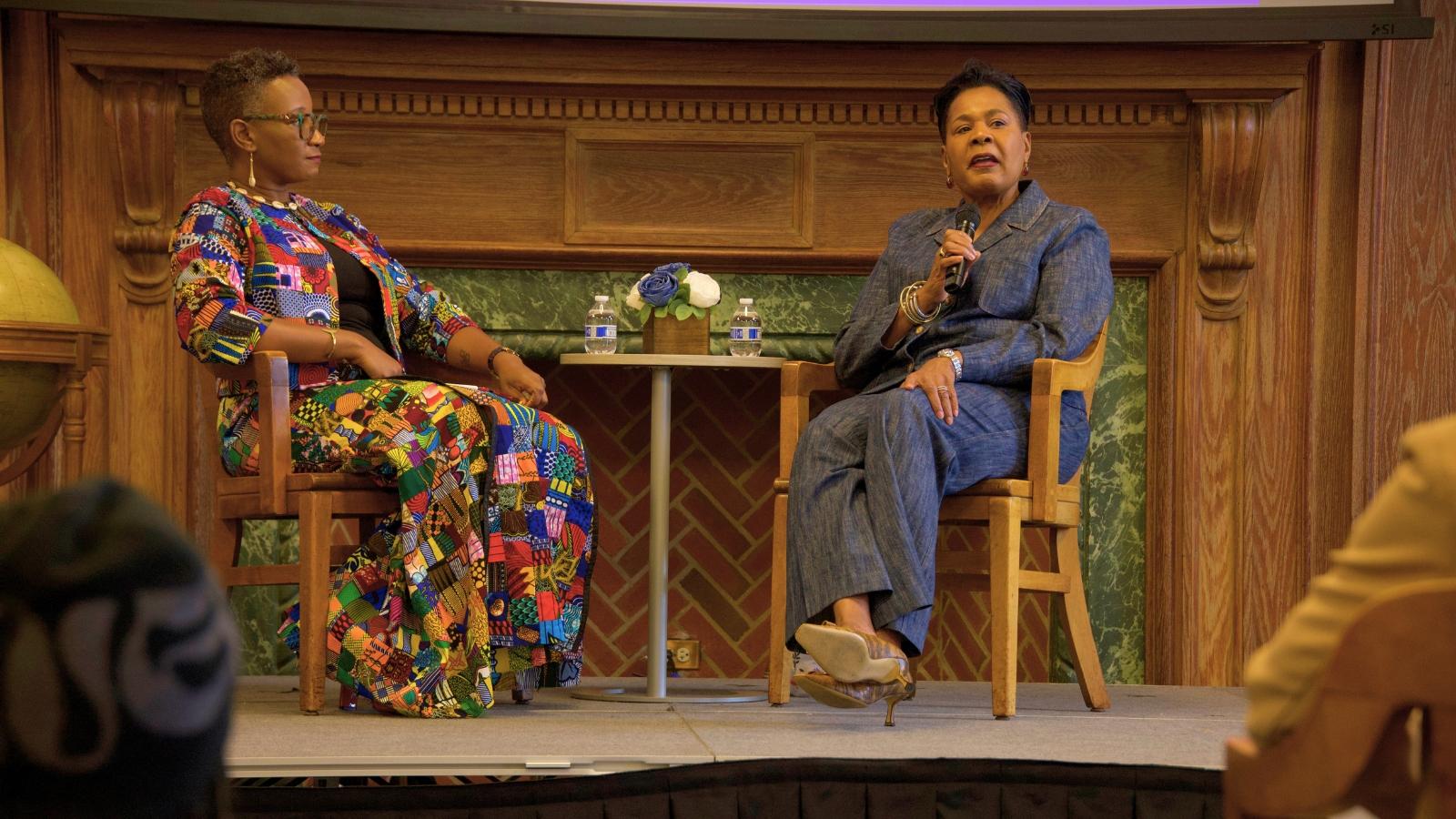
Weekes also spoke about key initiatives she led during her tenure as president, emphasizing her goal of assisting children, particularly young girls, in becoming future leaders in Trinidad and Tobago and around the world.
“A lot of my work as president had to do with children and going to schools, trying to motivate, and trying to ensure that young women knew that there really was no barrier that they could not surmount,” she said.
When asked about how she navigated difficult situations and challenging circumstances, Weekes advised students, especially young women in the audience, to remain steadfast in their goals, regardless of the obstacles they may face.
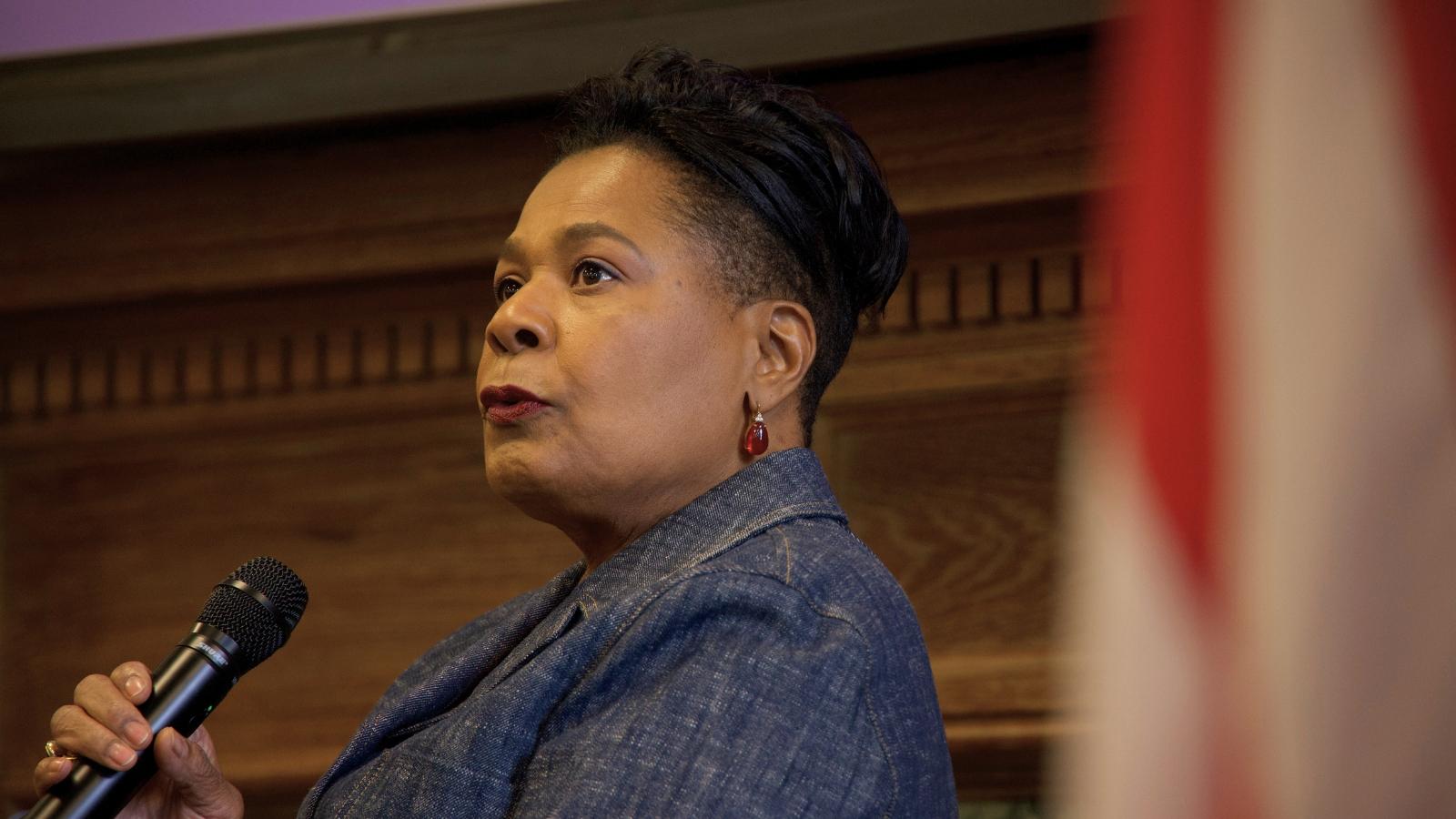
“When [women] have to fight hard, they become more powerful than before,” she said. “If you go into a profession that is male dominated thinking, assuming, and having the attitude that men will put obstacles in your way and make it difficult, to me, you start at a disadvantage. You may acknowledge it but not go into it in a state of paranoia … don’t let that make you hold back or make you afraid to do what you think you have to do.”
Dawuni echoed those sentiments, sharing that Howard’s legacy includes “women that stood their grounds and showed that they were here to stay.” She added that “our women and our men at Howard show up, we engage, and we make a difference.”
Advice for Howard’s Future Leaders
Nearly a dozen students lined up to ask Weekes questions about her career and her thoughts on global leadership efforts. When asked about how students can begin to prepare for future leadership roles, Weekes underscored the importance of educating oneself about what’s going on beyond one’s community and country of origin.
“As young people, you need to keep informing yourselves about what is going on globally,” said Weekes. “You need to develop a world view. The time when we could all live in our own little bubbles successfully has long passed. You have the tools in hand to give you a very wide view of what is going on.”
She continued: “Don’t be easily swayed by others … engage in strong debates with people with whom you don’t really have much in common or with whom you often disagree with. They might not bring you around to their way of thinking, nor may you bring them around to yours, but you have heard another side that may become important years down the road.”
Most importantly, Weekes imparted to students in the audience the importance of making time for enjoyment outside of their academic and career pursuits.
“You need to take your work and your studies seriously, but don’t take yourself too seriously,” Weekes shared. “Leave some space for enjoyment. Be curious, work hard, take the opportunities to experience the diversity that’s offered to you on a campus, and most of all make sure when you leave here you look back and say, ‘I enjoyed my years at Howard.’”
Keep Reading
-
 Legacy and Lineage
Class of 2030 Begins Howard University Journey with 14th Annual ‘Day of Service’
Aug 14, 2026 7 minutes -
 News
NewsFor Howard Students and Faculty, International Women in Engineering Day Is Everyday
Jun 23, 2026 4 minutes -
 Media Release
Howard University to Welcome Asante King, His Majesty Otumfuo Osei Tutu II, Asantehene and Custodian of the Golden Stool of the Asante Kingdom
Aug 24, 2026 3 minutes