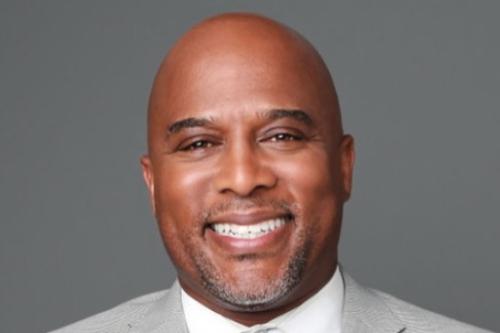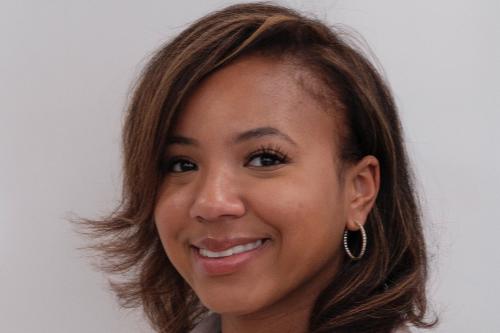
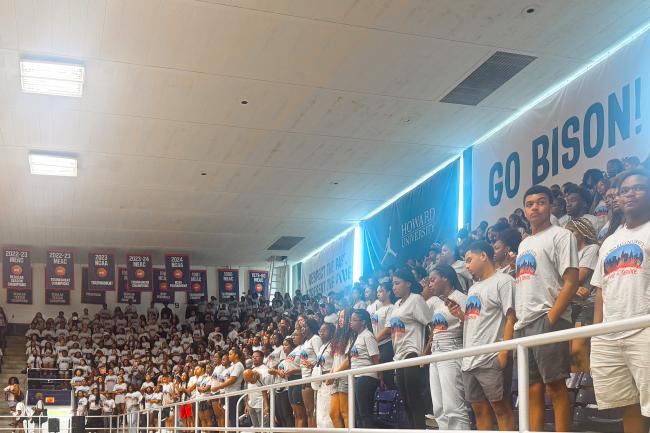
On Friday, Aug. 14, Howard University held its 14th annual Howard University Day of Service (HUDOS), continuing a tradition that introduces new students to the University’s enduring motto, “Truth and Service,” through hands-on engagement with communities throughout the District of Columbia.
Led by the Office of the Dean of the Andrew Rankin Memorial Chapel, the yearly service-learning initiative invites incoming Bison to encounter D.C. beyond the boundaries of campus while considering how to practice ethical leadership and civic responsibility. This year’s service projects addressed educational disparities, environmental injustice, food and housing insecurity, health disparities, poverty, and violence prevention. Program materials identified more than 60 community partnerships involving Howard’s 14 schools and colleges, with more than 64,000 hours of service anticipated.
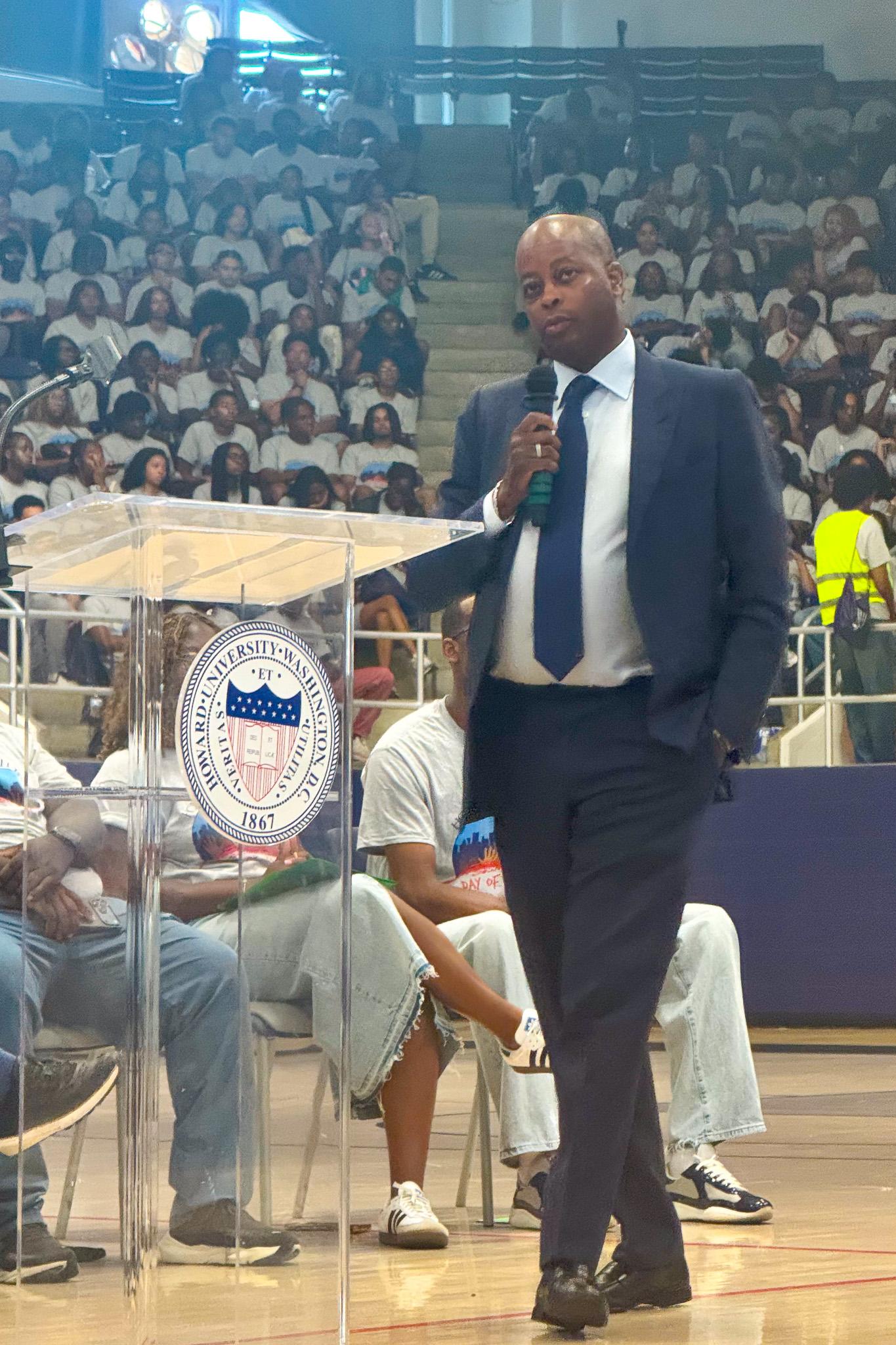
The morning began with an opening program inside Burr Gymnasium featuring student leaders, University administrators, and Interim President and President Emeritus Wayne A. I. Frederick (B.S. ’92, M.D. ‘94, MBA ’11), before participants departed for their service sites.
For many members of Howard’s newest class, HUDOS was their first major University tradition, and an early lesson that a Howard education is intended to extend beyond the classroom.
Perhaps the greatest lesson you will learn is that leadership begins with service.
A Howard Tradition
HUDOS began in 2013 under the leadership of Rev. Bernard L. Richardson, Ph.D. (B.A. ’75), dean of the Andrew Rankin Memorial Chapel. The program expanded substantially by 2017, when Howard students served more than 50 community partners during the University’s sesquicentennial. Students continued serving virtually during the COVID-19 pandemic before HUDOS returned to in-person service throughout the D.C. metropolitan area in 2022.
Fourteen years after its launch, Richardson told students that their willingness to rise early and serve, joined by Howard’s senior leadership, offered an answer to a question he often receives about what distinguishes the University.
“There’s not a university in this nation that can bring incoming students out at 7 o’clock in the morning to serve,” Richardson said. “Not only do you come out — the leadership of the University comes out.”
That tradition has increasingly become student-led. Joseph Dillard (B.A. ’13, J.D. ’16), associate dean for programming and engagement, reflected on watching the initiative grow from roughly 400 students in its early years to more than 1,600 participants today.
“What’s most important is just to see the students that are still committed to doing the work and doing the service,” Dillard said. “Especially during the times that we’re living in, when there’s a lot of division, just to see a group of students committed to coming together and serving together — that’s the beautiful thing.”
Daniel Adegboyega, a junior economics major and computer science minor from London, England, and this year’s HUDOS executive student director, framed the moment as an introduction to both Howard and the responsibilities that accompany membership in its community.
“For 14 years, our students have stepped beyond the gates of this campus and into the communities of Washington, D.C., demonstrating that education is most powerful when it is placed in the service of others,” Adegboyega told participants.
He reminded students that Howard’s motto contains a call to action: Truth compels them to pursue knowledge, while service asks that they use that knowledge for the benefit of others.
“Perhaps the greatest lesson you will learn is that leadership begins with service,” Adegboyega said.
It’s not about arriving with all the answers, but showing up with humility, curiosity, and a willingness to learn.
Listen and Learn
Throughout the program, speakers emphasized that the day was intended to be more than an exercise in volunteerism. Students were challenged to approach service with humility: not simply asking what they could provide to a community but remaining open to what the people they met could teach them.
Milania Maurice, a senior health science major and biology and chemistry double minor (pre-dental track) from Bordentown, New Jersey, and the current executive student director for Howard University Alternative Spring Break, recalled beginning her own Howard journey at HUDOS four years earlier.
“Some of my greatest moments of growth would come through service and the communities I had the privilege of serving alongside,” Maurice said.
She encouraged students to resist approaching their assignments as outsiders arriving with solutions. Instead, she urged them to listen, ask questions, and recognize the knowledge and strengths already present within the communities they would enter.
“Rather than asking, ‘What can I do for this community?’ ask yourself, ‘What can this community teach me?’” Maurice said. “It’s not about arriving with all the answers, but showing up with humility, curiosity, and a willingness to learn.”
That message was echoed by the University’s Provost and Chief Academic Officer Anthony K. Wutoh, Ph.D., R.Ph., who noted the significance of students choosing to serve before their first day of official collegiate coursework. With Howard approaching the 160th anniversary of its chartering in 2027, Wutoh connected the students’ participation to generations of Bison who have interpreted education as both privilege and responsibility.
“It is very meaningful that before you have your first day of classes on Monday, you’re going to contribute and provide service to our community,” Wutoh said. “Your Howard education isn’t going to take place just in the classroom, and it’s not going to take place just within the boundaries of this campus.”
Senior Vice President for Student Affairs Cynthia Evers, Ed.D., similarly encouraged students to allow the experience to shape their understanding of character, civic responsibility, and leadership.
“May the spirit of this day extend beyond this project and shape you,” Evers said, encouraging students to lead with “compassion, attention, and awareness of the needs of others.”
For first-year political science major and business administration minor Rafael Smith of Richmond, Virginia, the morning also offered an early glimpse of the sense of community that helped draw him to Howard. Smith said many of his new friends decided together to participate in this year’s Day of Service.
“As a student body, a lot of us were hanging out literally last night, and now we’re all here together,” Smith said. “It’s a nice community. People talk about the Howard community, and it’s cool to see it in real time.”
I will — I am a servant of humanity.
Carrying the Charge
In the morning’s culminating remarks, President Frederick connected the Day of Service to his own entrance at Howard University nearly four decades ago.
Frederick recalled first arriving on Howard’s campus at age 16 on Aug. 15, 1988. Living with sickle cell disease, he said his mother chose Howard in part because of the care available through the University’s sickle cell program. When he became ill away from his family for the first time, the Howard community ensured that he did not feel alone.
“This institution gave me every opportunity to live,” Frederick told students. “The opportunity that you have is to give that to others.”
He challenged students to carry that perspective into the neighborhoods they would serve, urging them not to view community members as statistics, but as neighbors whose lives, aspirations, and humanity deserve their attention.
“Stop when you meet people and speak to them,” Frederick said. “Ask them who they are. Ask them about their dreams.”
Frederick then led students through the traditional Day of Service charge, asking whether they would commit their talents to strengthening communities, stand in solidarity with people they had never met, and enter service willing to learn from those they hoped to help. The charge asked students to carry lessons of hope and justice into their future vocations and, ultimately, the ways they lead within their families and communities.
Students responded, “I will — I am a servant of humanity.”
But before students departed campus, Frederick offered one final challenge: Do not reserve service for strangers or special occasions.
“There is service every single day that you’re here,” he said, reminding students to pay attention to their classmates, roommates, and peers throughout their Howard experience. If something appears wrong, he said, they have a responsibility to stop, ask, and care.
“We have a responsibility to take care of one another,” Frederick said.
Moments later, the formal program gave way to another HUDOS tradition as student leaders cued F.L.Y.’s “Swag Surfin’,” spurring the crowd into a literal wave of movement before participants headed toward their assignments across the city.
It was a celebratory conclusion to a morning carrying a serious purpose: introducing another generation of Bison to a Howard tradition that defines leadership not simply by what students achieve for themselves, but by how they choose to use their knowledge and talents in service to others.
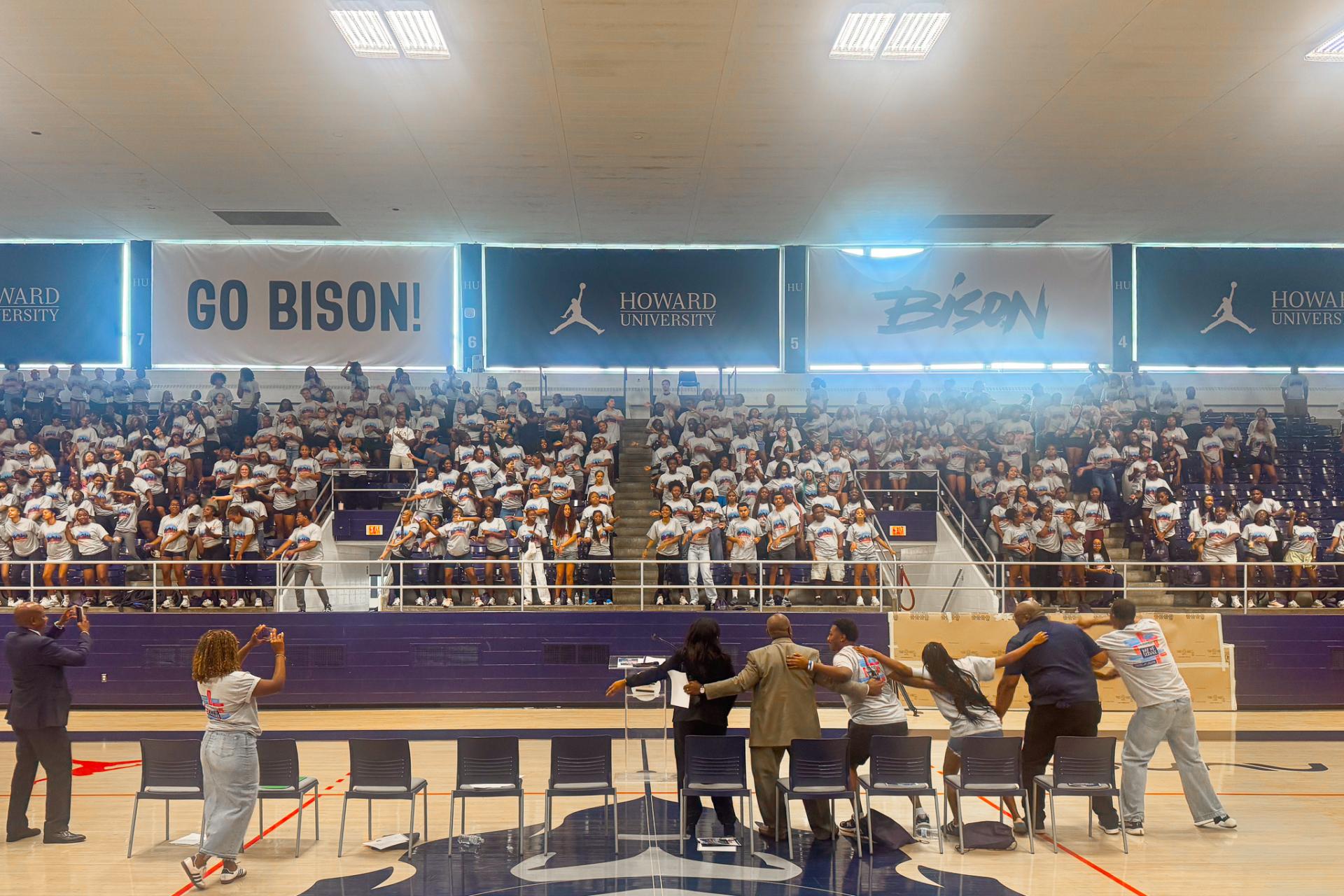
Administrators and students danced together to F.L.Y.’s “Swag Surfin’” before participants headed toward their assignments across the city.
Related Stories from Howard Magazine

Alternative Spring Break: Service With Impact
For more than three decades, Howard University Alternative Spring Break (HUASB) has answered the call to serve in marginalized communities around the world.
Mar 4, 2026Keep Exploring
Howard University Embraces a Virtual Day of Service for Class of 2024 and 2025
Keep Reading
-
Lineage: Howard Students and AlumniHoward Alumnus Chequan Lewis to Lead Crunch Fitness Through Its Next Chapter as New CEO
Aug 3, 2026 7 minutes -
Find More Stories Like This
Are You a Member of the Media?
Our public relations team can connect you with faculty experts and answer questions about Howard University news and events.
Submit a Media Inquiry