

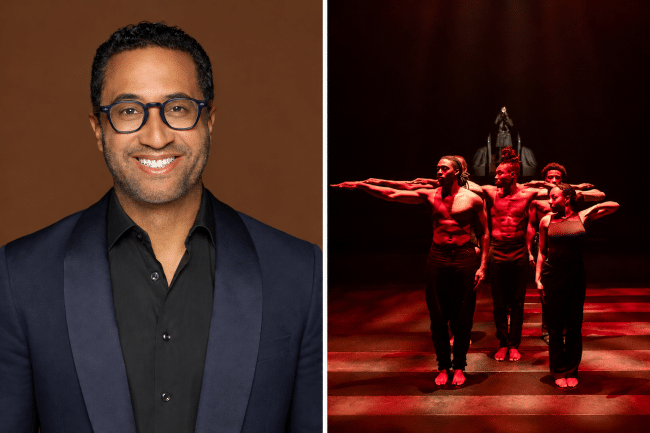
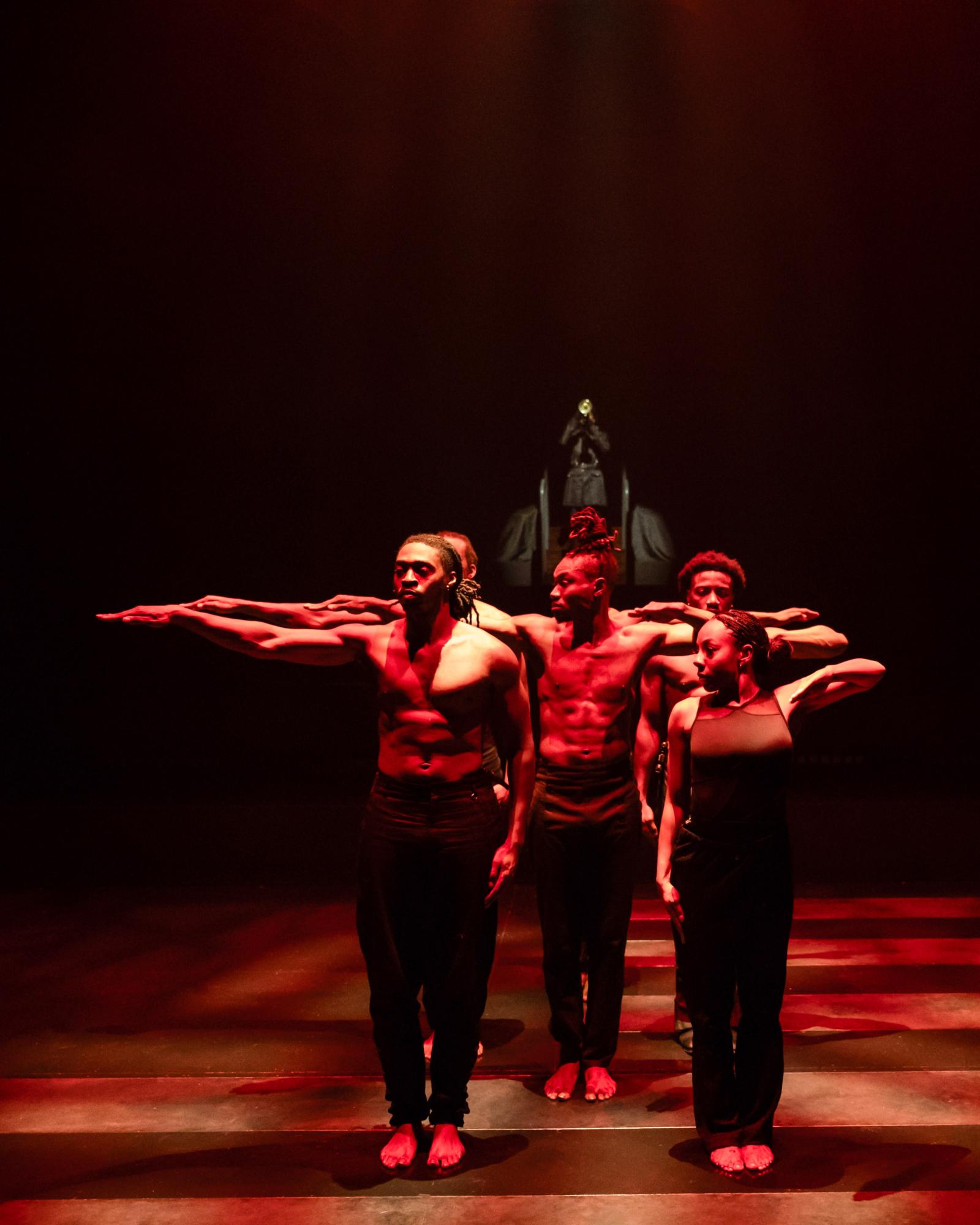
Top photo: C. Brian Williams (left) and Step Afrika! production of "The Fruits of Our Labor." Headshot photo by Keith Major. Production photo by Teresa Castracane
Howard alumnus C. Brian Williams (B.A. ’91) is known worldwide as founder and executive producer of Step Afrika!, the world’s first and leading professional dance company dedicated to the art of stepping. Step Afrika! is one of the country’s top 10 African American dance companies.
Stepping refers to the percussive dance tradition that originated in West Africa in which performers use their hands, feet, and voice to create complex rhythms heavy on clapping, stomping, and chanting. Stepping evolved in the United States through enslaved Africans, then through black fraternities and sororities performed and popularized stepping.
Williams shared his vision for stepping when he founded Step Afrika! in 1994, bringing together stepping’s African roots with the Divine Nine’s practices, along with a variety of contemporary dance styles.
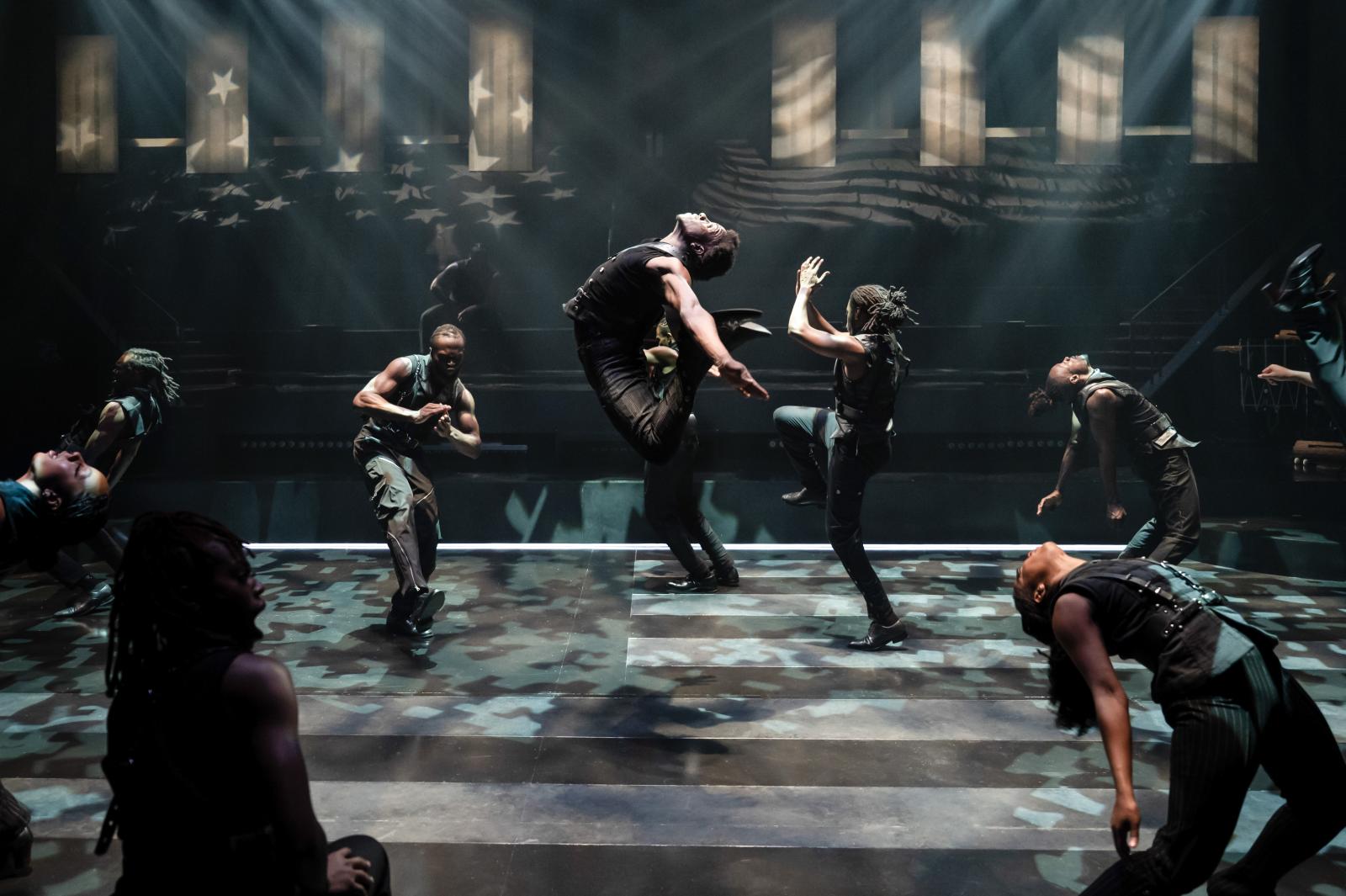
Step Afrika! is currently at Arena Stage through Nov. 1 with “The Fruits of Our Labor,” a new production exploring rhythm, resilience, and the unfinished story of the American experience. The production is directed by Jakari Sherman, with Conrad R. Kelly II and Vusi Mdoyi.
“I will never forget the first time I saw the tradition of stepping on campus. Surprisingly, I was not aware of the tradition before I came on campus,” said Williams, a Houston native who first saw stepping during Howard’s Homecoming Greek Step Show in 1996 at Burr Gymnasium. He later saw it regularly on the Yard.
“Coming on the Yard, seeing the Divine Nine stepping at 12 o’clock on a Friday, seeing the pledge process back in those days, and watching the different fraternities and sororities going through that rich tradition was exciting for me,” said Williams, who pledged Alpha Phi Alpha, Beta chapter, in 1989. He would later perform during the Greek Step Shows at Homecoming.

Everything from the tradition found in stepping’s tradition to its camaraderie with his fraternity brothers drew Williams to the art form.
“I was also very intrigued by the music that you make stepping. As much as you are visually compelling, you are also a musician making music and I enjoy that aspect of it,” he said. He added: "When I pledged the fraternity, that is what got me not only performing the art of stepping but starting to study and research it.”
Transformative Times at Howard
Step Afrika! could not have happened without Howard or without Washington, D.C., Williams said, though “especially without Howard because Howard is where I developed my passion and love for stepping in the first place, and where I developed my love for African American history and culture.”
Williams arrived at Howard in 1986 following his alumni father and uncle. His mother, grandparents, and great-grandparents attended HBCUs, making legacy a part of Williams’ decision to attend Howard. He applied to two different schools, but there was only one choice after he received an early acceptance from Howard.
“Once I got in, I was incredibly satisfied,” he said of Howard.” I was excited about coming to Howard and I had no idea what I wanted to study. But I knew I wanted to be at the Mecca.”
Williams said his years at Howard were impactful and transformative in shaping who he would become.
“I learned so much there,” he said. “Even though I was a marketing major, I took on so many things on campus. I was in the Fine Arts department playing around with theater, studying Spanish, pledging my fraternity. Howard has been so amazing for me.”
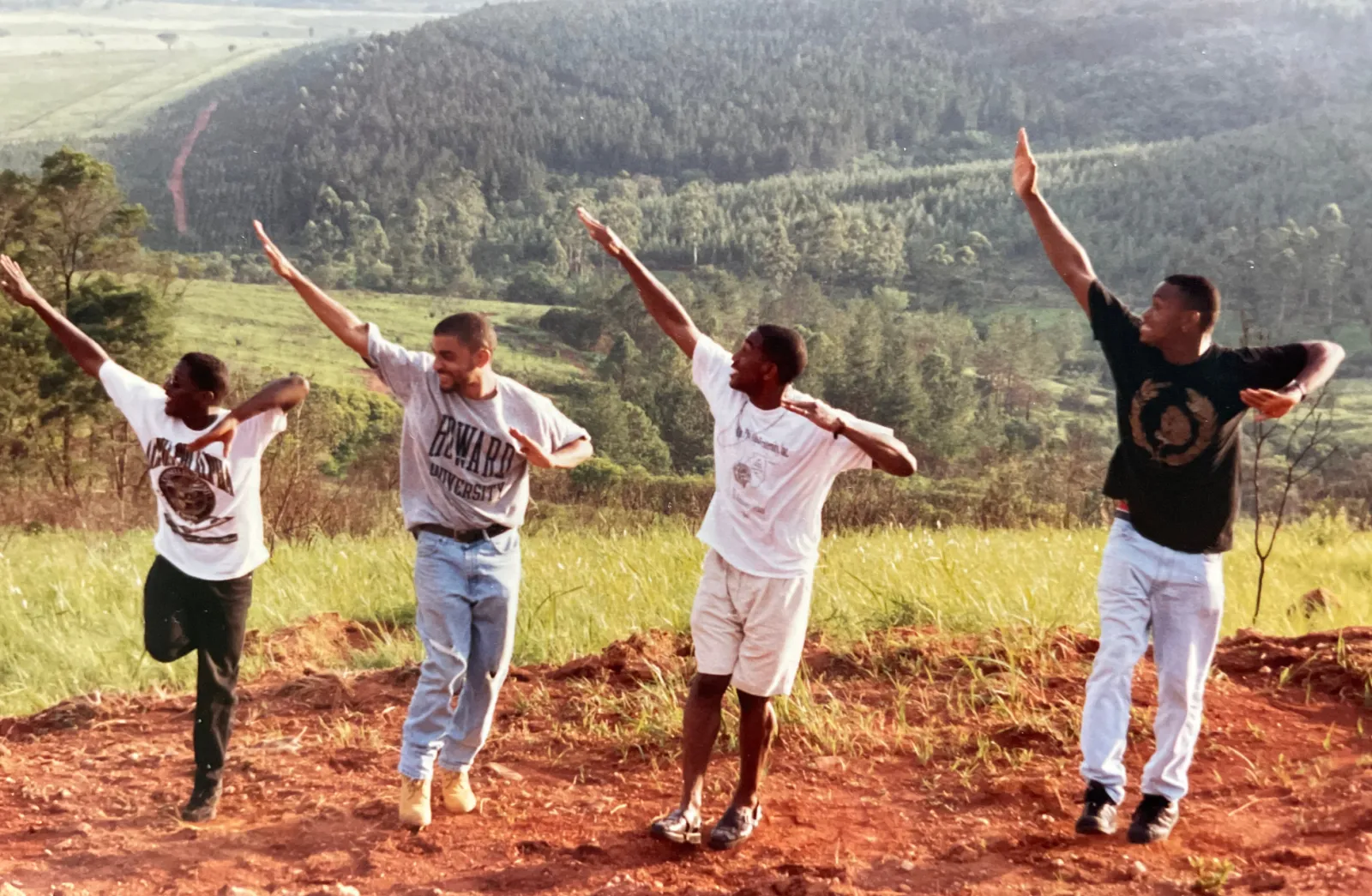
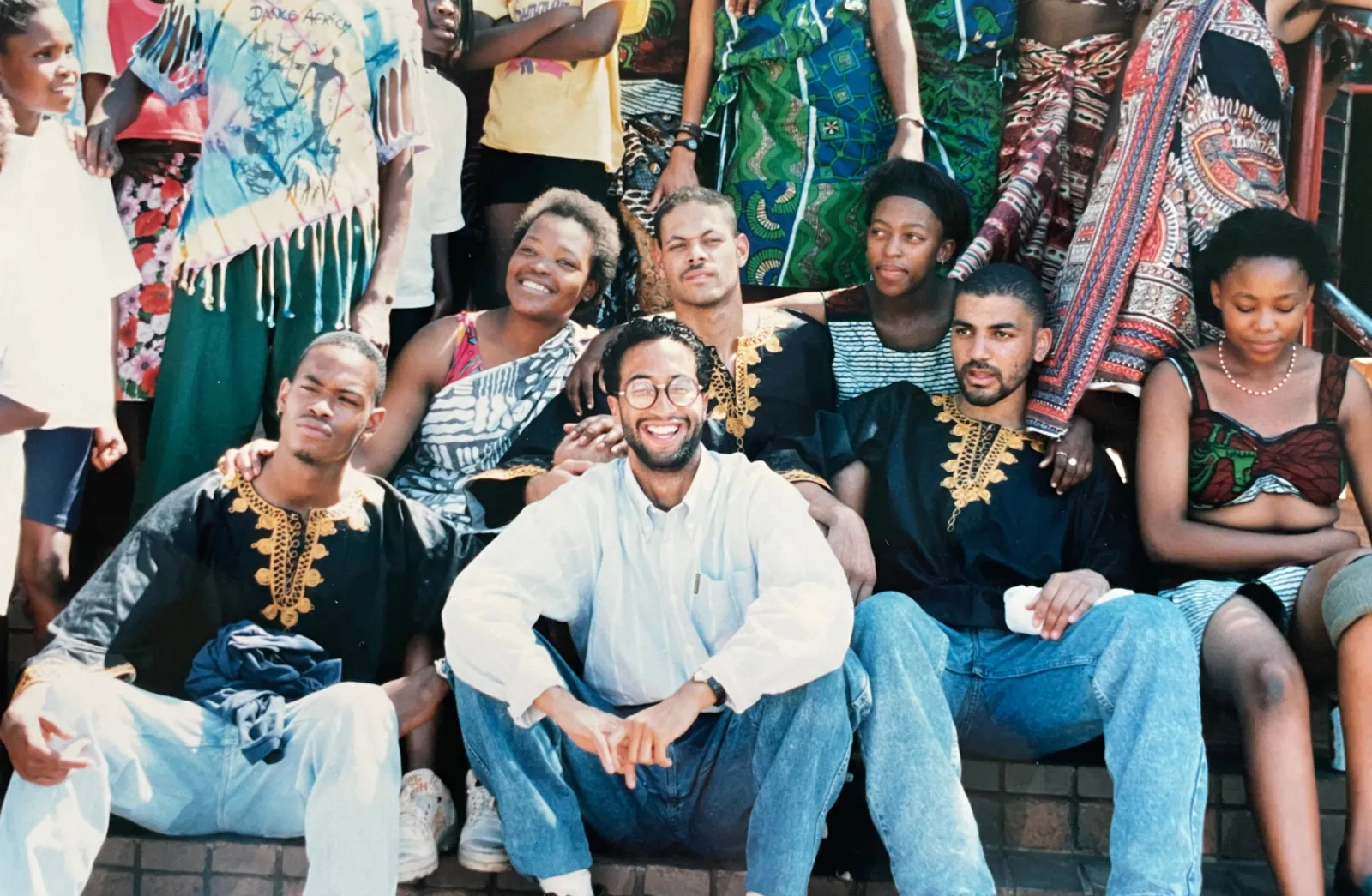
After taking a course in African American studies, he took more courses as his passion to explore the diaspora deepened. After graduation, Williams moved to Lesotho, South Africa, in 1991 for a yearlong fellowship. There, he saw different traditional African dance forms that fascinated him because of the energy of the stepping tradition he experienced at Howard.
“I became excited about the idea of introducing the African American form of stepping to the continent of Africa. I couldn’t wait to see what would happen when we would step on the continent,” said Williams.
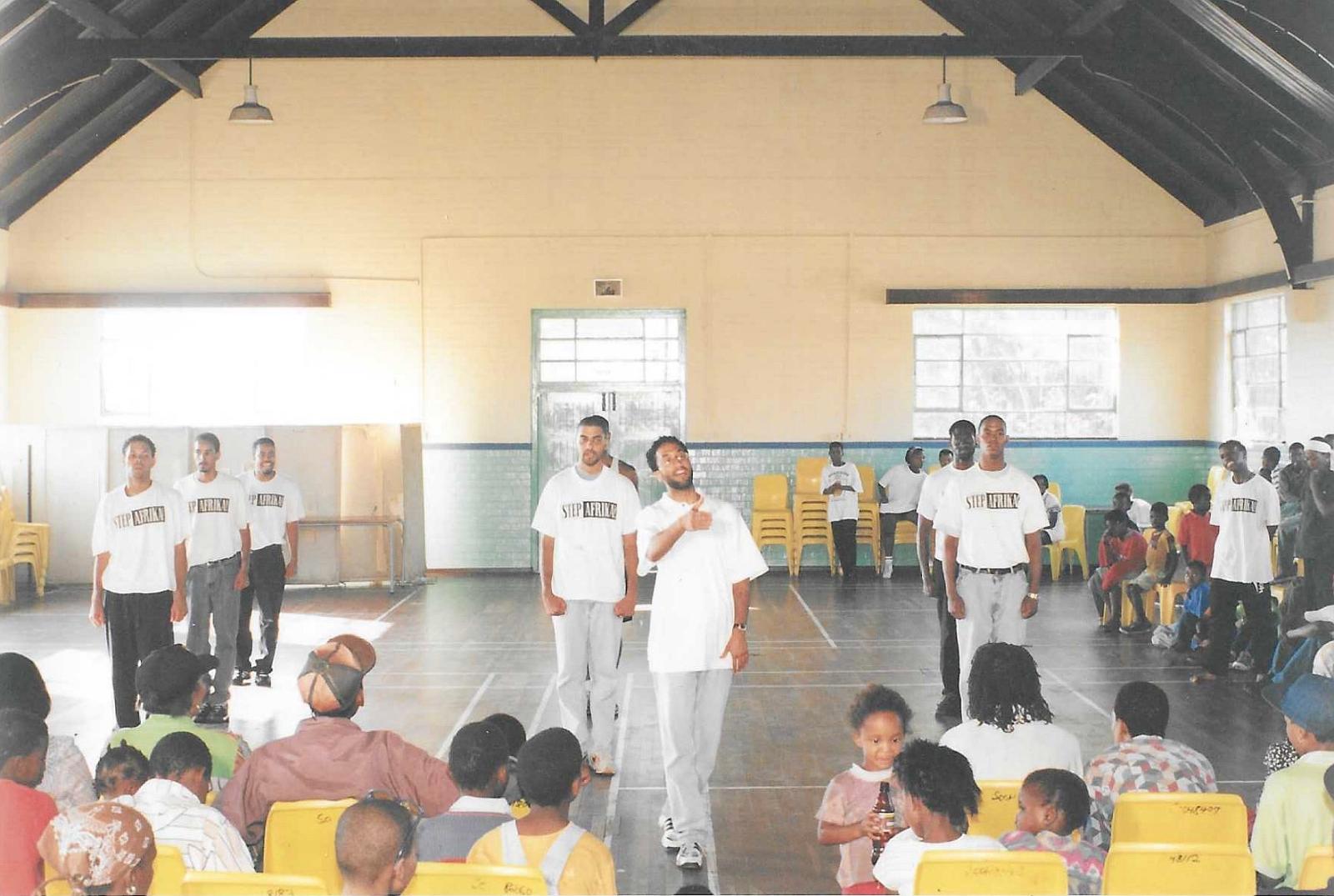
While in South Africa, connected with the Soweto Dance Theatre in Johannesburg and introduced the company to traditional African American stepping. Williams and the dance company discussed working together on a project. Still, when the fellowship ended and Williams returned to Washington, D.C., all he could think about was the name he had in his head: Step Afrika!
It fully came to fruition in 1994 when Step Afrika! International Cultural Festival launched in Johannesburg. He enlisted his fraternity brothers to help conduct free workshops for youth as part of the festival.
Stepping Into History
Step Afrika! has since collected countless accolades, including recognition at the Smithsonian’s Museum of African American History and Culture for the world’s first interactive stepping exhibit, which coincided with the museum’s opening in 2016; the first dance company inducted into the National Association of Campus Activities (NACA) Hall of Fame in 2023; the Guinness World Records title holder for largest stepping dance in 2025; and several Mayor’s Arts Awards in Washington, D.C.
Other highlights include: Step Afrika! partnered with the John F. Kennedy Center for the Performing Arts to develop arts programs (1999), before performing ten sold-out shows at the venue (2000); performed during the Lighting of the National Christmas Tree for President George W. Bush (2008); performed at President Obama’s Black History Month reception (2016); performed at the first-ever Juneteenth Celebration at the White House (2023); and performed for Vice President Kamala Harris (B.A. ’86) at the NMAAHC.
Years of praise, along with heralded productions including “Drumfolk” in 2022 and “The Migration: Reflections on Jacob Lawrence” in 2024, led NEA National Heritage Fellow Williams to the new show, “The Fruits of Our Labor.” The production is what its title states.
“I’ve been working in and around traditional stepping for 30-plus years, maybe 40, dealing with this art form, investigating it, scoring it,” said Williams. “This production is definitely a fruit of my personal labor, but more importantly it’s the fruits of our collective labor when I think about all the work the artists in Step Afrika! have done to carry, produce, and push the art form forward. This show demonstrates that.”
He said “The Fruits of Our Labor” centers stepping in ways the company never has before, getting straight to stepping rather than leaning into other traditional dance forms.
“The 19 artists of Step Afrika! push the tradition into new territory,” he said. “And we’re making history as one of the longest runs of a dance-centered production in D.C. theater. I’m proud of that and it’s a lot of work. It shows stepping as a dance form can be on stage in a theater in exciting ways, and we are making it happen.”
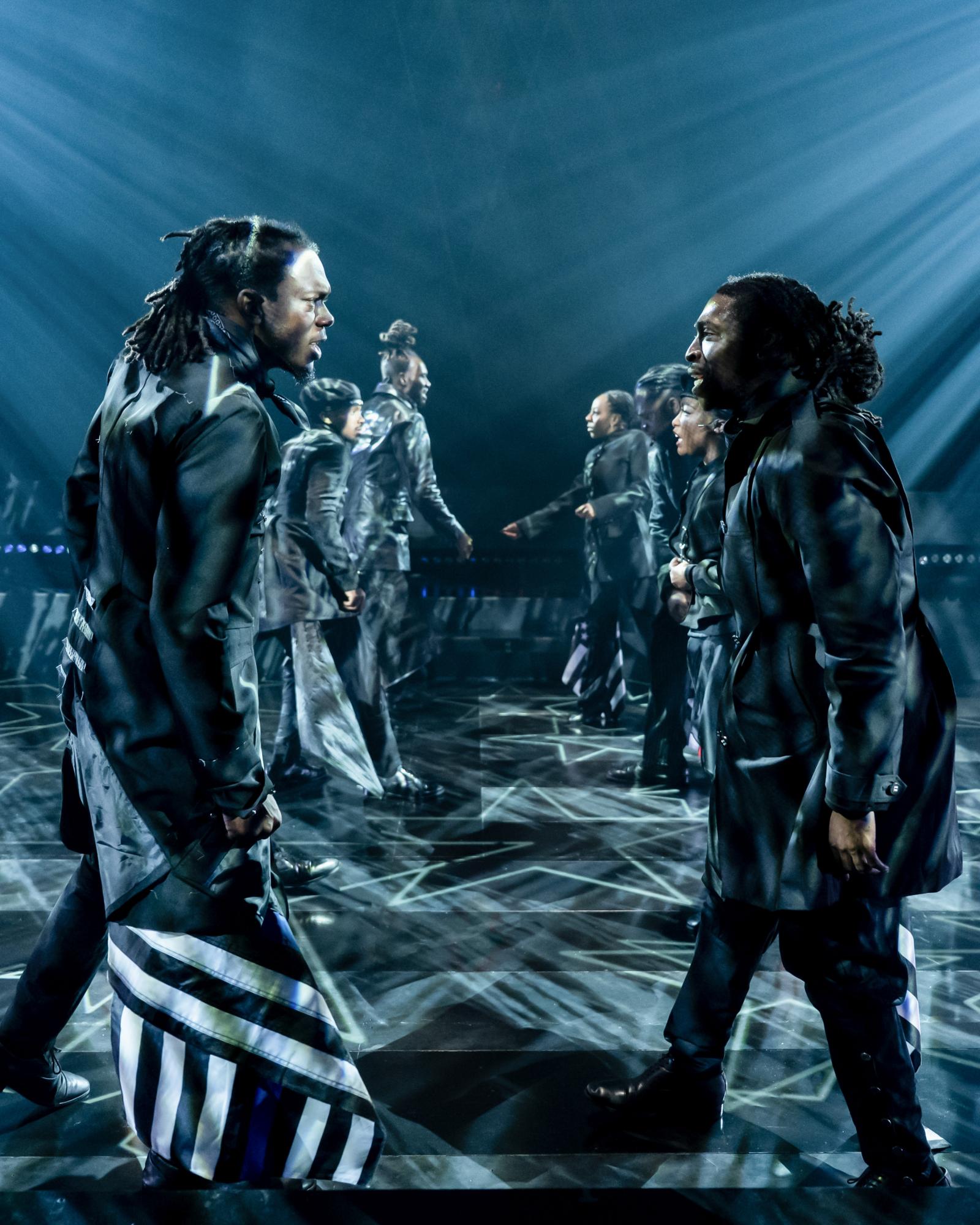
He said “The Fruits of Our Labor” centers stepping in ways the company never has before, getting straight to stepping rather than leaning into other traditional dance forms.
“The 19 artists of Step Afrika! push the tradition into new territory,” he said. “And we’re making history as one of the longest runs of a dance-centered production in D.C. theater. I’m proud of that and it’s a lot of work. It shows stepping as a dance form can be on stage in a theater in exciting ways, and we are making it happen.”
Presenting at a venue as prestigious as Arena Stage is always special to Williams.
“When I was at Howard,” said Williams, “this was like my theater, where I could see performances. Thirty-two years later it’s like our artistic home. It’s a beautiful venue, one of the most amazing theaters in the country. Creating new works here is just an honor.”
Once “The Fruits of Our Labor” runs its course Nov. 1, Step Afrika! returns to Arena Stage Dec. 4–Dec. 23 for the company’s long-running “Step Afrika!’s Magical Musical Holiday Step Show.” He called it Step Afrika!’s most special show because it draws the biggest crowds, thanks to families coming out and enjoying it. The show has only been performed at Arena Stage.
“We have been doing it every year for 15 years, and there’s nothing like it in the world. It’s so unique. I can’t explain it. You have to see it. Who steps with polar bears? When I see the way kids respond to the show, I could do that every day and be happy.”
Endless Impact
When Williams looks at Step Afrika's continued impact has on the world and culture, he said it is endless. It’s shocking to him to think about how far the company has taken traditional American stepping.
“When I started Step Afrika!, there wasn’t a lot of understanding or research, and quite honestly still isn’t, into the origin story of stepping. I think Step Afrika! has contributed magnificently into giving us a little more insight into why African Americans use the body as a percussive instrument in the first place.”
Additionally, Williams said Step Afrika! has introduced the world of American theater to stepping while nurturing the artists who perform in Step Afrika! –- many of them Howard alumni — are given a safe place to create and try things that have truly transformed what’s possible for this art form.
The impact on youth is notable as well, he said, beginning with the free workshops conducted during the earliest version of Step Afrika! in South Africa, and the hundreds of thousands of youth who’ve experienced since then through master classes, camps and workshops. Williams learned that from his family, and at Howard.
“One thing I learned at Howard was community service, the type of service that’s not just performance and doing the work but serving at the same time. That is truly the legacy of Howard University.”
Step Afrika!'s production of "The Fruits of Our Labor" is at Arena Stage through Nov. 1. "Step Afrika!'s Magical Musical Holiday Step Show" runs Dec. 4–23. Go to arenastage.org for more information.
Keep Reading
-
 Culture Creators: Arts and Entertainment
‘A Different World’ Stars Come Home to Howard Ahead of Netflix Sequel Premiere
Sep 25, 2026 4 minutes -
 Lineage: Howard Students and Alumni
20 Years in Motion: Models Inc. Celebrates Two Decades of Fashion, Mentorship and Black Creative Expression at Howard University
Sep 14, 2026 7 minutes -
 Homecoming 2026
Howard University Homecoming 2026: Wildest Dreams, Bison Traditions and a Week of Celebration
Oct 12, 2026 16 minutes