

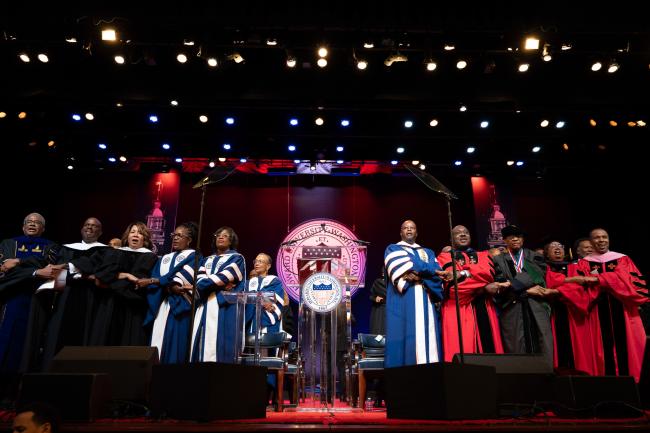
Pomp and circumstance were aplenty at Howard University’s 2026 Opening Convocation, the 159th in the institution’s history.
Cramton Auditorium was packed to the rafters on Friday, Sept. 18, with students, alumni, faculty, staff, and friends of the University who gathered to commemorate the start of the academic year. Yet the annual tradition doubled this year as the close of a chapter for many longtime members of the Howard community.
This year’s Opening Convocation orators were four of those distinguished members: professor of surgery Clive Callender, M.D.; associate provost for faculty development and professor of law Okianer Christian Dark, Esq.; assistant secretary for University operations and director of policy management Anita L. English; and executive director for University events and protocol Andrew Rivers. The staff members, including nearly 170 others, participated in Howard’s Employee Voluntary Retirement Incentive Program.
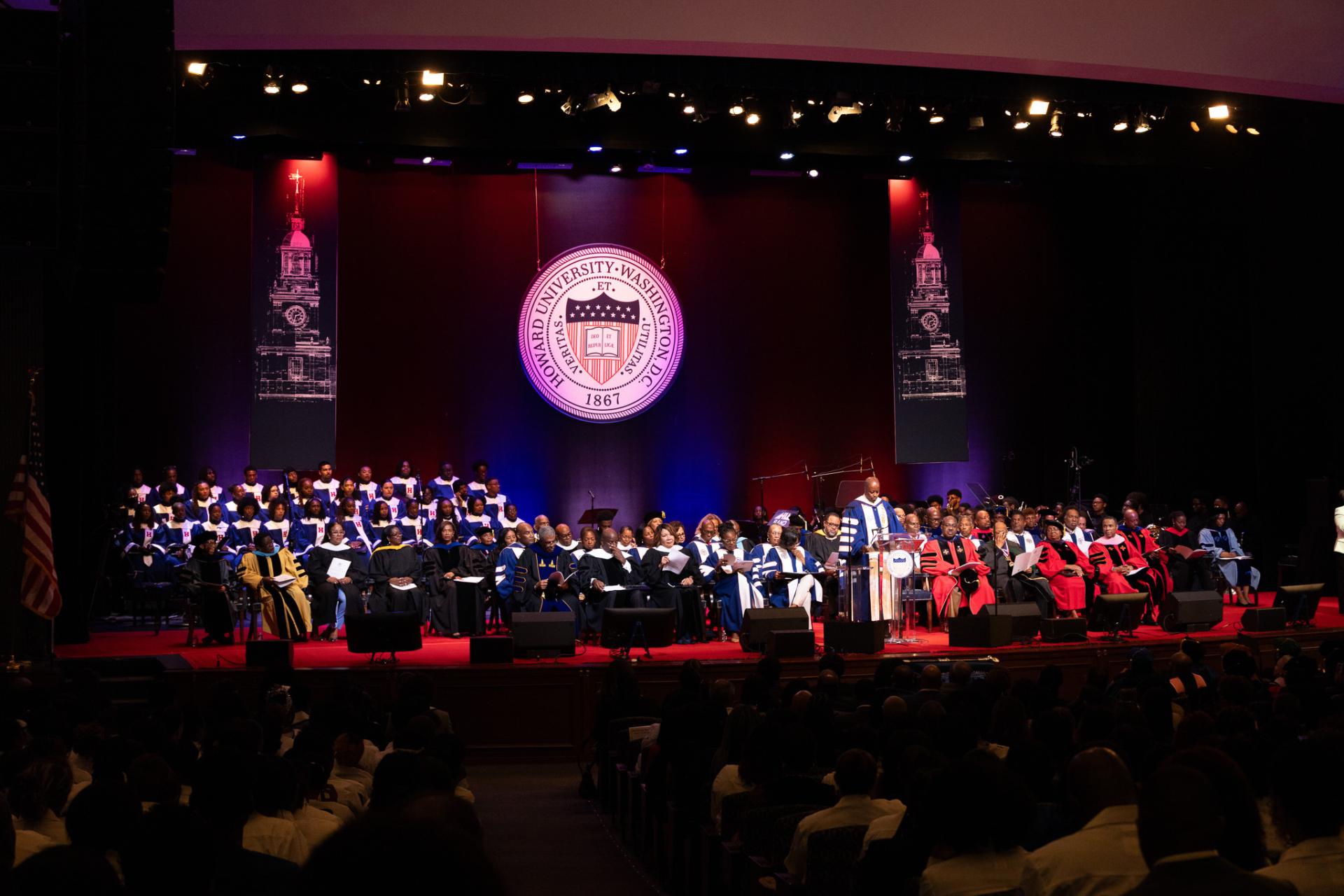
President Frederick addresses the Howard University community at 2026 Opening Convocation. (photo by AJ Cabbagestalk / Howard University)
Stewarding Howard’s Future
Howard University Interim President and President Emeritus Wayne A. I. Frederick (B.S. ’92, M.D. ’94, MBA ’11) began the proceedings by thanking the retirees for their years of service to the institution before discussing the University’s newest initiatives, including the optimization of its business processes.
Frederick then spoke from the perspective of a triple alumnus when discussing the University’s newly launched search for its next president, expressing his hope that it will result in Howard appointing a woman as its permanent president for the first time.
“The Board of Trustees makes the decision; they have their criteria, and they will pick the best person for the job,” Frederick said. “But I have to be honest with you: when that person is appointed, I sure hope it is a woman. It is time.”
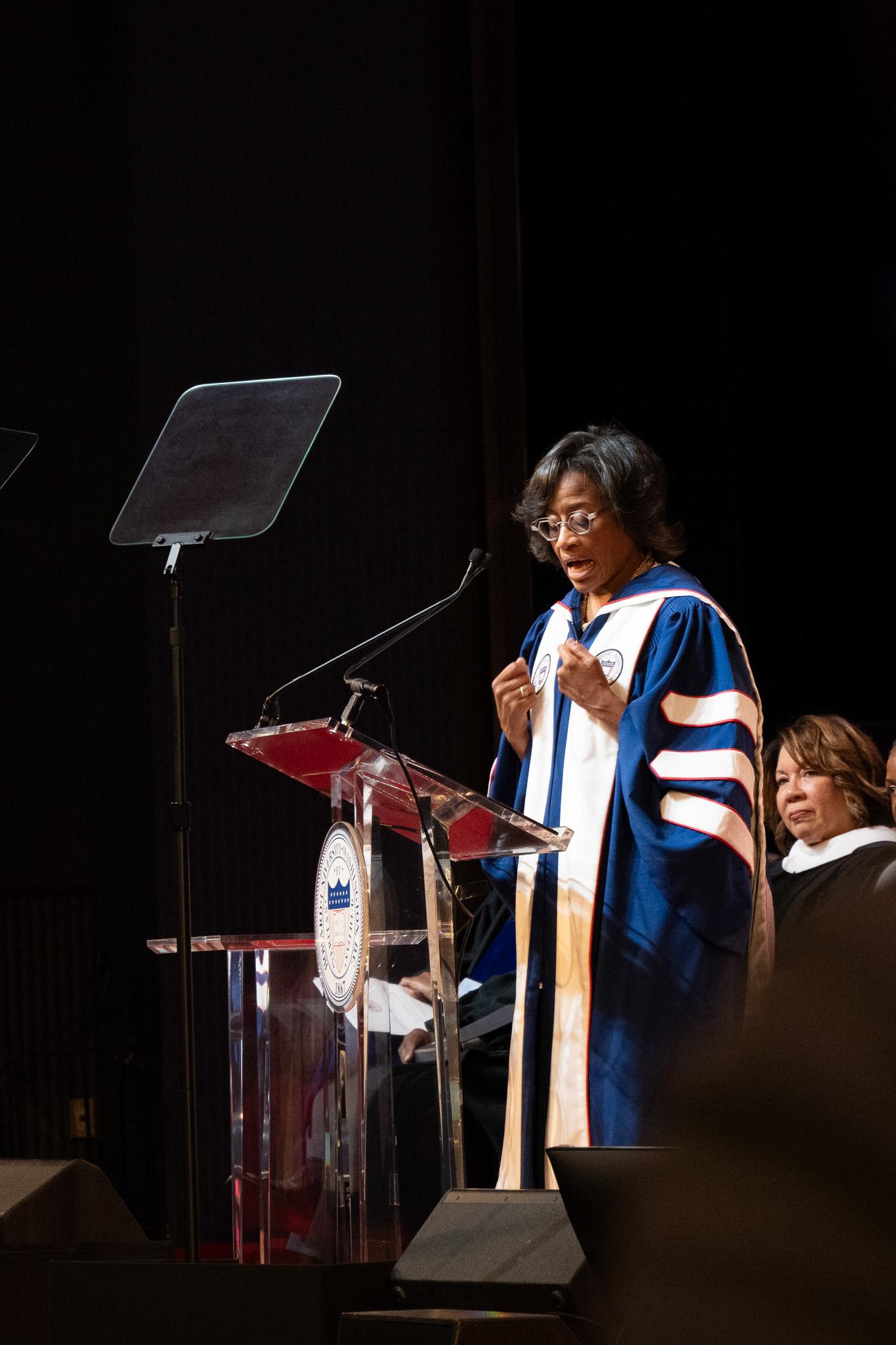
Frederick asked the University community to engage in the presidential search and warmly welcome the eventual appointee. He described the role as essential not only to American academia but also to education across the globe.
“This is the most consequential academic job in America: being the president of this University,” Frederick said. “The person who takes the helm of this University represents the entire African diaspora.”
While Frederick acknowledged the largest decisions tend to fall to the president, he was nonetheless adamant that ensuring Howard’s future success is a campus-wide endeavor.
“The responsibility to steward this University is one all of us must accept,” he said.
Similarly, University Board of Trustees chair Leslie D. Hale (BBA ’94) spoke directly to students on the “promise of Howard,” exhorting those new to Howard to embrace the totality of the University experience.
“Long before you arrived on this campus, generations of Bison believed in the promise of this institution,” Hale said. “They struggled here, discovered their purpose here, and created opportunities that you now inherit.”
“We are excited about Howard’s future because we know the strength of the foundation beneath us,” she added. “We know the power of the community around us. Most importantly, we know the promise of generations to come.”
The responsibility to steward this University is one all of us must accept.
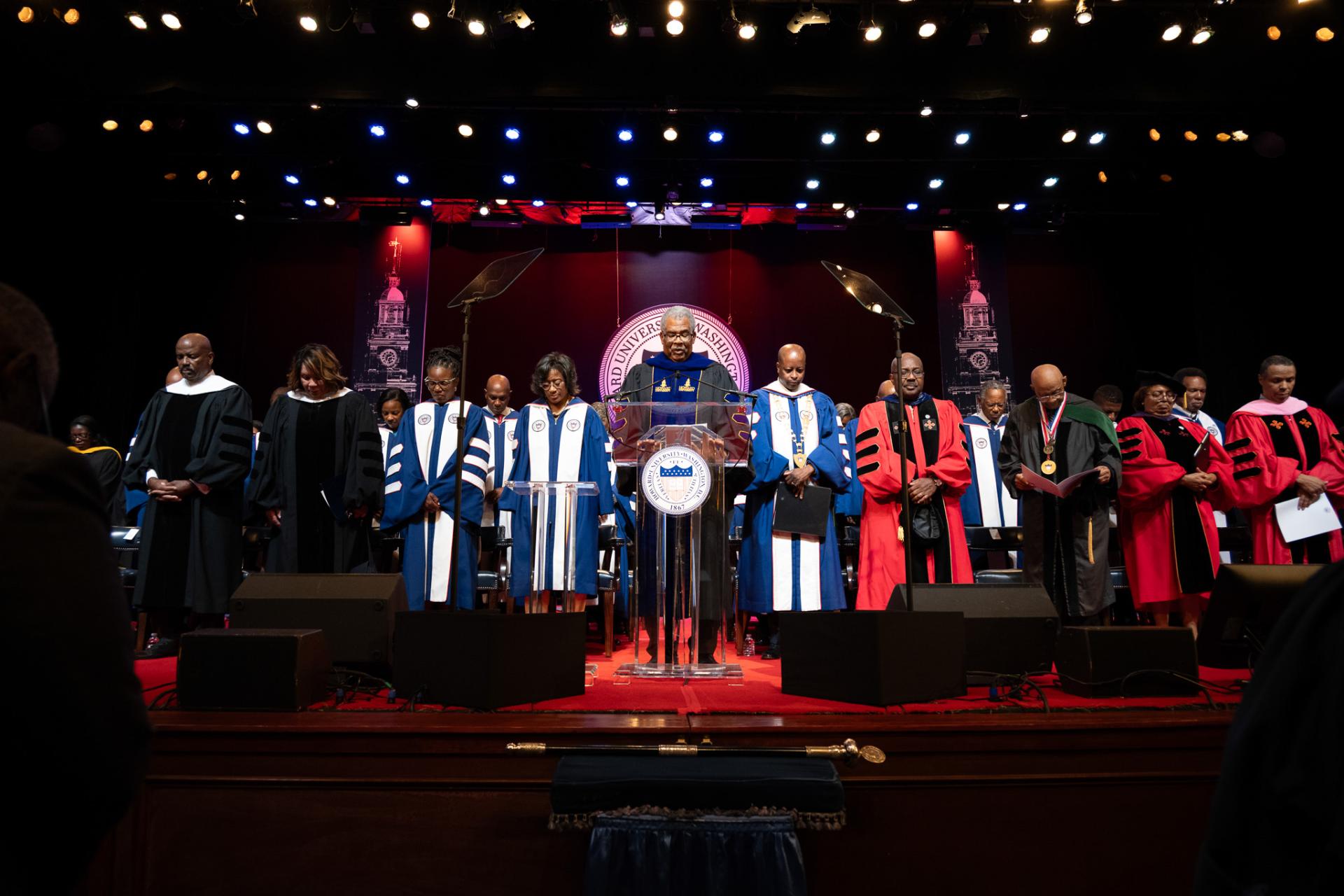
Andrew Rankin Memorial Chapel Dean Bernard L. Richardson, Ph.D., provides the benediction to conclude Opening Convocation. (photo by Simone Boyd / Howard University)
Related Story
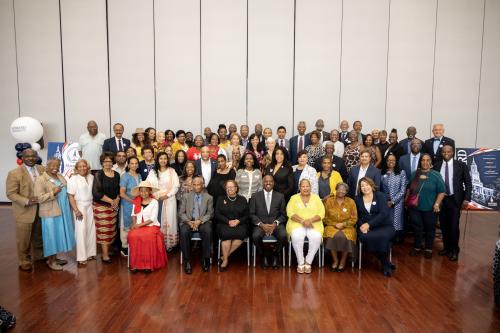
2,000 Years of Service: Howard University Retirees Honored at Celebration
Keep Reading
-
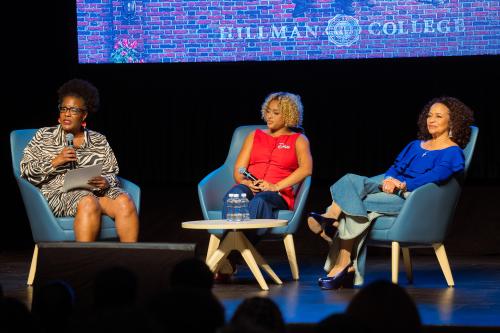 Culture Creators: Arts and Entertainment
‘A Different World’ Stars Come Home to Howard Ahead of Netflix Sequel Premiere
Sep 25, 2026 4 minutes -
Legacy and Lineage
2,000 Years of Service: Howard University Retirees Honored at Celebration
Sep 24, 2026 7 minutes -
 *Accolades
Howard University CEA Professor Sonya Smith Elected to AIAA Class of 2026 Fellows
Sep 28, 2026 3 minutes