


Howard University doctoral students Tonshia Luster and Carlos Aguilera were recently selected as recipients of the 2025-2026 Winslow Sargeant Doctoral Award, awarded by the university’s Ronald W. Walters Leadership and Public Policy Center.
Since 2020, the Winslow Sargeant Doctoral Award has supported Howard graduate students in the social sciences and humanities. Luster and Aguilera are the first co-recipients of the award since its inception. Each recipient received $5,000 in funding to support their doctoral studies.
The award is made possible by a gift from Dr. Winslow Sargeant, a friend of Ronald Walters who sought out to provide financial support to new and continuing doctoral students as they prepare to undertake future research opportunities. Sargeant, an engineer, is an owner and senior strategic advisor for ITSC Secure Solutions. He is also senior advisor for globalization and head of capital markets for Genaesis.
“We applaud Carlos and Tonshia, who are both first generation advanced degree candidates who are looking forward to using their talents to help others like them achieve,” said Dr. Elsie Scott, director of the Walters Center. “Dr. Sargeant, the funder of this award, is a great example for others who may be looking for a way to increase and support the next generation of scholars at Howard and other Black universities.”
Advancing the Legacy of Ronald W. Walters
Aguilera is a political science doctoral candidate whose academic and professional work encompasses civic engagement, democratic participation, and equitable policymaking. Aguilera is from Inland Empire, California, and has built a career dedicated to strengthening democratic systems, expanding access for marginalized communities, and advancing the scholar-activist legacy exemplified by Dr. Ronald W. Walters.
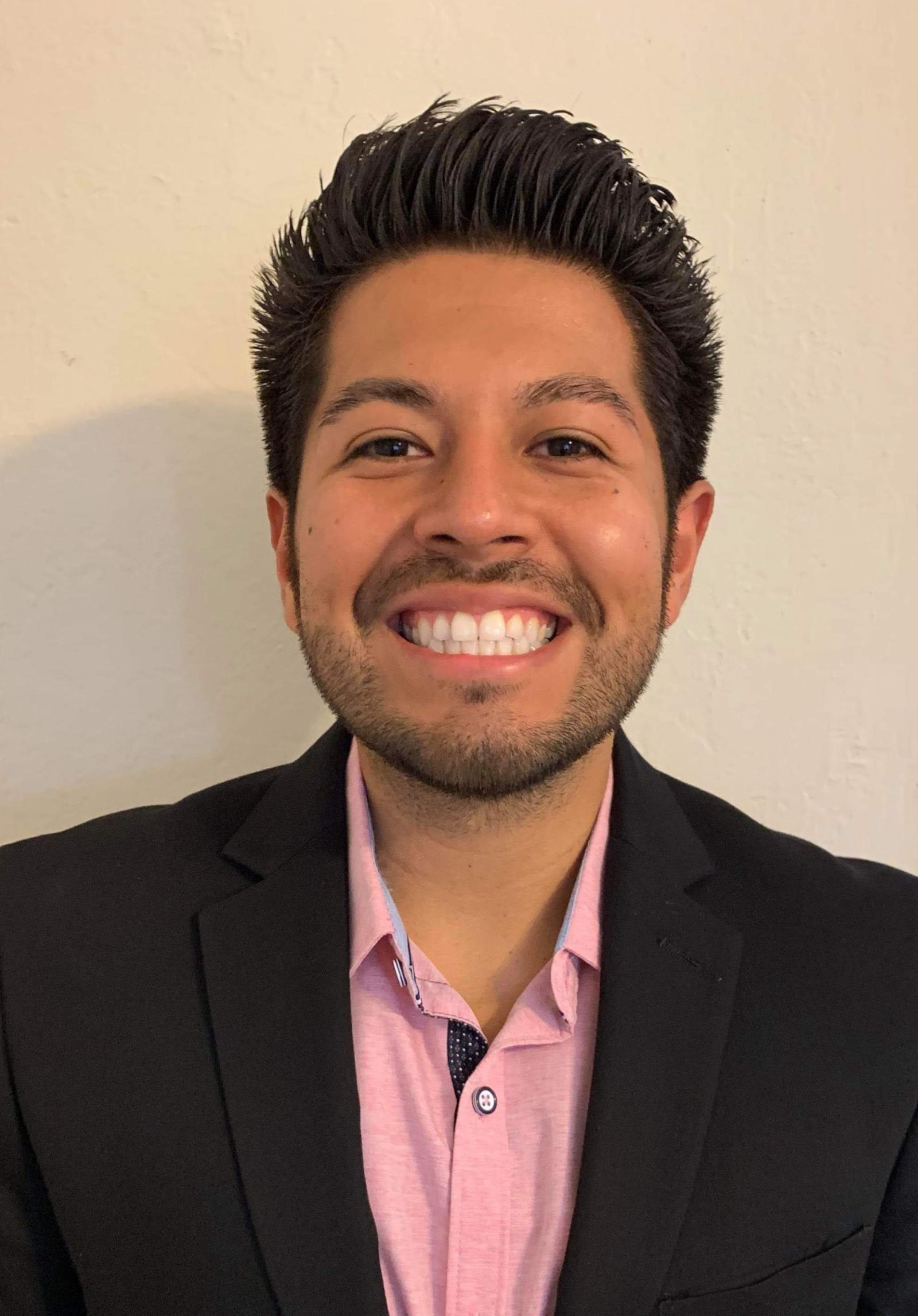
His dissertation, “Statewide Ballot Initiatives and the Role of Civic Engagement in Shaping Democracy: An Examination of Campaign Finance in California Since 2016,” investigates how financial power, civic participation, and voter behavior interact in the nation’s most expansive system of direct democracy. His research, spanning five statewide election cycles (2016-2024), analyzes campaign contribution patterns, expenditure categories, mobilization strategies, and levels of community engagement to understand how money influences initiative outcomes and how civic participation can counterbalance financial inequities.
“This award represents meaningful recognition of ongoing efforts at the intersection of American government, public policy, social justice, and civic engagement,” said Aguilera. “The award provided support in my doctoral work with greater focus and flexibility as I balance academia, teaching preparation, and policy-oriented research. More importantly, it reinforces my commitment to producing work that speaks to both academic audiences and the communities affected by public policy.”
Aguilera’s work draws from theories of democratic engagement and social capital to inform the conditions under which ballot initiatives empower or marginalize communities. He noted the significance of the Winslow Sargeant Doctoral Award funding saying, “it supports doctoral research that is both analytically rigorous and publicly relevant. It reinforces the importance of scholarship that informs democratic practice and policy decision-making.”

Luster, an economics doctoral candidate, is a native of Pine Bluff, Arkansas. She earned a bachelor’s degree in agricultural economics from the University of Arkansas in 2005 and a master’s in agricultural economics from Kansas State University in 2009, where she made history as the first African American woman to graduate from the Agricultural Economics graduate program.
“As a first-generation scholar, this recognition affirms both my academic journey and my commitment to research that advances equity, justice, and public policy in the spirit of Dr. Ronald Walters’ legacy,” said Luster. “This support provides critical financial relief at a pivotal stage of my doctoral program, allowing me to focus fully on completing my dissertation and transitioning into academia. It also strengthens my connection to the Walters Center’s mission-driven community of scholars and leaders.”
Luster’s dissertation, “Regulatory Caps and Bank Growth Patterns: An Empirical Study of Wells Fargo’s Total Assets and Loans,” examines how federal regulatory interventions, specifically the 2016 and 2018 enforcement actions against Wells Fargo, affected the bank’s total assets and lending activity. Using a combination of synthetic control methods and difference-in-differences analysis, her research provides empirical evidence of how large financial institutions adjust their balance sheets in response to targeted regulatory sanctions. Luster’s work contributes to broader conversations on financial regulation, governance, and economic disparities.
Luster underscored the importance of receiving the Winslow Sargeant Doctoral Award, sharing that the funding “invests in doctoral scholars whose work centers on policy, equity, and social impact values that are essential yet often underfunded. For students from historically underrepresented backgrounds, this type of support is transformative and sustaining.”
Upon completing her doctorate, Luster plans to join the faculty of an HBCU where she hopes to advance scholarship in economics while mentoring the next generation of Black economists.
Keep Reading
-
 *Accolades
Howard University CEA Professor Sonya Smith Elected to AIAA Class of 2026 Fellows
Sep 28, 2026 3 minutes -
 Lineage: Howard Students and Alumni
20 Years in Motion: Models Inc. Celebrates Two Decades of Fashion, Mentorship and Black Creative Expression at Howard University
Sep 14, 2026 7 minutes -
 *Accolades
Howard University Student Journalists Rack Up Honors at Atlanta NABJ Convention
Aug 26, 2026 3 minutes