

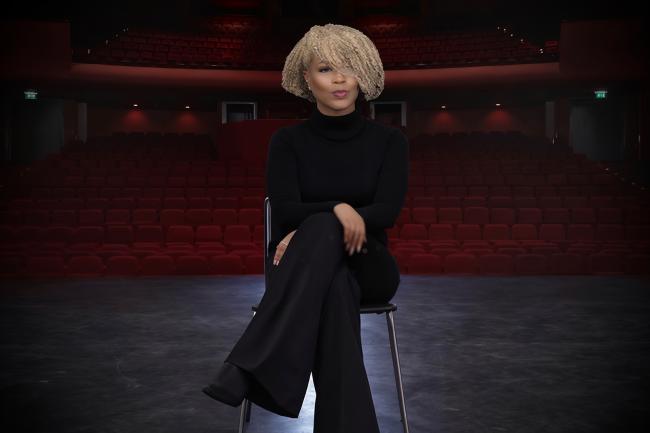
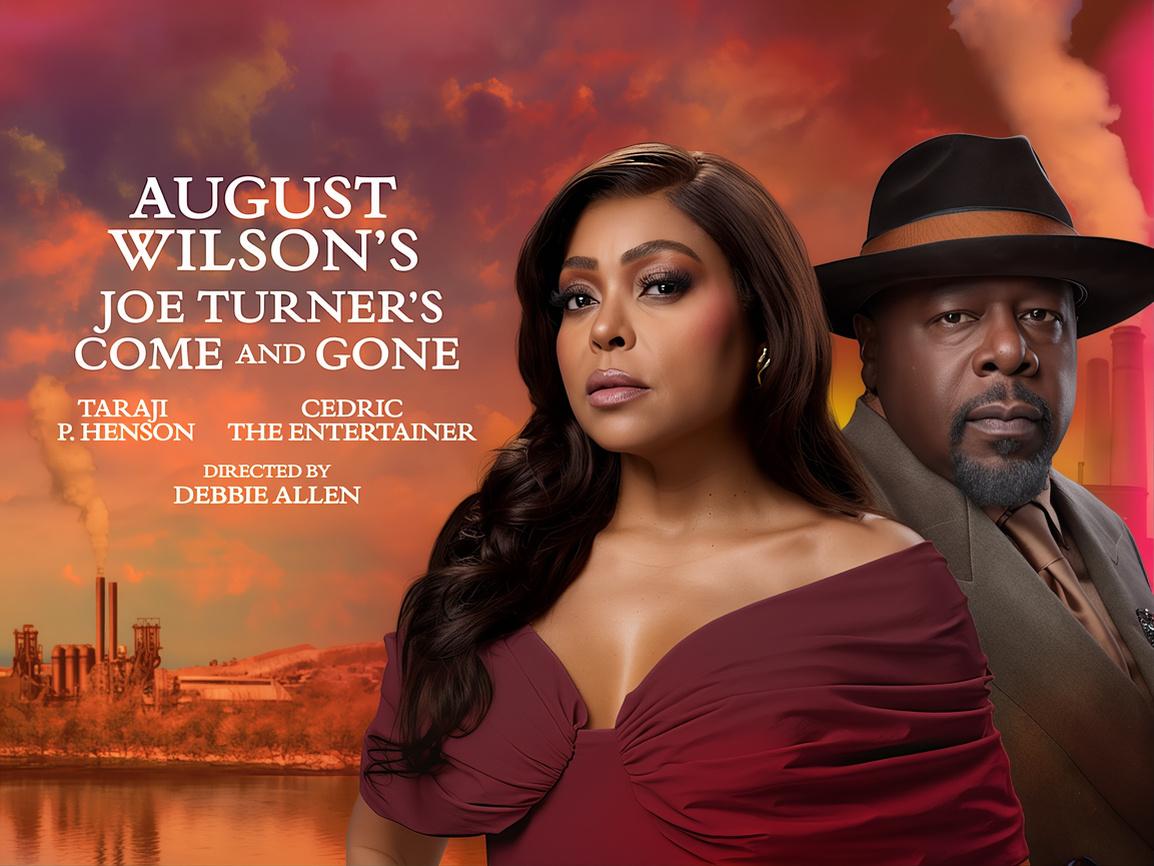
Howard University’s Chadwick A. Boseman College of Fine Arts Professor Pat Parks is stepping onto Broadway in a major way as a co-producer of the highly anticipated revival of August Wilson’s play “Joe Turner’s Come and Gone.” The production, which will begin previews March 30 with an official opening night set for April 25, is a powerhouse collaboration, directed by Academy Award winner and Howard alum Debbie Allen (BFA ’72, DHL ’93) and starring fellow Howard alum Taraji P. Henson (BFA ’95) alongside Cedric the Entertainer. Helmed by lead producer Brian Anthony Moreland, the production brings together some of the most celebrated voices in theater and film for a culturally, historically, and personally significant Broadway event. The show is slated for a 15-week limited engagement ending July 12.
From Music and TV to Broadway
For Parks, the path to Broadway reflects a longstanding passion for producing that began in the music world.
“I had always been a lover of producing, but I had only done so initially on music projects,” Parks said.
That changed when a classmate from the University of Notre Dame — a former New England Patriots player — connected them with a line producer working on a reality show called “The Battle” that aired on ESPN-U, a competition series centered on HBCU marching band rivalries inspired by Dallas Austin’s “Drumline” movie.
Parks collaborated with the show’s line producer and story producer to develop new show concepts and pitch them to networks, gaining valuable experience in production strategy, talent coordination, and sponsorship alignment.
“As a producer for television productions, I gathered capital, secured the talent, and — most importantly — lined up sponsorships, so we could come to the networks with everything already in place,” Parks said. “That experience taught me how to combine vision with strategy — a skillset I will be able to apply to Broadway productions.”
The Broadway revival of “Joe Turner’s Come and Gone” marks Park’s first foray into Broadway, and they credit experience at Howard University with grounding them in the artistry, leadership, and cultural responsibility necessary for the role.
“At Howard, I teach students how to merge artistry with leadership and business acumen. Those lessons resonate in every decision I make as a co-producer.”
Working With Industry Leaders
Parks regards it as a profound professional privilege to work alongside lead producer Brian Anthony Moreland, a visionary force in contemporary Broadway production whose recent shows have been both critically acclaimed and commercially successful, including hits like “Othello,” “The Wiz,” and “The Piano Lesson,” each contributing to some of Broadway’s standout seasons in recent years.
“Working with Brian Anthony Moreland — whose work has shaped some of Broadway’s biggest hits in recent seasons — is a true honor,” Parks said.

Several of Wilson’s plays have been adapted into acclaimed films, including “The Piano Lesson,” “Fences,” and “Ma Rainey’s Black Bottom,” the latter featuring Howard alum Chadwick A. Boseman (B.A. '00). These adaptations underscore the enduring cultural and cinematic significance of Wilson’s work — now further extended by Denzel Washington’s commitment to producing the entire August Wilson American Century Cycle for film.
The revival of “Joe Turner’s Come and Gone” also features an extraordinary creative team and cast. The production is directed by Golden Globe and Emmy Award winner Debbie Allen, whose artistic leadership brings new dimensions to Wilson’s work. The show stars Taraji P. Henson, making her Broadway debut opposite Cedric “The Entertainer,” who returns to the stage in a powerful dramatic role. Both performers bring commanding presence and depth to roles that anchor Wilson’s exploration of identity and belonging onstage.
A Personal Connection
For Parks, this production resonates on a deeply personal level. Wilson’s “Joe Turner’s Come and Gone” asks how people displaced from their origins find their song — and the courage to sing it — a question that closely mirrors Parks’s own creative journey.
“I have spent my life moving between worlds often kept separate: artistry and business, creative expression and strategy, academia and industry,” Parks shared. “Being a multihyphenate — producer, educator, coach, artist — doesn’t always fit neatly into conventional boxes, but it is precisely my song. I do my best work when I honor all of these elements rather than fragment them.”
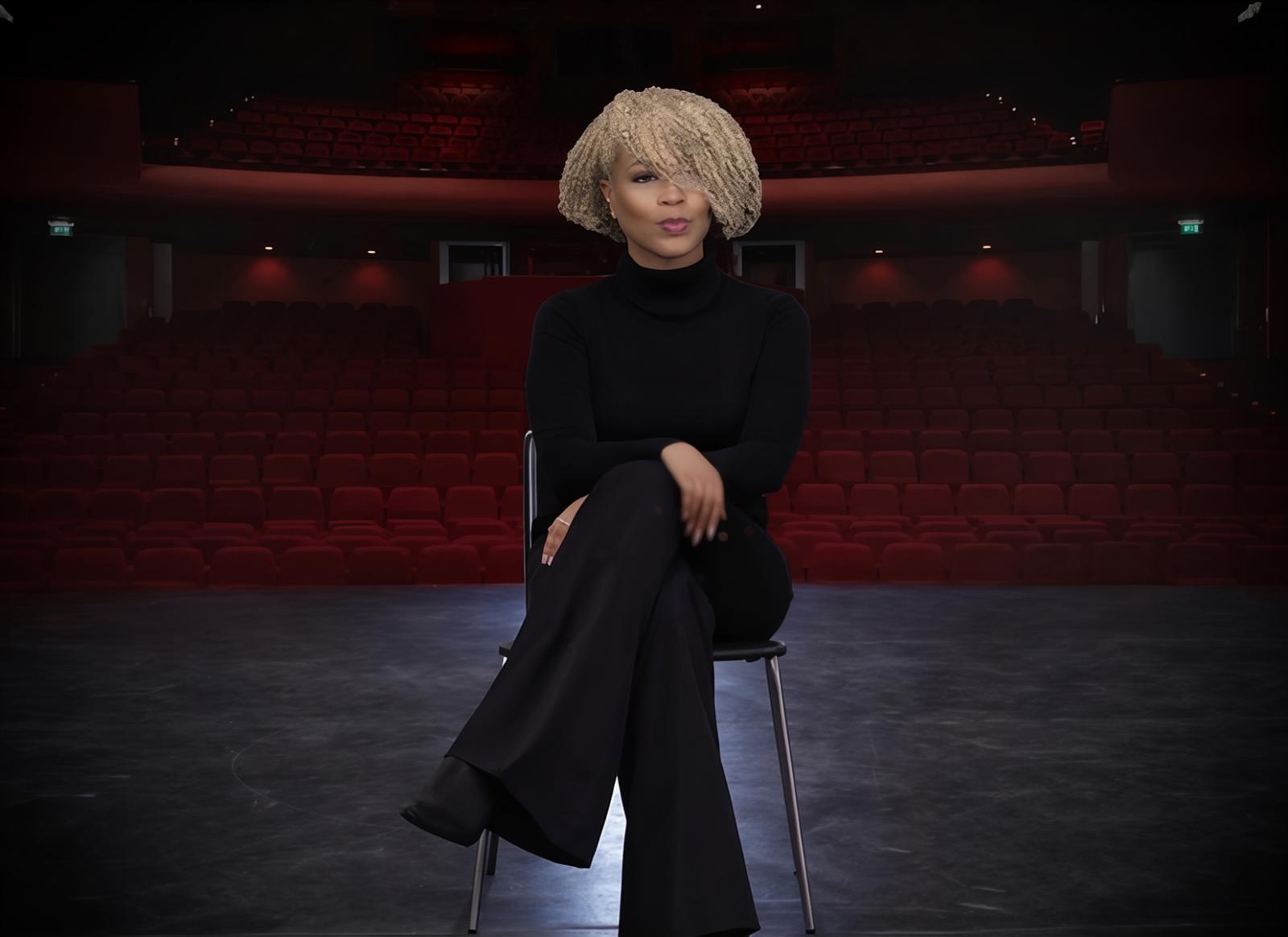
In 2023, Parks was named a Mellon Grant recipient for research on the multihyphenate experience, developing a new framework called Entertainer Intelligence (EntQ). Composed of eight interrelated dimensions — from domain intelligence (“the talent on display”) to spiritual, commercial, and artificial intelligence — EntQ argues that today’s artists must be rounded, grounded, and diversified to thrive in the modern creative economy.
That philosophy aligns seamlessly with “Joe Turner’s Come and Gone,” a play that centers spiritual traditions long practiced within Black communities as sources of guidance, resilience, and renewal.
“We definitely need that now more than ever,” Parks added.
The connection deepens through place and ancestry. Memphis, Tennessee — Parks’s hometown — is woven directly into the play’s lineage. The title derives from “Joe Turner Blues,” written by Memphis-based composer W.C. Handy, the Father of the Blues, whose music chronicled the lived experiences of Black Southerners during and after Reconstruction — the very conditions shaping Wilson’s world.
There is also a striking familial parallel. Parks’ great-grandmother was born in 1900, making her 11 years old in 1911, the year the play begins — the same age as Zonia, the daughter of the play’s protagonist.
“That alignment makes this work more than a production for me,” Parks said. “It’s a way to honor family history, Memphis heritage, and the cultural legacies that shaped Wilson’s artistry.”
Through this revival, Parks brings their full self — Memphian, educator, artist, and advocate — into service of culturally significant storytelling, while helping create pathways for emerging talent both on and off the Broadway stage.
Giving Back and Paying it Forward
“I came to Howard to educate the next generation of arts leaders and to build that talent pipeline — first to equip them with the proper knowledge in the classroom, and to help them get the right internships, fellowships, apprenticeships, and lived experiences,” Parks said, underscoring a deep commitment to mentorship, community, and the next wave of arts leaders.
As coordinator of the Theatre Arts Administration program in Howard's Department of Theatre Arts, Park’s work spans classroom instruction, mentorship, and hands-on production experience.
“So when people ask me what I do at Howard, I tell them I am a professor in the business of show — better known as show business — and now I can also say this process has inspired me to start my own production company so that I can not only educate but even employ some of our students on and off stage, while creating culturally resonant, inclusive stories that honor ancestry and amplify diverse voices,” they said.
Through this work, Parks exemplifies how creativity, strategy, and cultural stewardship can come together to enrich the art form and elevate voices that might otherwise go unheard.
Learn more about the Theatre Arts Administration Program in the Department of Theatre Arts at Howard University.
Visit the official “Joe Turner’s Come and Gone” Broadway page to learn more and purchase tickets: joeturnerbway.com
Keep Reading
-
 *Community
A Backpack, a Fresh Start: Howard University Supports D.C. Students
Sep 29, 2026 3 minutes -
 *Partnerships
Marriott Leaders Bring Knowledge, Experience, and Advice During Howard University Student Visit
Sep 28, 2026 8 minutes -
 *Accolades
Howard University CEA Professor Sonya Smith Elected to AIAA Class of 2026 Fellows
Sep 28, 2026 3 minutes