

Protecting the Fourteenth Amendment
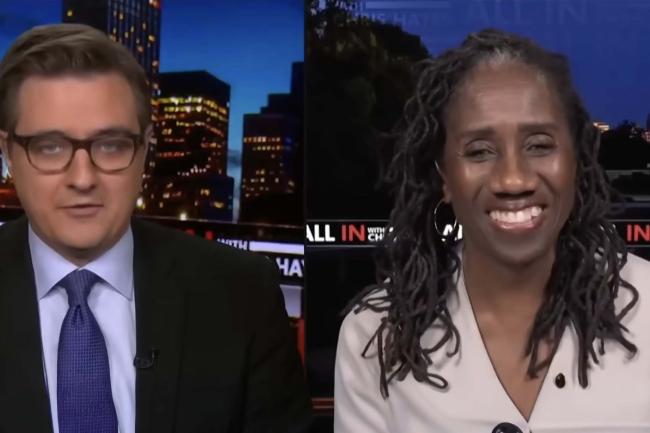
Ifill joined the show’s host Chris Hayes to analyze the decision while breaking down the specifics of the Fourteenth Amendment. Since 2023, the legal scholar has helmed the university’s 14th Amendment Center for Law and Democracy at the Howard School of Law. She’s also the university’s inaugural Vernon E. Jordan, Jr., Esq. Endowed Chair in Civil Rights.
She noted the significance of the split decision in the 2026 Trump v. Barbara case, saying that it gives “legitimacy to the idea that birthright citizenship can be overturned.”
In the decision, Chief Roberts wrote: “Citizenship, then and now, was the right to have rights – to freely participate in our political community. The framers of the Fourteenth Amendment extended that promise to ‘every free-born person in this land.’ We keep that promise today.”
Ifill referred to those amendment framers in her analysis, saying that “our constitution is not colorblind. The framers of the Fourteenth Amendment involved in a very race-conscious project, and that project was to remove caste and subordination from who could be an American and who could be a first-class citizen.”
During her remarks on “All In,” Ifill also pointed to Justice Ketanji Brown Jackson citing the brief Ifill co-wrote with Guy-Uriel Charles of Harvard Law School. The document, called the “Amicus Brief,” was in support of respondents in the Trump v. Barbara case.
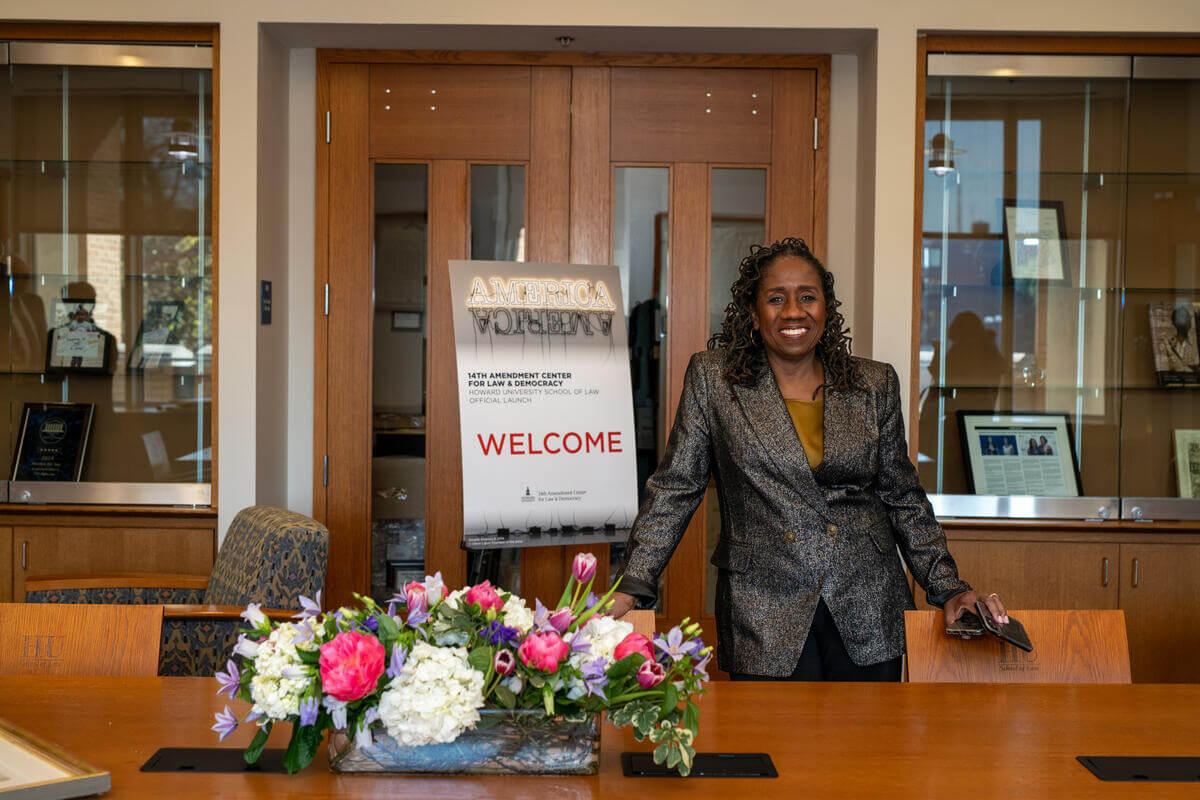
The brief — written with the help of Howard School of Law students — argues that the establishment of the Fourteenth Amendment was explicitly designed to guarantee citizenship to all individuals born on U.S. soil, with narrow exceptions only for children of foreign diplomats. The brief also argued that the Fourteenth Amendment was designed to ensure the United States could never legally recreate the oppressive, caste-like structures of the pre-Civil War era. Civil rights advocates warn that allowing an executive order or congressional statute to alter birthright citizenship risks entrenching a permanent, hereditary underclass.
The brief’s first half examines the original intent of the post-Civil War framers. Student researchers examined the legislative record of the Civil Rights Act of 1866 — Congress’s first attempt to codify birthright citizenship — to assess whether the law was intended to be universal. The second half offers a comparative international analysis, cautioning the Supreme Court about the predictable “caste-like hierarchies” that have emerged in countries where birthright citizenship has been curtailed by political regimes.
Ifill also connected the Trump v. Barbara decision to the United States’ semiquincentennial observation of the anniversary of the signing of the Declaration of Independence.
“Because we’re celebrating our 250th anniversary, this is why it’s so important not to just focus on the first founding of the country in 1776 and our constitution in 1789, but also to make sure you include our second founding because this country has evolved,” said Ifill. “I’m profoundly disturbed that [the decision] was as close as it was.”
Keep Reading
-
 Epiphanies, Discovery, and Research
Howard University Doctoral Student Receives Competitive Dissertation Fellowship, Examines Faith in Educational Experiences of Black Students
Sep 4, 2026 5 minutes -
 Global and Diaspora
Former President of Trinidad and Tobago Visits Howard University for Fireside Chat on Global Leadership
Sep 3, 2026 6 minutes -
 *Change Makers
Howard University Professor Explores Race and Media Literacy in Popular New Book
Sep 8, 2026 5 minutes