

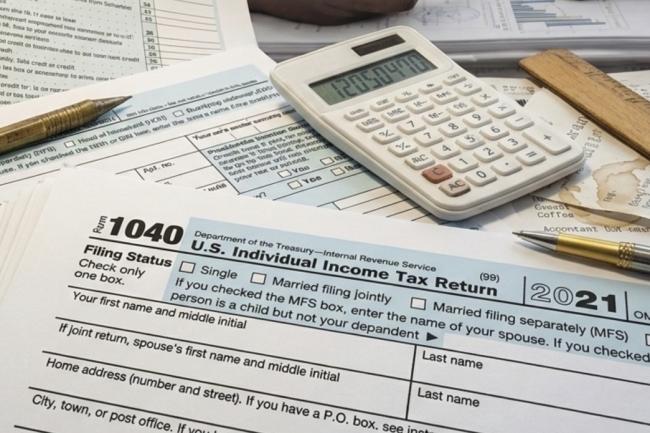
This tax season, Howard University is offering free tax preparation and financial support to District residents and eligible students through a series of on-campus and neighborhood service days designed to help families file accurate returns and claim refund checks.
The effort is part of the Volunteer Income Tax Assistance (VITA) program, housed in the Howard University School of Business’ Center for Accounting Education and operated in partnership with Community Tax Aid and the Internal Revenue Service (IRS).
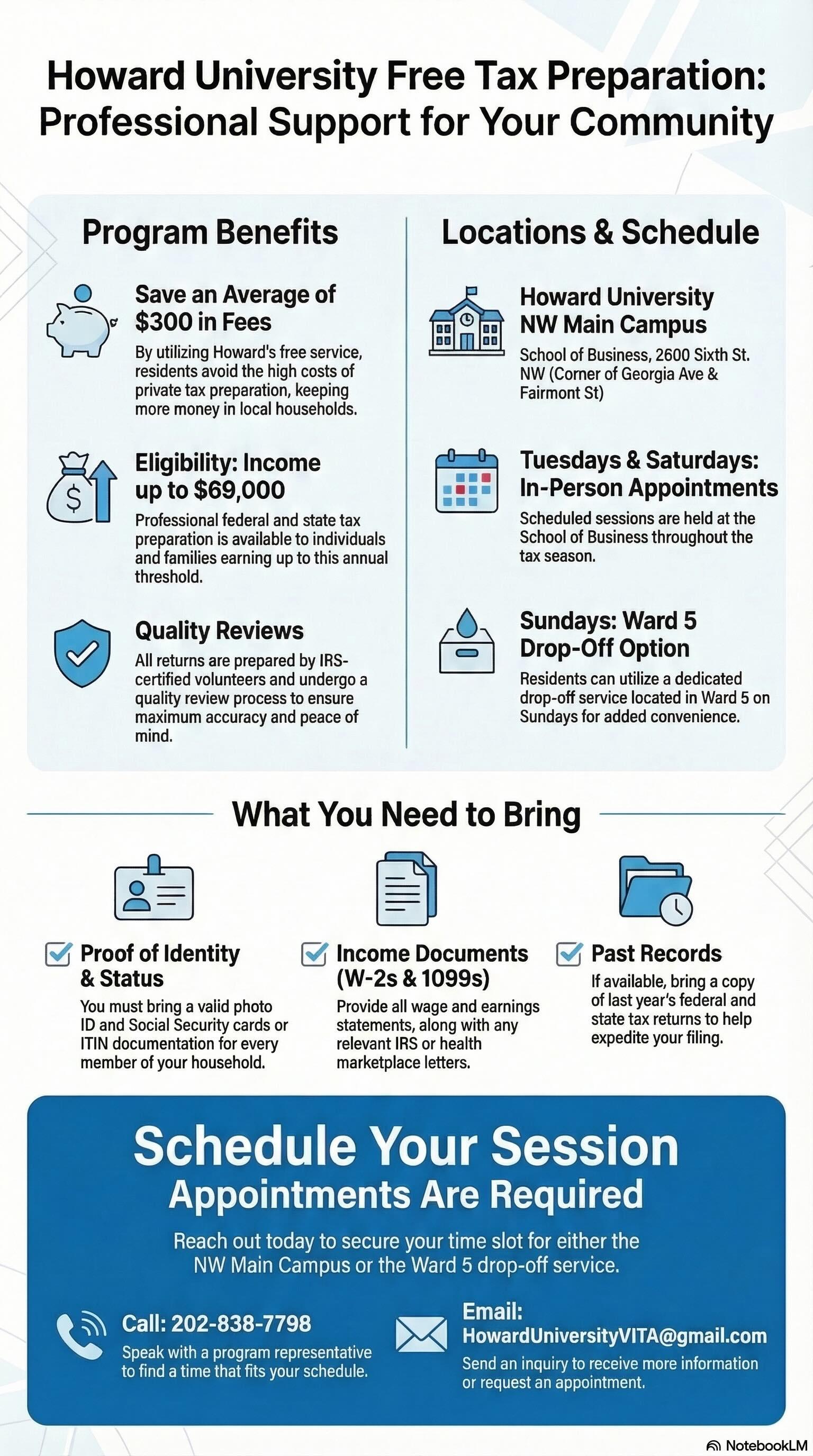
Through the partnership, IRS-certified student and professional volunteers provide free federal and state tax preparation to individuals and families earning up to $69,000, with appointments available on Tuesdays and Saturdays at the School of Business and a Sunday drop-off option in Ward 5. VITA will accept appointments through the end of the tax season, with the final day of operation on Tuesday, April 14.

Appointments are required and can be scheduled by calling 202-838-7798 or emailing HowardUniversityVITA@gmail.com. Services are offered at the Howard University School of Business, located at 2600 Sixth St. NW, at the corner of Georgia Avenue and Fairmont Street.
Participants must bring a valid photo ID, Social Security cards or ITIN documentation for all household members, all W-2s and 1099 forms, any IRS or health marketplace letters, and a copy of last year’s tax return if available.
Organizers say the VITA program reflects Howard’s motto, “Truth and Service,” by combining student training with direct community impact.
Andrea D. Smith (BBA ’06, MBA ’07), a site coordinator at VITA since 2008, said the program allows families to save, invest, and pay down bills.
“By eliminating preparation fees, which average nearly $300 for simple returns, the program helps families redirect funds toward rent, groceries, utilities and saving,” Smith said.
Since 2009, the tax preparation program has served hundreds of residents annually and grown steadily in demand. Through the service, clients secured a combined $667,000 in refunds and saved an estimated $90,000 in tax preparation fees.
Volunteers must complete more than 16 hours of annual training and earn IRS certification before preparing returns. A dual-tier training model supports both first-time and returning volunteers, and every return is reviewed for accuracy before filing by the program’s quality assurance supervisor.
Smith noted that recent federal tax legislation has introduced changes that may affect some filers, particularly D.C. residents, as local tax authorities determine how the updates apply to individual returns.
James Hodge, an accounting instructor who runs the VITA program through the Center for Accounting Education, said the program delivers both economic and educational impact. About 24 Howard students are volunteering this year, joined by alumni and professionals from federal agencies and private firms. The structure gives students practical workforce preparation while advancing Howard’s commitment to service.
“There’s an economic ripple effect,” Hodge said. “We’re returning refunds and saving preparation fees for families, while students gain practical experience navigating evolving tax laws and serving the community.”
In addition to tax preparation, organizers are expanding financial literacy programming this season, offering workshops and one-on-one coaching to help residents plan for long-term financial stability, retirement, and family financial goals.
Smith and Hodge said the program is prepared to accommodate additional clients and welcome increased community participation. Smith said the program reflects Howard’s broader responsibility to give back to the community. Just as other schools provide clinics and services, the School of Business provides free tax preparation and financial literacy support, she said.
The tax program also offers a drop-off location at Edgewood Commons, an affordable housing community in Ward 5 which serves low-income residents, the disabled, and senior citizens. These clients can schedule an appointment to submit their tax information and volunteers at Howard prepare their returns remotely. Clients then return to Edgewood Commons to sign their completed tax returns so they can be electronically filed.
Keep Reading
-
 *Community
A Backpack, a Fresh Start: Howard University Supports D.C. Students
Sep 29, 2026 3 minutes -
 *Partnerships
Marriott Leaders Bring Knowledge, Experience, and Advice During Howard University Student Visit
Sep 28, 2026 8 minutes -
 *Accolades
Howard University CEA Professor Sonya Smith Elected to AIAA Class of 2026 Fellows
Sep 28, 2026 3 minutes