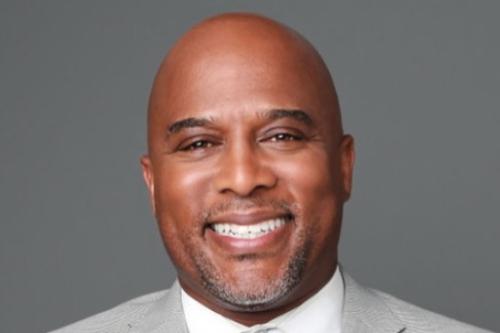

Howard University doctoral candidate Tribuana Jones was recently named as a 2026 recipient of the Louisville Institute Dissertation Fellowship award, a competitive funding opportunity that supports Ph.D. or Th.D. (Doctor of Theology) students whose research focuses on Christian faith and life, the practice of ministry, religious trends and movements, and religion and social issues.
Jones, a fourth-year Ph.D. student in Howard’s Educational Leadership and Policy (ELP) program, was one of 10 students selected to receive the Louisville Institute fellowship that provides awardees with a $35,000 grant to support their final year of dissertation writing. The award will support Jones as she completes her dissertation research titled “Sacred Souls in Secular Schools: Faith in the Educational Experiences of Black Youth in Urban Public Schools.” Jones’ research examines how Black adolescents in public schools are balancing their faith practices with their academic pursuits.
“The overall theme of the research is the negotiation of faith from Black adolescents in public schools,” said Jones, sharing that she’s exploring “the reasons why [students] can’t show up as their full selves and use their faith identity to regulate themselves.”
A Passion for K-12 Education
Jones, a native of D.C. who was raised in Chicago, Illinois, received her bachelor’s degree in sociology from Northern Illinois, and a Master of Arts in secondary education from National Louis University. She began her career working as an admissions counselor at Job Corp in Chicago and pivoted to teaching after discovering her passion for assisting young learners.
“I used to work at daycares, but I always felt more pulled and connected to adolescent students and high schoolers,” Jones said. “I was like, ‘I think I want to be a high school teacher,’ so I went back to school and got my master’s in teaching. I started working at Chicago public schools at Simone Career Academy which launched my teaching career.”
During her time as a teacher, Jones noted that she was drawn to working with and supporting Black students who came from lower-income communities. “I’ve always worked with these babies because that's where I’m from,” she said.
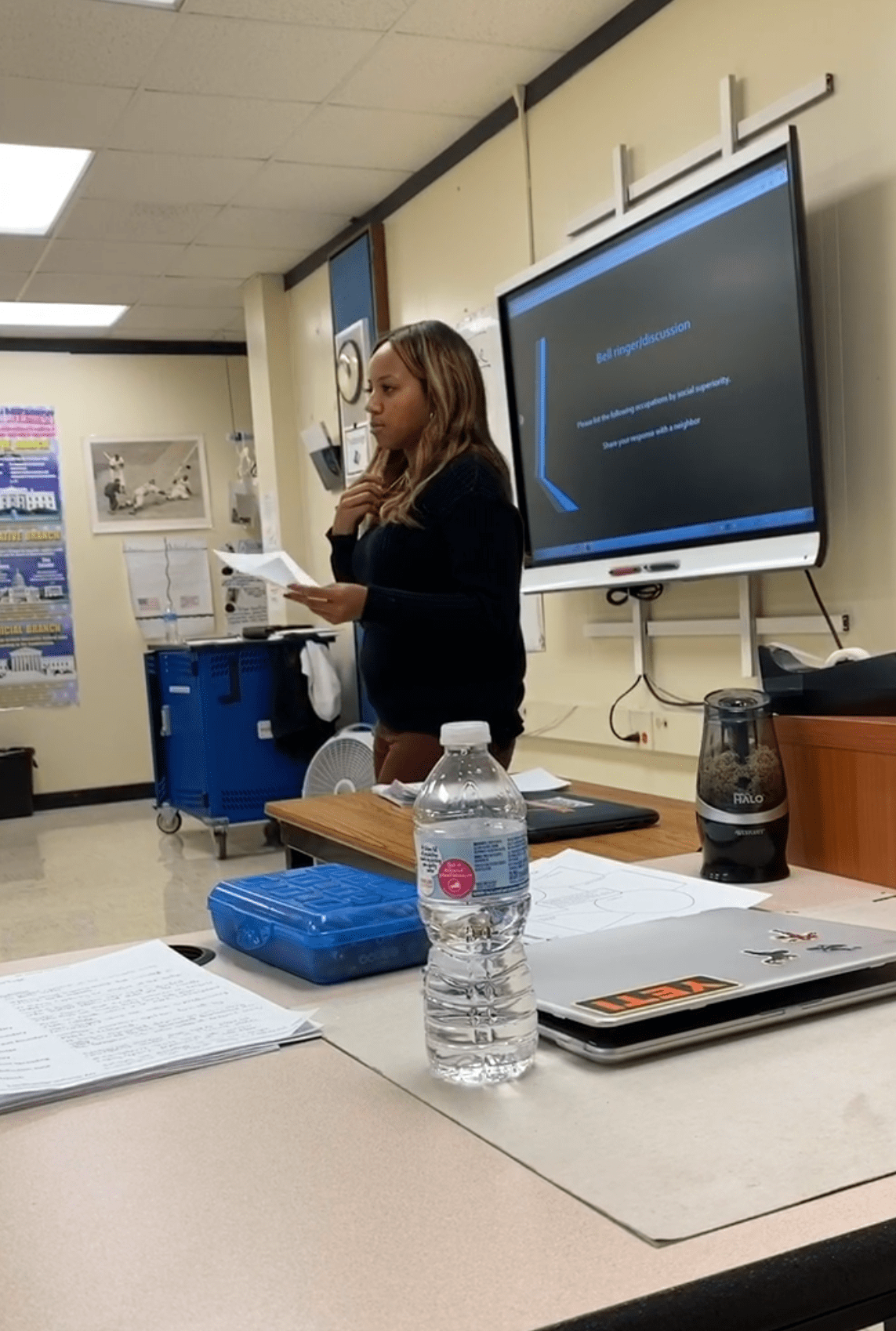
After enrolling at Howard and transitioning from Chicago to D.C., Jones continued working with K-12 students at schools such as Kramer Middle School and H.D. Woodson High School. Jones said it was a priority for her to continue supporting public school students who come from historically under resourced communities.
“I believe in public schools, and I believe in kindergarten through 12th grade systems,” Jones said. “I know it will never be perfect, but I've always seen the positive aspects of it. When I reflect on educators that invested in me and then being an educator that invests in the youth, especially Black youth, that’s always meant something to me. I deeply care about K through 12 education and about public-school education, especially as it pertains to the Black child and what will work best for them and not necessarily always centering things around what Black kids are not getting or what Black kids are suffering from.”
Exploring Spirituality in Secular Educational Environments
At the start of her time as an ELP doctoral student, Jones was initially interested in conducting research in educational technology (EdTech), a field she thought would be more financially lucrative for her future. However, Jones pivoted her research interest after she became more dedicated to her faith and spirituality practices.
“I didn’t grow up as a Christian at all. I was so far from that,” she said. “When I became a believer of Christianity, I started to see how kids would wrestle with their faith at school, especially my high school students. I remember one of my former bosses said, “You’re not passionate about EdTech. You’re passionate about your faith.’ So, I changed my research topic to address the negotiations of faith in Black adolescents' educational experiences.”
With her dissertation, Jones argues that faith is a central part of identity for many Black youths, shaping how they cope with adversity, pursue academic goals, and understand their place in school. However, public schools, especially those serving low-income communities, often marginalize or suppress religious expression. This, she explains, creates a cultural mismatch that many students may have to navigate daily. Jones uses the faithcrit framework, an emerging research methodology that examines the intersection of race and religion, to examine how faith identity develops across school and church contexts and how youth make sense of their spirituality within secular educational environments.

Jones found that there were significant gaps in current research that specifically examine faith and the educational experiences of children. She also realized that there were limited research methodologies tailored to Black adolescents. Jones created the “Black Youth Agency Methodology” that engages Black children in the research process in a comfortable, non-exploitative way.
“When we do the focus groups, if students want to lay on the floor or if they want to mess up the whole room, they can – whatever helps them best articulate themselves,” Jones said. “The methodology encompasses bonding between the researcher and the Black adolescent. My research has developed a methodology specifically for Black youth where they can take ownership of data collection. That’s something that I'm very grateful for.”
As a recipient of the Louisville Institute’s Dissertation Fellowship, Jones will have an opportunity to take part in the program’s winter seminar in January 2028 in which award recipients from three Louisville Institute programs share their projects and engage in valuable collaboration. She will also have access to coaching seminars and professional learning communities. Jones shared that upon completing her doctoral studies in May 2027, she hopes to transition into working at non-profit organizations where she can continue to be an advocate for Black children.
Keep Reading
-
 Artificial Intelligence
Howard University College of Engineering and Architecture Expands STEM Pathways with Transformative Summer AI and Robotics Programs
Aug 14, 2026 4 minutes -
 Artificial Intelligence
Howard University Researcher Kamilah Woodson Develops A.I.-Powered Platform to Expand Mental Health Support for Students
Jul 31, 2026 6 minutes -