

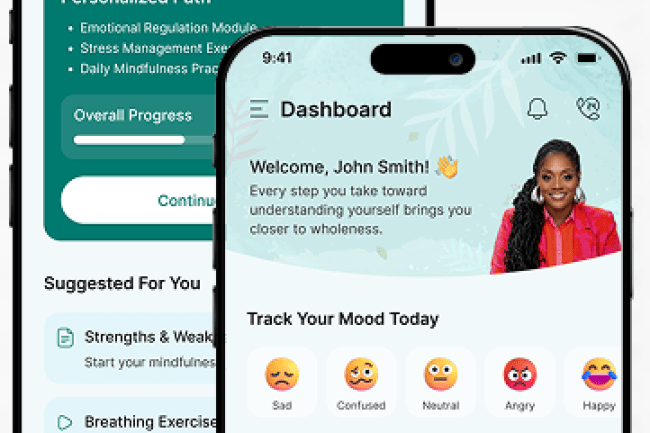
As colleges nationwide confront rising mental health challenges, Howard University psychologist, researcher, and professor Dr. Kamilah Woodson is developing an innovative approach that combines artificial intelligence, narrative therapy, and culturally responsive care to help students better understand their emotional experiences and rewrite the stories they tell about themselves.
The platform, Kamilah 2.0™, was inspired by what Woodson observed among students during and after the COVID-19 pandemic. As counseling centers struggled to meet growing demand, many students were navigating grief, anxiety, depression, trauma, and isolation without adequate support. For Black students in particular, those challenges often intersected with racialized stress, questions of identity and belonging, and longstanding barriers to mental health care.
Those barriers remain significant. According to the U.S. Department of Health and Human Services' Office of Minority Health, Black adults were 36 percent less likely than U.S. adults overall to receive mental health treatment in the previous year. Additionally, only about one in three Black adults who need mental health care receive treatment, according to the National Alliance on Mental Illness. Studies also show that Black adults are more likely to report serious psychological distress while facing disparities in access to culturally responsive care.
The challenge is particularly urgent for young Black men. Research published by the National Institutes of Health in notes that suicide is now the third-leading cause of death among Black male adolescents and young adults, while Black boys and men account for more than 80 percent of completed suicides among Black Americans.
For Woodson, those realities underscored the need for new approaches to emotional support.
"The inspiration came from seeing students carry invisible emotional burdens without adequate access to culturally responsive care," she said. "Many were struggling not only with mental health symptoms, but with the stories they had begun telling themselves about who they were and whether they mattered."
The Beginning of Narrative Therapy
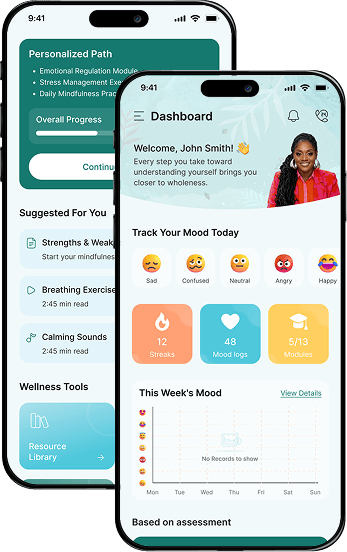
Dr. Woodson started her career at Howard as a psychologist in the University Counseling Center in 2001 early in her career. "This was the impetus for creating the Epiphany app as I understood the need for there to be a bridge to engage in treatment for students who need supplemental support, because the need for services is at an all time high at many HBCUs," she said. That observation became the foundation for Kamilah 2.0™, a platform built around the principles of narrative therapy. The therapeutic approach encourages individuals to separate themselves from their problems and examine the beliefs and assumptions that shape their identities. Woodson is now beta-testing the app until July 1, 2026 with a scheduled release for institutional licensing on September 1, 2026, before finally launching individual use in 2027.

Woodson believes the approach is especially effective for young adults because they are actively constructing their sense of self while navigating academic, social, and personal transitions. Students are constantly creating narratives about who they are, where they belong, and what their future holds. Those narratives can either reinforce feelings of shame and inadequacy or become sources of resilience and growth.
The platform uses AI as a reflective tool rather than a directive authority. Through guided journaling, emotional check-ins, mood tracking, psychoeducational content, and adaptive conversations, Kamilah 2.0™ helps users identify recurring thought patterns, externalize difficult experiences, and recognize strengths that may be overlooked.
"The AI doesn't tell users who they are," Woodson said. "Instead, it facilitates self-exploration through psychologically informed prompts, affirmations, grounding exercises, and narrative reframing techniques."
Privacy and Safety
The need for those safeguards has become increasingly evident as national conversations have emerged around the impact of AI on vulnerable users. Sadly, in 2024, the mother of a 14-year-old Florida boy filed a wrongful death lawsuit against Character.AI, stating that interactions with a chatbot contributed to her son's worsening mental health before his death by suicide, drawing national attention to the responsibilities of AI developers when engaging with young people in emotional distress. In the Epiphany App if someone were to mention harming themselves or others they would be connected to an actual human in realtime through the app to triage the case.
At the same time, organizations such as the National Institute of Mental Health (NIMH) continue to emphasize that suicide is a major public health concern and that individuals experiencing a crisis should be connected to evidence-based interventions and human support. These developments have reinforced the importance of strong safety protocols, crisis escalation measures, and clear boundaries around the role of AI in mental health care.
In addition to the safety protocols that come with the Epiphany app, all Howard University students can access The University Counseling Services online. The counseling center provides a variety of services to meet students' immediate mental health needs. Students can meet with a practitioner virtually or in-person.
"Universities can also can integrate the app into their current counseling and benefits offerings through a group plan, much like a group healthcare plan. To help with university programming, a counseling center designee will have access to a HIPPA and FERPA-compliant dashboard with data analytics and end-user safety protocols on the backend," said Woodson.
Finally, Epiphany was designed with privacy, security, and ethics at its core. User information is protected through a secure, HIPAA and FERPA-aligned infrastructure that keeps data encrypted and isolated. The platform operates within a closed system, meaning user interactions are not used to train public AI models. Epiphany also does not use advertising trackers, cookies, or third-party analytics tools that could share personal health information with advertisers.
Additional safeguards include strict consent requirements; enhanced protections for sensitive substance-use information; independent security audits; and ongoing oversight from clinical and ethics experts.
“The app is currently for college students; the safety protocols work in concert with university security and safety protocols,” Woodson explained. “There is also the requirement for GPS in case of emergency. If they mention any of the ‘unsafe words’ the app will notify help to keep them safe. Outside of that, its confidential.”
While no technology can guarantee complete protection from data breaches, Epiphany is committed to transparency and responsible data practices. Users have the right to know what information is collected, how it is used, and with whom it may be shared. They also have the right to access, correct, and delete their information. These protections represent the standard every mental health platform should meet, and Epiphany is being built to meet and exceed those expectations.
The Kamilah 2.0™ platform, which was built on a closed, ethically-governed framework rooted in psychological science and trauma-informed care, was intentionally designed with privacy and safety at its core. Features include secure data protections, crisis support resources, informed consent processes, and clinical oversight mechanisms. Woodson emphasized that the technology is not intended to replace traditional therapy practices but can be used to expand access to mental health support for students who may not otherwise receive it.
"I often describe the vision this way: Kamilah 2.0 isn't replacing therapy — it's extending care where none existed," she said.
The project also reflects Howard’s broader mission of developing solutions that address the needs of historically underserved communities. Woodson hopes the platform demonstrates that HBCUs can play a leading role in shaping the future of ethical AIand mental health innovation.
Ultimately, she sees Kamilah 2.0™ as more than a technology platform. It is an effort to make emotional support more accessible, culturally grounded, and responsive to the lived realities of students who too often navigate mental health challenges alone.
Keep Reading
-
 *Accolades
Howard University CEA Professor Sonya Smith Elected to AIAA Class of 2026 Fellows
Sep 28, 2026 3 minutes -
 Artificial Intelligence
Howard University Launches Its First AI Certificate Program for Undergraduate Students
Aug 20, 2026 4 minutes -
 *Change Makers
Howard University Trustee Arne Duncan’s Anti-Gun Violence Organization Takes the Spotlight in Documentary
Oct 2, 2026 6 minutes