

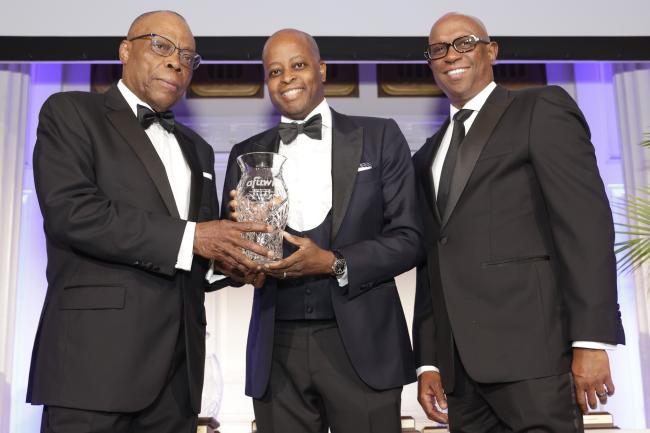
Above from left: George S. Willie (BBA ’72), Dr. Wayne A. I. Frederick, Trustee Donald B. Christian (BBA ’90). (Credit: The University of the West Indies)
When Wayne A. I. Frederick (B.S. ’92, M.D. ’94, MBA ’11), FACS, recently accepted the Caribbean Luminary Award from the American Foundation for the University of the West Indies (AFUWI) during its 29th annual “The Legacy Continues” Awards Gala, the recognition celebrated a career defined by excellence in medicine, higher education, and public service.
But the moment also illuminated a deeper Howard story — one rooted in a multinational legacy of scholarship, leadership, and Caribbean intellectual influence that extends across generations.
At the center of that story stands Dr. Eric Eustace Williams, the first prime minister of independent Trinidad and Tobago. His own scholarship and service helped shape modern Caribbean political thought, and his relationship with Howard University continues to resonate today.
For Frederick, a native of Trinidad and Tobago, the current Charles R. Drew Professor of Surgery, and Howard’s interim president and president emeritus, this latest honor represents more than personal achievement. It reflects a continuum of Caribbean leadership deeply intertwined with Howard’s mission to educate scholar-citizens prepared to lift humanity.
A Scholar-Statesman
Before Williams became one of the Caribbean’s most consequential leaders, he was a scholar whose intellectual journey passed through Howard University.
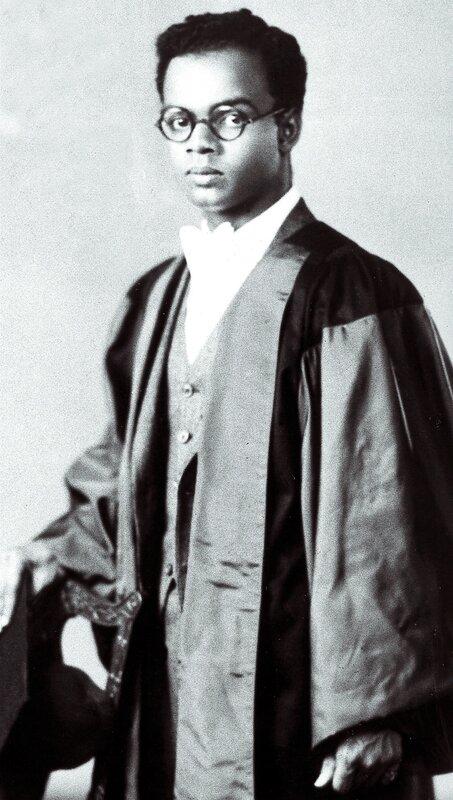
After earning a doctor of philosophy degree from the University of Oxford, Williams joined Howard’s political science faculty, where he further developed the historical scholarship that defines his intellectual legacy. While at Howard, he advanced the work that would become his landmark 1944 book, “Capitalism and Slavery,” an influential text examining the relationship among slavery, colonialism, capitalism, and the development of the modern global economy.
Williams challenged prevailing historical narratives, arguing that the transatlantic slave trade and enslaved labor played a central role in building European wealth and industrial expansion. Decades later, the work remains foundational for scholars examining economic inequality, race, and global power structures.
At Howard, Williams found a community committed to rigorous intellectual inquiry and Black liberation thought; a place where scholarship was expected to engage the world and ideas were inseparable from public responsibility.
The ‘Black Oxford’
Williams’ influence on Frederick was simultaneously intellectual and deeply personal.
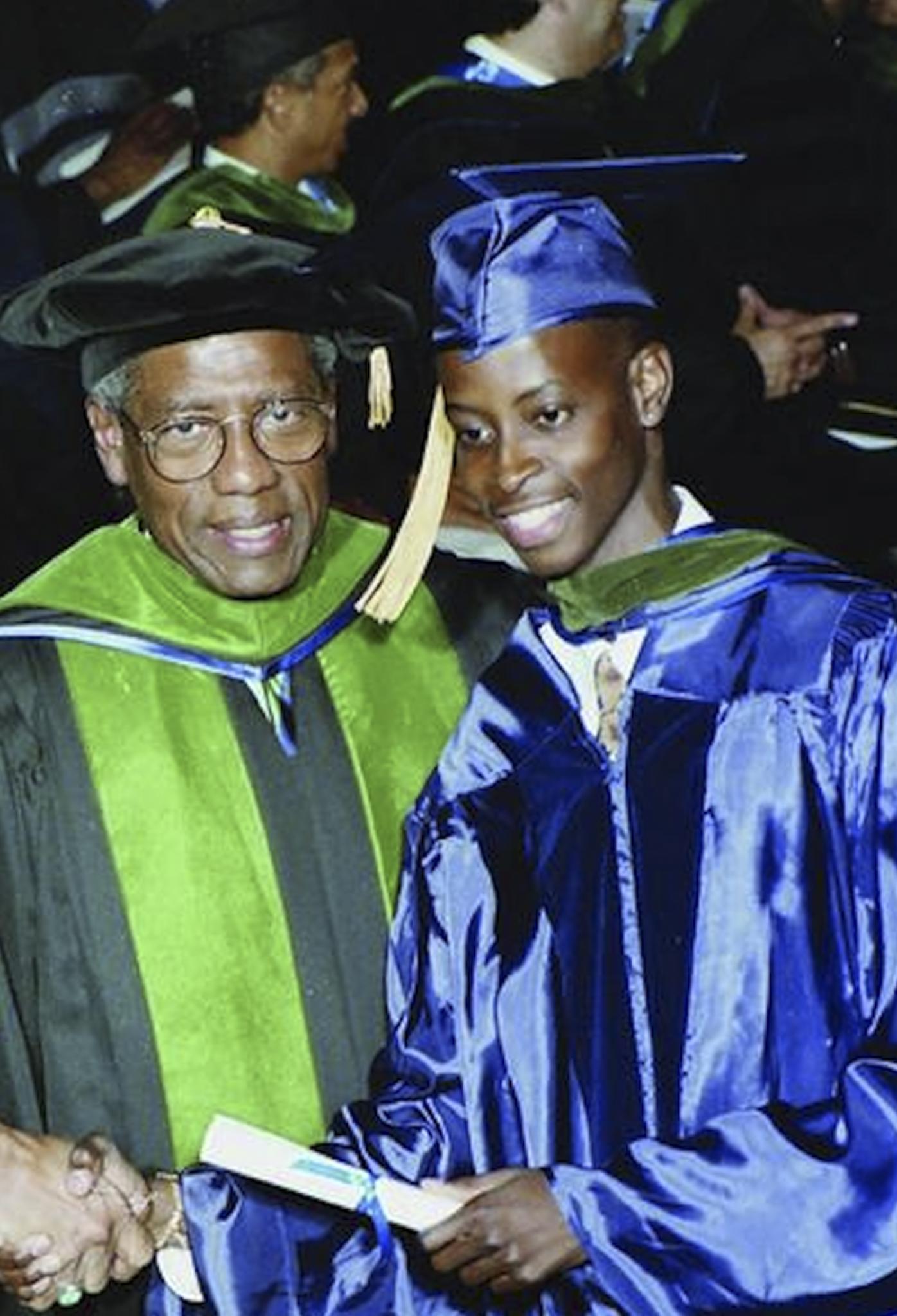
Growing up in Trinidad and Tobago, Frederick often heard Williams describe Howard as the “Black Oxford” — a place of rigor, possibility, and purpose. In reflecting on why he chose Howard, Frederick has spoken about the university’s outsized reputation throughout the Caribbean and Williams’ role in elevating its stature among generations of students.
Frederick has also noted the influence Williams had on his family and particularly his mother, who admired the social transformation Williams helped bring to Trinidad and Tobago and viewed Howard as a place where academic excellence met civic responsibility.
For Frederick, Howard represented more than higher education. It represented community, intellectual seriousness, and a broader commitment to service.
Arriving at Howard at age 16, Frederick would become a triple alumnus and later one of the university’s defining leaders — serving as surgeon, educator, provost, president, and now interim president and president emeritus. Across those roles, he has consistently emphasized equity, opportunity, and the responsibility to use knowledge in service to others.
Frederick’s trajectory mirrors the Howard tradition Williams embodied decades earlier: scholarship fused with leadership in pursuit of institutional and societal progress.
All carousel photography credited to the University of the West Indies (UWI).
Honoring Williams’ Legacy
Frederick’s Caribbean Luminary Award comes at a moment when Howard is preparing to deepen its formal recognition of Williams’ enduring influence.
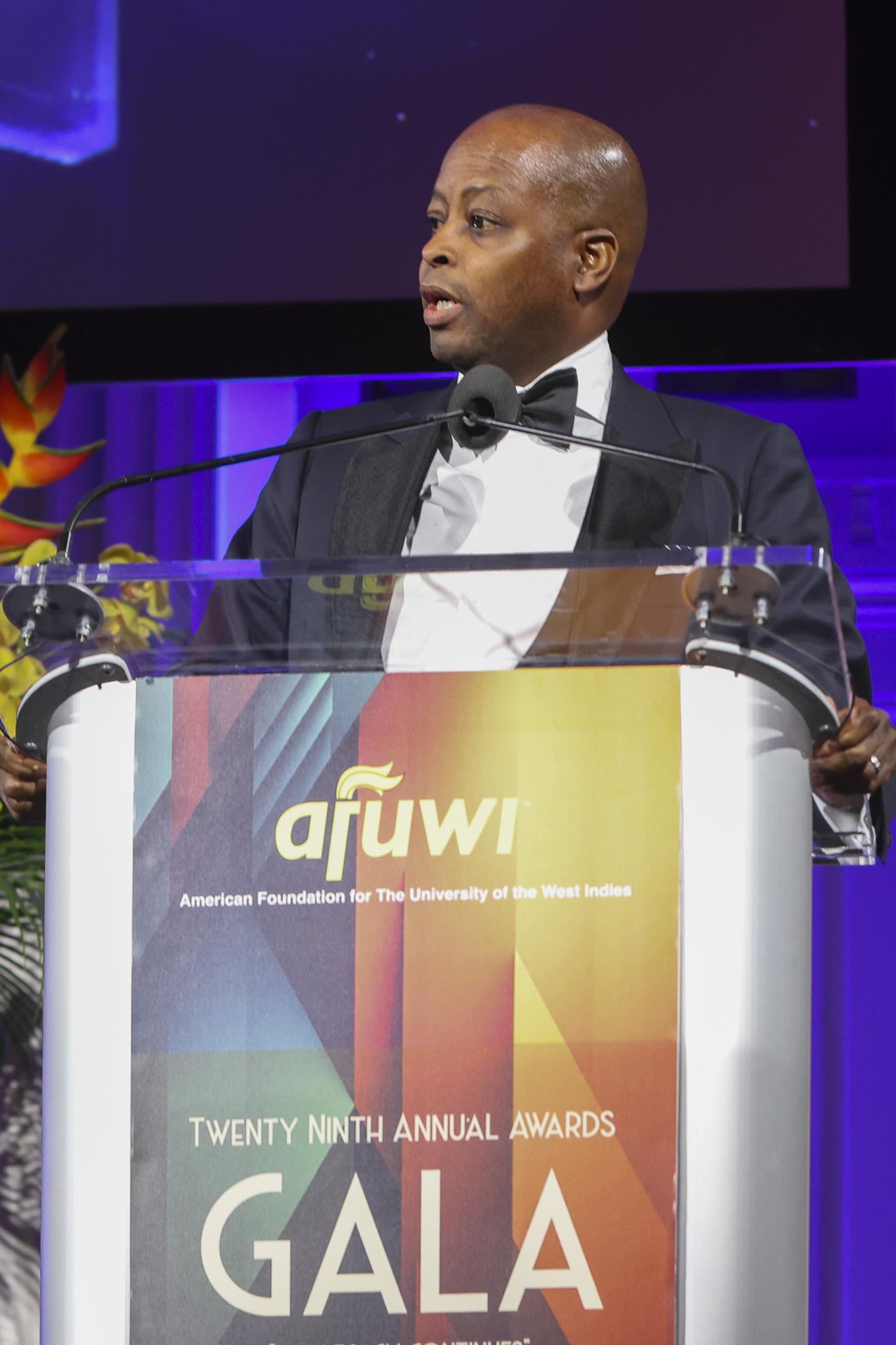
During his remarks at the gala, Frederick announced plans for Howard University to establish an endowed chair in Williams’ name beginning in fall 2026 — a lasting tribute to the legendary member of the Howard family whose work redefined global conversations about history, economics, and colonialism.
The endowed chair will honor Williams’ scholarship and leadership while advancing research and teaching aligned with Howard’s enduring mission: confronting inequality, illuminating historical truth, and preparing future generations to lead across communities, nations, and disciplines.
The initiative reinforces Howard’s longstanding role as a crossroads for global Black thought and affirms the university’s enduring connection to the Caribbean scholars and leaders who helped shape its identity.
In many ways, Frederick’s recognition by AFUWI is also a recognition of a larger Howard legacy — one carried across oceans and generations. From Eric Williams to Wayne A. I. Frederick, Howard’s Caribbean story is one of ideas transformed into action, scholarship translated into service, and leadership rooted in a belief that education can elevate not only individuals, but entire societies.
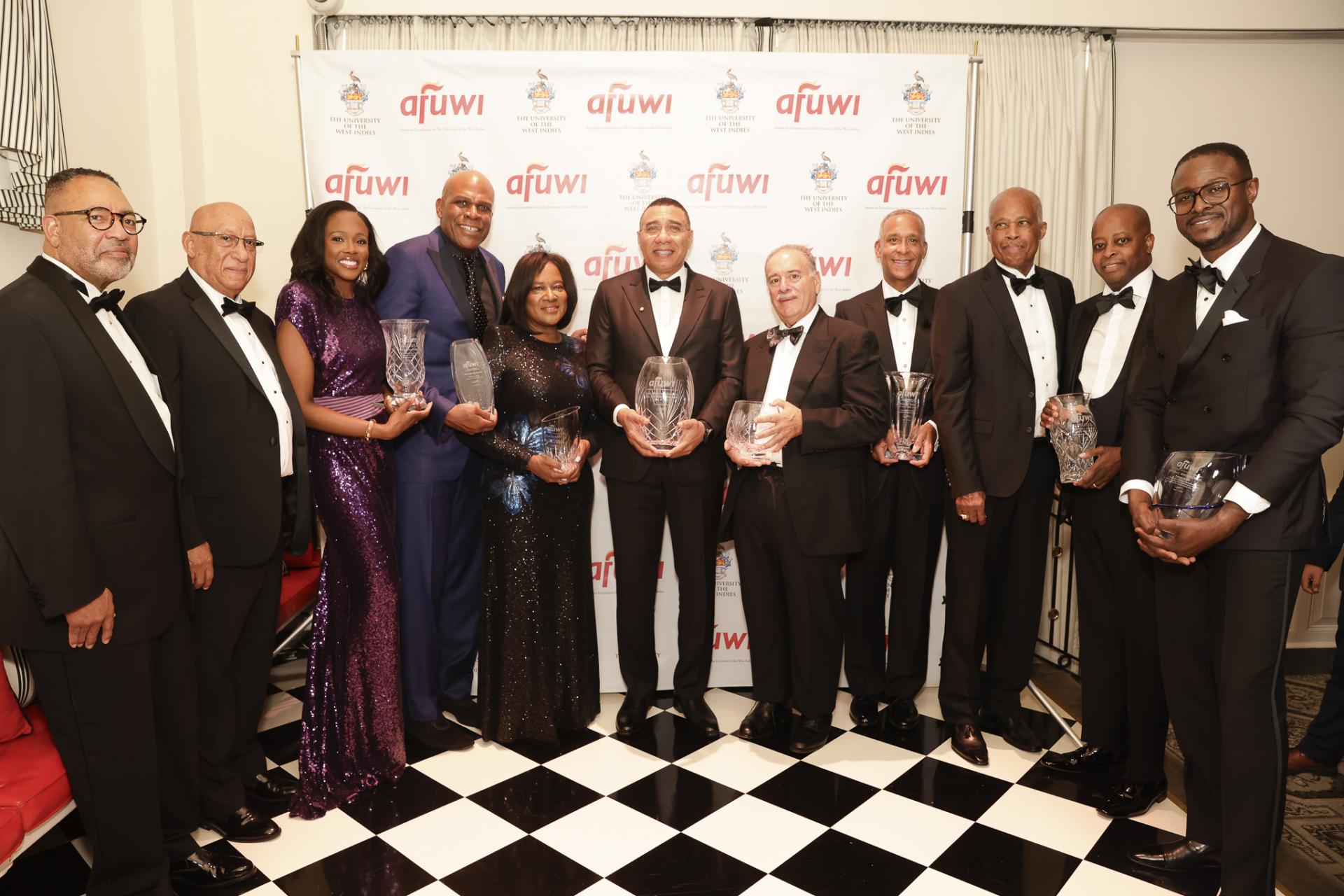
From left: Dr. Cyrus McCalla; The Most Honourable Dr. Dodridge Miller; Camille Joseph-Goldman; Gregory Belinfanti; Dr. Jacky Wright; The Most Honourable Dr. Andrew Holness; A. Norman Sabga; Dr. Wayne J. Riley; Sir Hilary Beckles; Dr. Wayne Frederick; Dr. Kevin C. Rhiney. (Credit: The University of the West Indies)
Keep Reading
-
 Legacy and Lineage
Howard University Honors Retirees, Inaugurates Academic Year at 159th Opening Convocation
Sep 25, 2026 6 minutes -
 Culture Creators: Arts and Entertainment
‘A Different World’ Stars Come Home to Howard Ahead of Netflix Sequel Premiere
Sep 25, 2026 4 minutes -
 *Legacy and History
Cathy Hughes School of Communications Honoring Legacy Through ‘55 for 55’ Celebration
Oct 15, 2026 4 minutes