

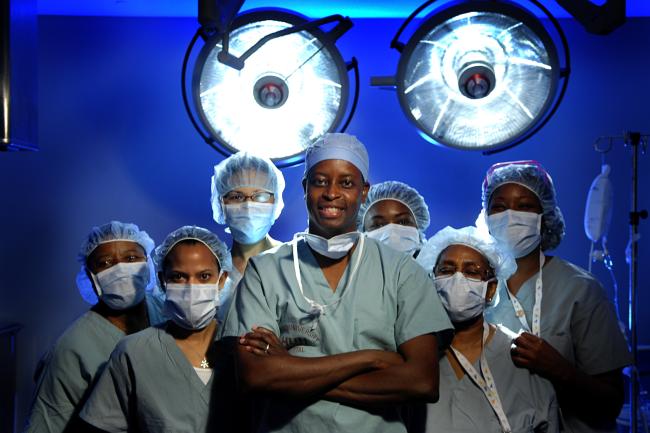
When Wayne A. I. Frederick (B.S. ’92, M.D. ’94, MBA ’11) retired from Howard University’s presidency in August 2023, he was focused on rest, relaxation, and a break from institutional responsibility.
Two years later, he returned as Howard’s interim president, off a nine-month stint as the interim chief executive officer of the American Cancer Society (ACS), the largest non-government, nonprofit funder of cancer research in the United States, and its affiliated Cancer Action Network, the ACS-based nonprofit whose efforts are targeted at specific cancer-related issues.
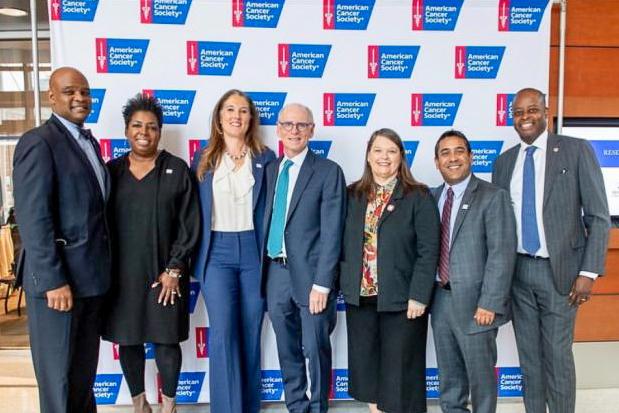
On this World Cancer Day (Feb. 4), that arc lands with particular resonance — not as a detour from higher education, but as a reminder that Howard leaders often serve across the full ecosystem of public purpose: from classroom to clinic, from institutional stewardship to national mission.
For Frederick, the thread connecting those roles is consistent: Cancer care is deeply human, outcomes are shaped by systems, and progress requires both academic knowledge and values-driven leadership.
A Discipline Transformed
As a neophyte in medicine, Frederick was first trained by former Department of Surgery chair and legendary surgical oncologist LaSalle D. Leffall Jr. (M.D. ’52) before he began his professional career as an associate director of the cancer center at the University of Connecticut. His experiences as both student and teacher help him remain attentive to how oncology evolves scientifically, clinically, and culturally — his observations less about tools and more a window into how medicine itself has changed.
“Technology is constantly advancing, and interacting with young people as a result of those changes has been very different,” he said.
That progress has also changed how prepared these students arrive to the domain. Frederick noted that younger people increasingly matriculate into medicine and oncology with broader baseline knowledge than earlier generations, a byproduct of earlier exposure to evolving standards of care.
As Frederick sees it, that reality is both a challenge and an opportunity for Howard to prepare learners who arrive informed, curious, and eager. Howard also guides them toward sound judgment and the capacity to navigate complex systems without losing sight of the person at the center of every diagnosis.
“The disparities that occur with cancer outcomes for underrepresented minorities is significant, and [Howard has] been at the forefront of highlighting that,” Frederick said. “It’s important.”
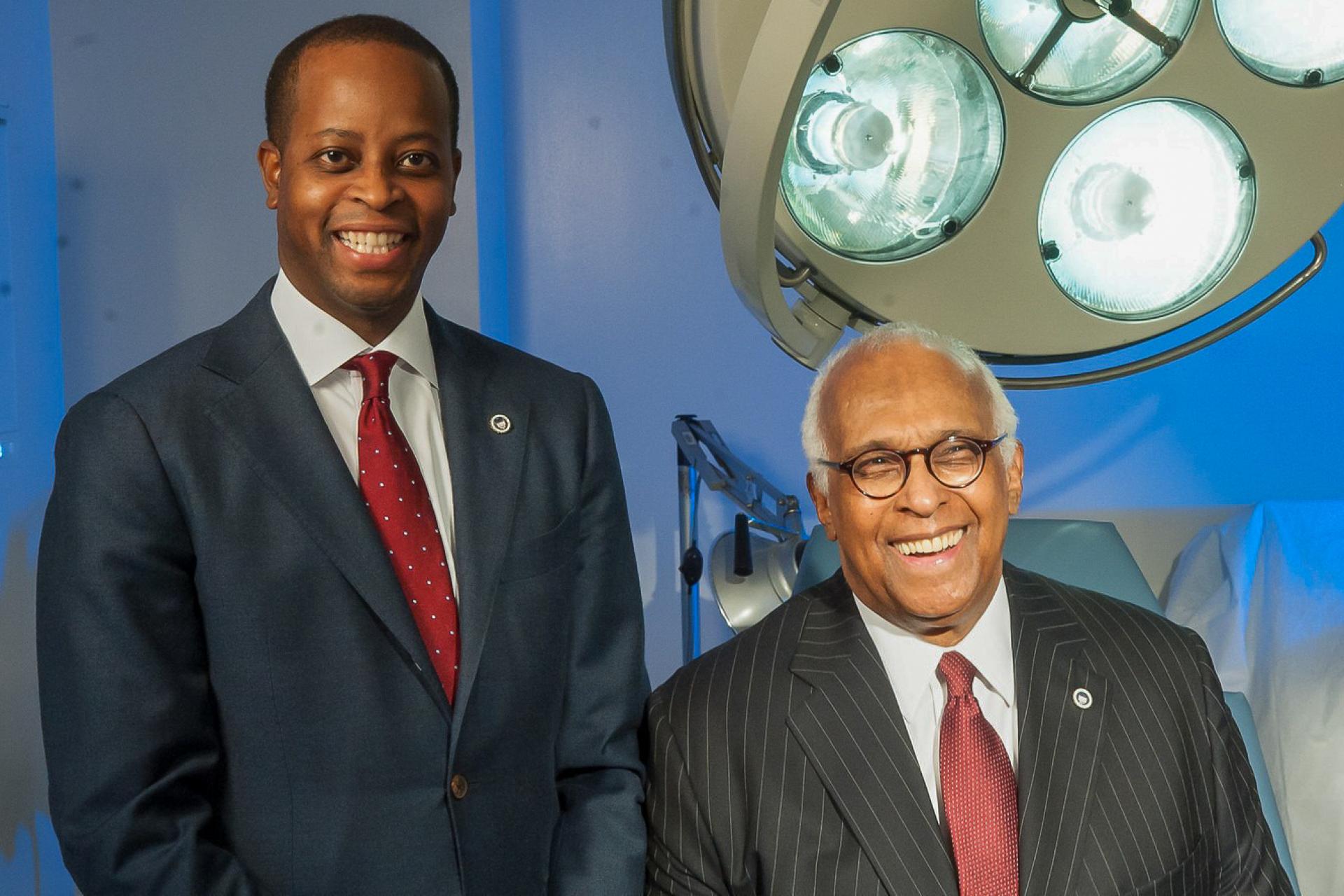
Frederick with mentor, former Department of Surgery chair, and legendary surgical oncologist LaSalle D. Leffall Jr. (M.D. ’52).
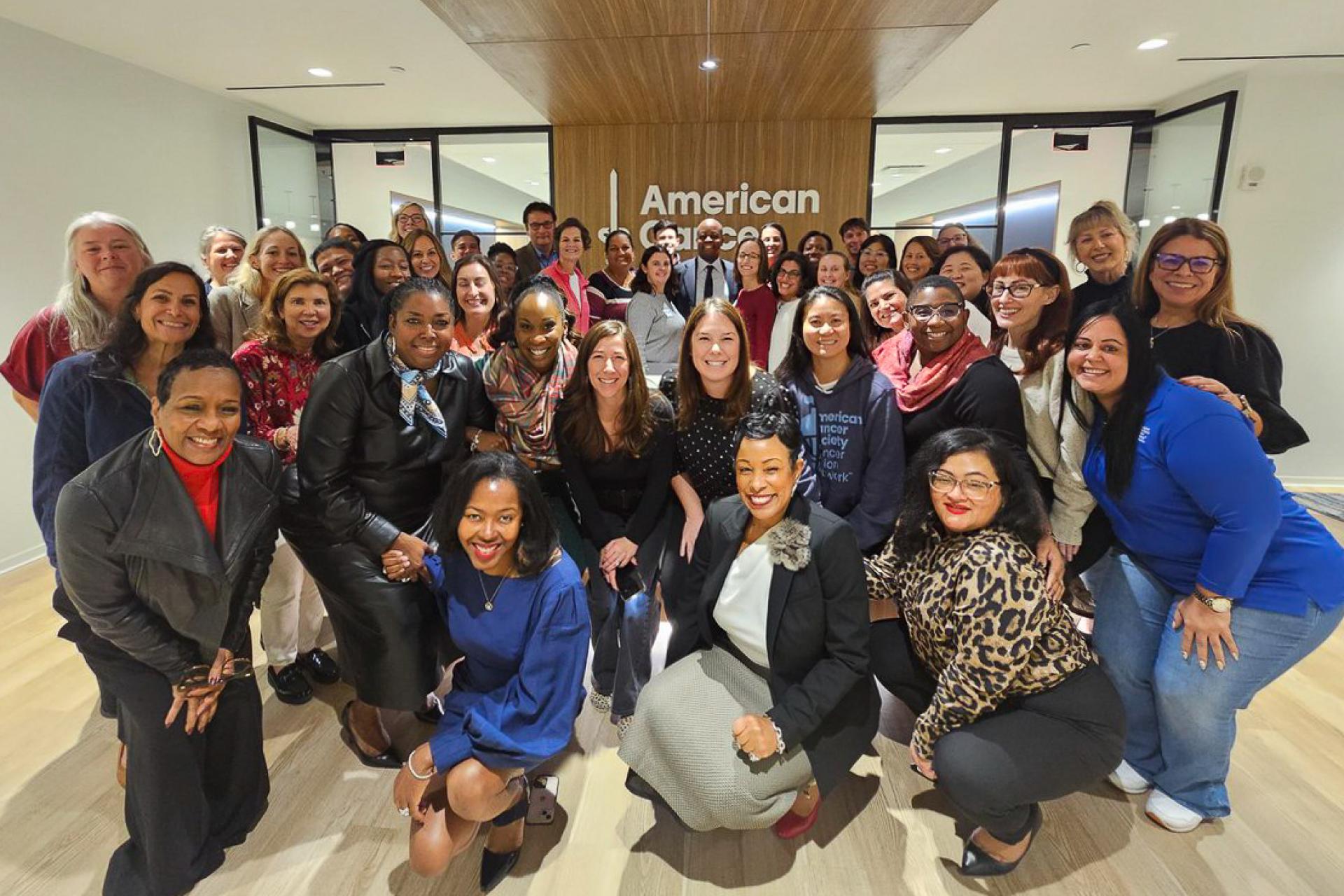
Frederick with the ASPIRE Leadership Academy as American Cancer Society’s interim CEO. (Tawana Thomas Johnson/X)
From the Operating Room to the Boardroom
A distinct perspective has shaped Frederick’s ACS tenure and overall executive career: he remains a practicing oncologist. As he explained, the relationship between clinical work and executive leadership is continuous and never disparate.
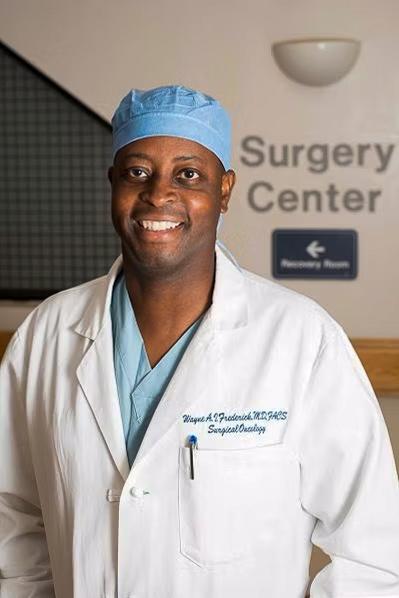
“You’re leading a team, and I would say you’re taking that experience from the operating room to the board room,” Frederick said. “Being in charge of the team, making sure everybody contributes, making sure everybody’s appreciated when they do contribute, making sure you intervene on crises.”
Shortly after his interim CEO tenure, ACS announced a new investment of $43.2 million in cancer research grants, with awards that went into effect Sept. 1, 2025, or would begin in the weeks and months that followed. Altogether, ACS is funding 92 new grants at 69 institutions across the country, achievements all under Frederick’s stewardship.
Yet when asked about his greatest achievement, Frederick emphasized something that can’t be captured by a dollar figure alone: culture. While cancer is a scientific and financial challenge, it is also a human one shaped by whether systems treat patients and communities with dignity. He found that in a mission-driven organization like ACS, the infrastructure determines whether excellence is repeatable and whether people can sustain the work.
“ACS has great people, and I think I was able to get them to appreciate the great people that they have,” Frederick said. “Evolving and making [ACS] even better meant ensuring that the effort to get better never gets blunted when you’re already doing good.”
Frederick’s return to Howard after leading a national organization like ACS reframes the idea of “interim” leadership. His service — at ACS, Howard, and myriad service organizations across America — underscores what the university has long been chartered to do: educate, advance knowledge that improves lives, and serve as a trusted voice for those often underserved.
For Frederick, interim stewardship is not a pause; it represents a responsibility to strengthen an institution’s systems, people, and momentum.
“You have to keep the organization moving, so that it is a great place to come to work,” Frederick said. “You should never just be in a holding pattern, trying to keep the stewardship of something for somebody else to come into. You should constantly be trying to move it forward.”
Keep Reading
-
 *Research and Discovery
Howard University Study Links Medicaid Expansion to Lower Breast Cancer Deaths
Oct 6, 2026 5 minutes -
 *Accolades
Howard University CEA Professor Sonya Smith Elected to AIAA Class of 2026 Fellows
Sep 28, 2026 3 minutes -
 *Upgrade
PunchOut Opens at Howard's Blackburn University Center with New Tastes, Fresh Look
Oct 19, 2026 4 minutes