

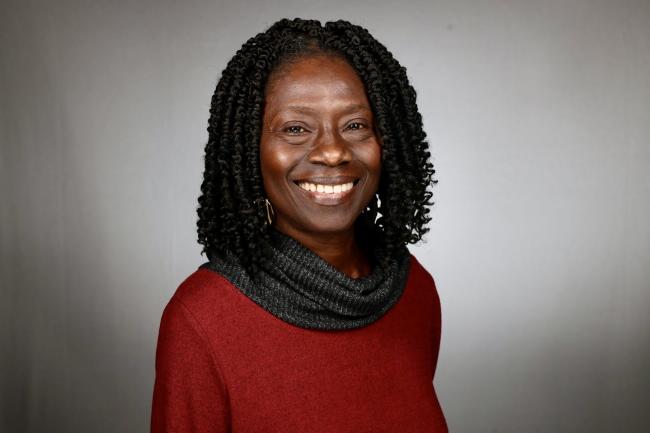
Many academic fields underrepresent Black and African women, but few stand out as starkly as economics.
“Economics has a gender problem, and it has a race problem,” said Howard University economics professor Elizabeth Asiedu.
According to the American Economic Association, only three Black/African American women earned a Ph.D. in economics in the 2022-2023 academic year. Although there is no reliable global count of women of African descent with Ph.D.s in economics, the available data suggests that number may be low.
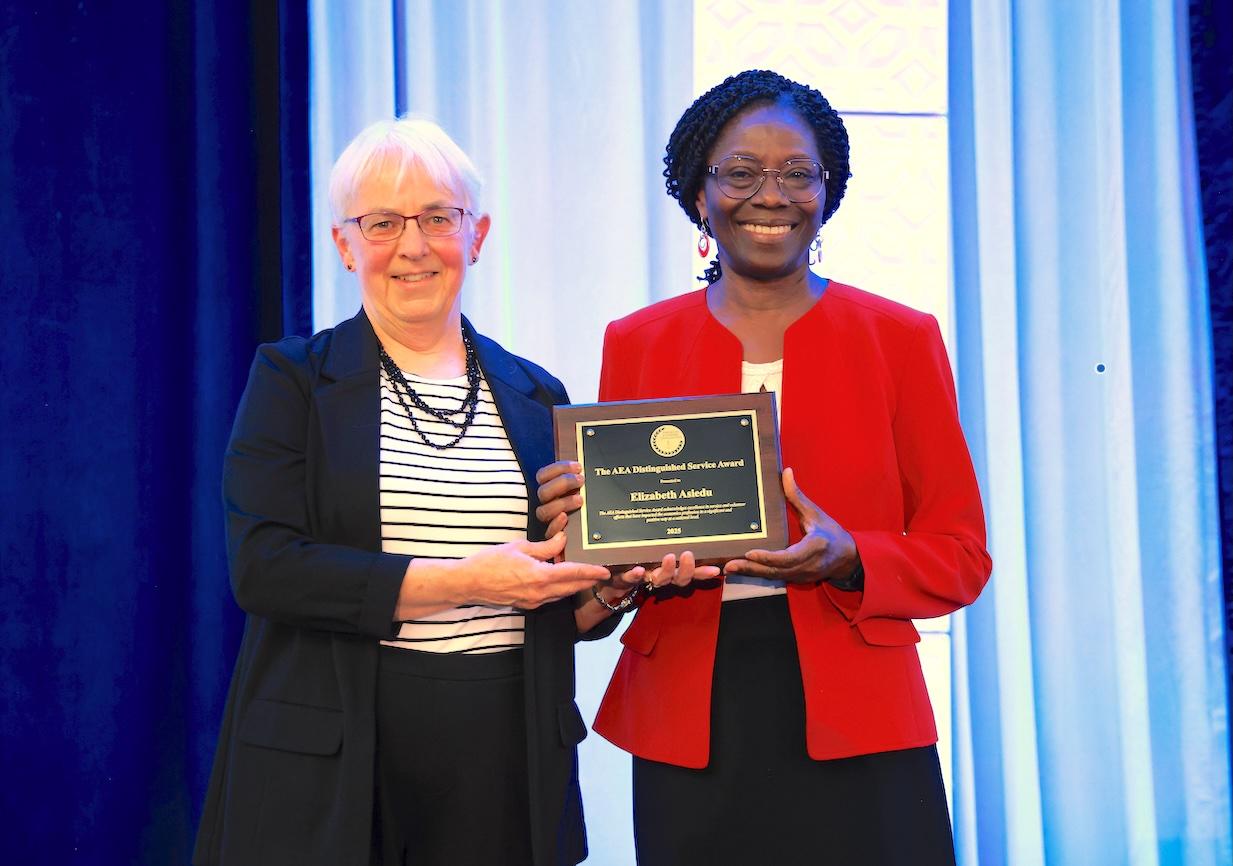
Confronted with isolation and underrepresentation, 15 years ago, Asiedu acted, creating a space specifically for African women economists: the Association for the Advancement of African Women Economists (AAAWE). Asiedu’s work in developing the organization, which she launched with a home equity loan, earned her the American Economic Association Distinguished Service Award for 2025.
The AAAWE is a global network dedicated to supporting and connecting women of African descent in economics. Over the years, AAAWE has grown significantly, now bringing together more than 1,200 members across 67 countries. Through conferences, training programs, and partnerships with institutions such as the World Bank, the organization has become a key hub for collaboration and support, fostering a more inclusive pipeline and a sense of community.
A Sense of Isolation
Asiedu grew up in Ghana with a mother who was an elementary school teacher. She completed her undergraduate studies at the University of Ghana at Legon, majoring in computer science and mathematics. The isolation for Asiedu began early.
In Ghana, she was the only woman in her cohort of about 100 students.
“I was the only one,” Asiedu recalled. “I remember thinking, ‘It would be nice to have a role model, someone who looks like me.’ There was definitely a sense of isolation, but for me, the lack of role models was even more important.”
Asiedu came to the United States in 1990 for graduate school at the University of Illinois at Urbana-Champaign. She started in the mathematics department, earned a master’s degree, and then transferred to economics, where she earned a Ph.D. After graduating, she joined the University of Kansas in 1998 as an assistant professor. In both Illinois and Kansas, she found herself in a similar position, but the isolation was no longer just about being a woman, now it was also compounded by race.
“In the U.S., nothing prepared me for the importance of race,” she said. “At the University of Illinois Math department, there were about 200–300 graduate students, and I was the only Black female. I’m not even sure there had been anyone before me. At the University of Kansas, I was the only female of color in the department.”
Founding the Association for the Advancement of African Women Economists
In 2021, Asiedu became a faculty member at Howard. To counter feelings of isolation, Asiedu became involved in professional organizations such as the Committee on the Status of Women in the Economics Profession (CSWEP), the National Economic Association, and the African Finance and Economic Association. The groups provided mentorship, community, and helped her understand the unwritten rules of the field.
Still, she saw a gap in the industry. None of these spaces were designed specifically for African women economists. Therefore, in 2012, Asiedu set out to change that, founding AAAWE. The goal was to create a space for connection, mentorship, and support.
“It’s about not being alone,” she said. “I found out that the were many women in situations similar to what I was facing, both in the diaspora and on the continent.”
At the time, the organization had no resources, and Asiedu had two young children and was working as a full-time faculty member. Building AAAWE would require an attorney, an accountant, and a website. Costs were adding up. In the end, she decided to take out a home equity loan to get it off the ground.
“My husband said, ‘Just do it.’” More than a decade later, she says the decision has absolutely paid off.
Now, at Howard, Asiedu is proud that she's realized her vision of serving as a role model and source of encouragement for underrepresented students.
“Howard has been fantastic,” she said. “Every student I meet is an opportunity to offer encouragement, make clear the economics is not that hard, and show them that someone like them can really do this.”
###
Keep Reading
-
 News
NewsFor Howard Students and Faculty, International Women in Engineering Day Is Everyday
Jun 23, 2026 4 minutes -
 Epiphanies, Discovery, and Research
College of Engineering and Architecture Students Supply Water to a Kenyan Community and Earn National Recognition
Jun 23, 2026 5 minutes -
 Epiphanies, Discovery, and Research
Climate-Change and Gender-Based Violence: Howard University Panel Discusses How Climate Crises Can Put Women and Girls at Increased Risk for Violence
May 4, 2026 9 minutes