

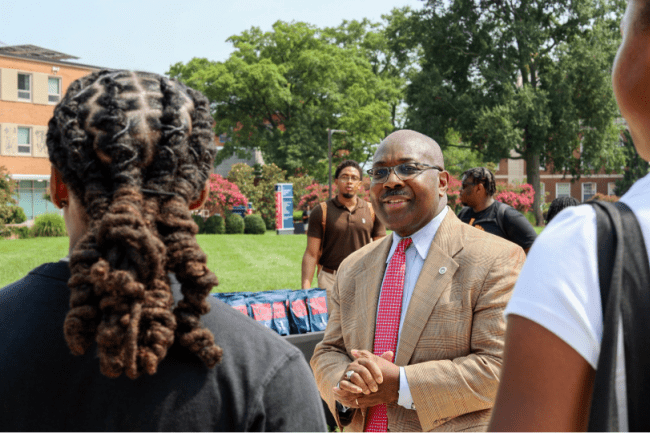
With the start of the 2026-2027 academic year commencing on Aug. 17, Howard University students have extra reasons to feel special about their Bison Pride. Forbes magazine has ranked Howard No. 1 in its first-ever “America’s Top HBCUs” list.
The report places Howard, the first and only HBCU with a Research One (R1) Carnegie Classification, at the top of their chart among other private HBCUs on the list including Xavier University, Morehouse College, Spelman College, Tuskegee University, Fisk University and Hampton University. Public HBCUs are ranked separately by Forbes. Factors that impacted the rankings include student outcomes, graduation and retention rates, alumni earnings, student debt, and more.
If Howard’s No. 1 ranking has a familiar ring to it, it is for good reason. Forbes previously reaffirmed Howard’s shining star status as the highest-ranked private HBCU in 2023 and 2024 on its broader list of “America’s Top Colleges” before HBCUs were ranked on an exclusive list.
Concurrently, Linkedln released its list of top HBCUs with Howard commanding the No. 1 spot, again a position seen previously on the career and professional networking platform. Linkedln ranks schools on how swiftly graduates secure full-time roles and move into leadership positions.
Wayne A. I. Frederick (B.S. ’92, M.D. ’94, MBA ’11), interim president, president emeritus, and Charles R. Drew Professor of Surgery, said: “While we are grateful for these distinctions, our greatest measure of success remains our commitment to excellence in fulfilling our enduring mission of 'Truth and Service.' That commitment is reflected in the academic experience we provide, the scholarship and research of our faculty, the success of our students and graduates, and the extraordinary impact Howard continues to have on our nation and the world. Recognition from respected organizations such as Forbes and LinkedIn affirms what can result when we remain steadfast in our mission, uphold the highest standards of excellence, and prepare the next generation of leaders to serve, lead and help shape a better future.”
Focus on Academic Excellence
Anthony K. Wutoh, Ph.D., R.Ph., Howard’s provost and chief academic officer, said topping a list like “America’s Top HBCUs” in Forbes is never the University’s goal, though when it occurs naturally, it’s appreciated. He said the No. 1 ranking is a reflection of the hard work being done at Howard for decades, and more recently under the tenure of Frederick.
“We’ve really had a focus on academic excellence and ways that we can create new, unique and innovative programs that would be of interest to really bright students, as well as preparing students to lead nationally and internationally,” said Wutoh, who credited faculty as well. “Our excellent faculty has been doing incredible work for quite a number of years now, doing excellent research, engaging in the community and teaching at a high level. That really has been the hallmark of Howard’s history and tradition.”
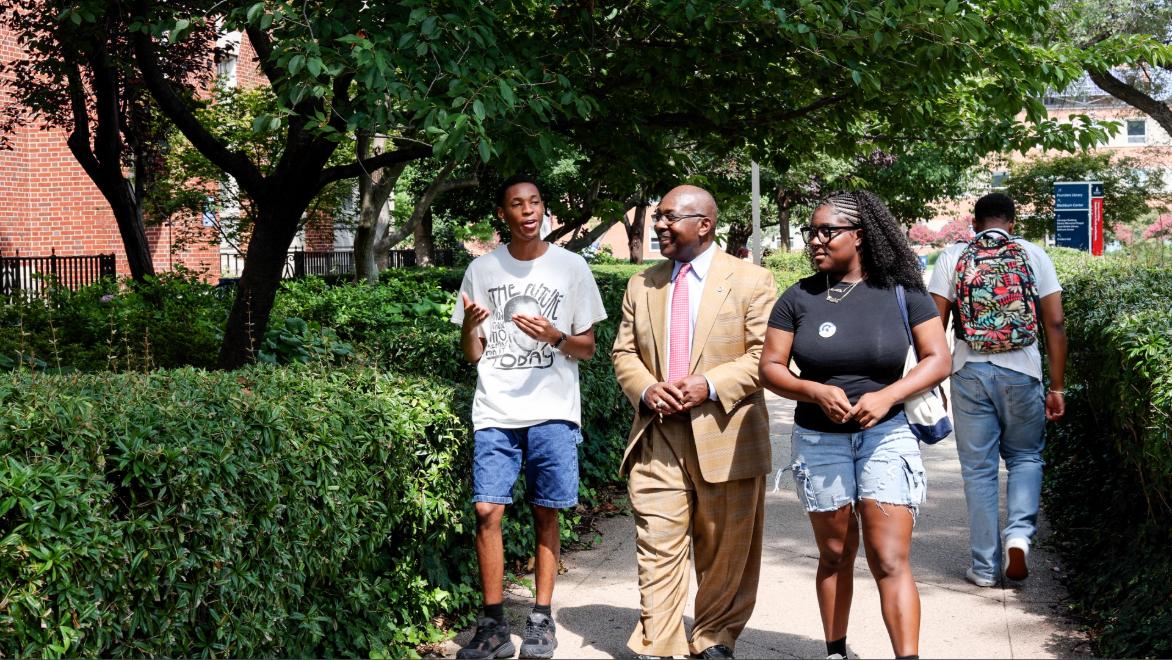
Wutoh continued, “We certainly appreciate and are honored when these rankings list us highly. Depending on where we are, I try to have an even approach to rankings. Certainly, most rankings have us listed high at number one or number two for HBCUs, and I know we’re in the top 100 of national universities. But, it’s more an outcome of doing the right thing and doing things that are going to make our students progress and develop.”
The provost looked at the various factors on Forbes’ list that the publication took into consideration leading to Howard’s No. 1 ranking; factors likely to keep Howard in the top spot in the future. He expounded on several of them including the University’s graduation rates and retention rates. He said graduation rates are currently at 70% and rising.
“One of the things that has been a priority of President Frederick is for us to improve our graduation rates as much as possible,” said Wutoh. “We’ve had a steady increase in our four-year graduation rate and in our six-year graduation rate, and we think it’s a reasonable expectation that when young people go to Howard or any other institution, they should be able to graduate in four years.”
To accelerate that process to under four years, he mentioned the University has created programs, including several three-year programs.
“We really want to have our graduation rate exceeding 80% to 90%. So that’s going to be an ongoing goal for us.”
The University’s first-year retention rate is over 90%, “but we certainly want to see it even higher. Ideally, we’d have a first-year retention rate of over 95% but that is also an indicator of how our students are going to progress towards graduation. Higher retention rates particularly among first and second-year students are going to result in higher four-year and six-year graduation rates, which is one of our big goals.”
Howard’s ability to produce world-class leaders in a number of areas including public service, law, government, business, the arts, journalism, medicine, science, sports and more key to the ranking. Most famous on the esteemed list of recent leaders is the 49th Vice President of the United States, Kamala Harris (B.A.’86).
“One of the things that has been a constant theme throughout Howard’s history,” said Wutoh, “is that we’ve attracted really bright and talented students. Our students come to Howard with a set of skills and talent, but I think what Howard then does is provide them the opportunity to strengthen those skills and develop leadership skills. We expect that when our students graduate, they won’t just be performers in various fields. They will be leaders.”
Wutoh pointed to a number of new and innovative programs at Howard as examples that highlight its academic success, another essential underlying factor in the Forbes ranking. He named programs such as the Karsh STEM Scholars Program, the Humanities & Social Sciences Scholars Program, new programs in data science, and various honors programs. Wutoh also referenced online programs designed to provide opportunities to students who are interested in the Howard experience but don’t live in the area, such as the Online Master of Social Work, the M.S. in Applied Data Science and Analytics, and the Bachelor of Human Development degree completion program that saw its first cohort of students graduate in 2026.
One of the big initiatives moving forward prioritizing academic success is a focus on artificial intelligence, including a new Fundamentals of AI Certificate program open to juniors and seniors. He said by next year it will be open to graduate and professional students.
“We are creating programs to make sure that our students remain at the forefront. As they complete their Howard degrees, they are well positioned to be successful in the work force, graduate or professional school or wherever they choose to apply their Howard degree,” said Wutoh.
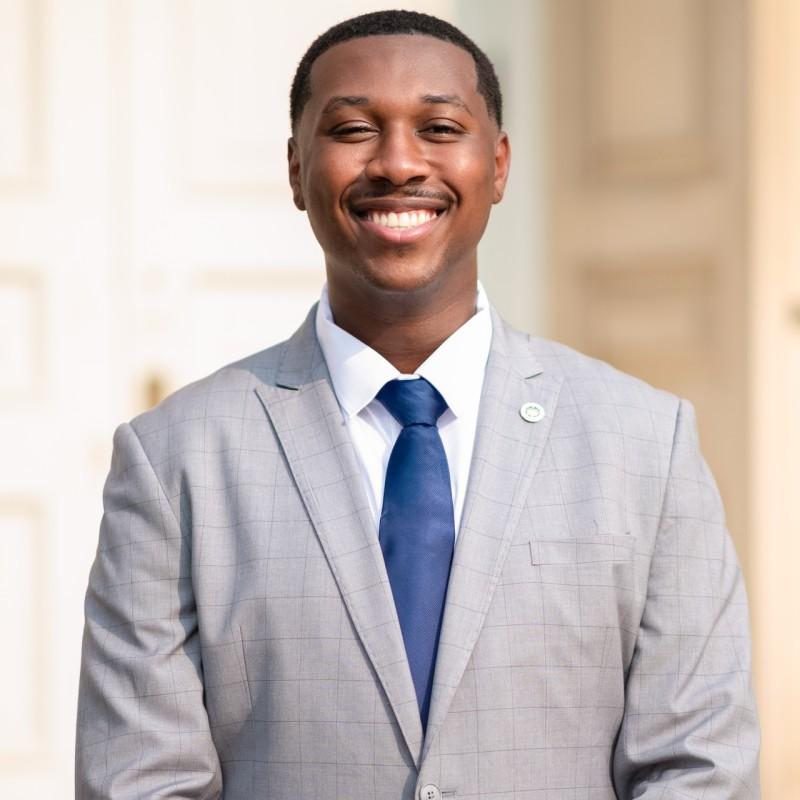
Jeremy Allman, the 2026-2027 president of the Howard University Student Association, said from his perspective representing students, Howard’s No. 1 ranking stemmed from its ability to secure research funds; amazing schools such as the College of Dentistry, College of Pharmacy and School of Law; a culture that goes deeper in its diversity than other HBCUs, contributing to more vast world-class views; and giants such as former U.S. Vice President Harris who has inspired him to want to go out into the world and be the best version of himself.
Like Wutoh, Allman, a senior honors political science major with a minor in history, also mentioned AI opportunities that are unfolding on campus. “Howard is encouraging people not to think of AI as a threat but to think of AI as something we can work with to better our community.”
Graduates Changing the World
Alumni salaries are another factor leading the University’s high placement on the Forbes’ list. According to U.S. News & World Report, six years after enrolling, alumni median starting salary is estimated between $47,400 to $52,000 annually, and rises to $90,000 to $120,000 by mid-career, varying by major, advanced degree and industry. Forbes published a list in February 2026 of the 50 most powerful and wealthiest Black Americans in alternative investments. The ForbesBLK 50 Money Masters list included Howard alumni JoAnn Price (B.A. ’71), Laurence Morse, Ph.D. (B.A. ’73), Levoyd E. Robinson (BBA '87), and Jewel Burks Solomon (BBA ’10).
“It’s certainly a reasonable expectation that if a student comes to Howard, performs well academically and graduates, they want to be gainfully employed,” said Wutoh, “and certainly because of their accomplishments and the great things that our alums are doing, that has provided a great platform for our students to get jobs and positions that are well paying.”
Howard positions its graduates to “go out and change the world securing employment in areas that are of interest and importance to them,” Wutoh continued, whether it's starting businesses, forming and supporting non-profits, engaging in corporate America, or other pursuits.
Median federal student loan debt levels and overall repayment performance weigh in on Forbes’ list, and Wutoh said this is increasingly important as the University strives to make sure students can graduate with either reasonable debt or as low debt as possible.
To that end, Wutoh said Howard is addressing this by creating several opportunities for students to complete a degree in less than four years, which saves a year of tuition. Additionally, there are a number of combined or duo degree programs such as the BS/MD joint degree program, a six-year program jointly run by the College of Arts and Sciences and College of Medicine, allowing high-achieving students to earn both an undergraduate degree and a medical degree in six years instead of eight. He also named a similar program, the JD/MBA dual degree program that provides a transition from an undergraduate degree to the School of Law through an accelerated pathway.
“In addition to the time savings, that’s a financial savings to the student as well,” said Wutoh. “Last year we provided over $200 million in scholarship support to students, and while that is a significant investment by the University, students will tell you it’s never enough, particularly students who come from circumstances where they don’t have access to resources. We’re always looking for ways we can add value to the Howard educational experience, support the students who need that financial support the most, but also creating circumstances where students will be able to graduate early or on time.”
Landing at the top of Forbes’ list again didn’t come as a surprise to Allman. His first reaction was “‘Wow, The Mecca does it again.’ I was extremely happy. It definitely proved that what I always thought was right. What we’re saying as students and as alumni is all true. We already knew Howard was a great school given the historical aspect of Howard.”
Allman said lists such as Forbes’ serve as motivation for future Bison considering their options, helping push them over the edge into Howard “to see all the greatness we’re doing, educating young individuals to go out into the world and do service.”
Keep Reading
-
 *Accolades
Howard University CEA Professor Sonya Smith Elected to AIAA Class of 2026 Fellows
Sep 28, 2026 3 minutes -
 Lineage: Howard Students and Alumni
20 Years in Motion: Models Inc. Celebrates Two Decades of Fashion, Mentorship and Black Creative Expression at Howard University
Sep 14, 2026 7 minutes -
 *Legacy and History
Howard University 9/11 Initiative Unites Students with Veterans During 3 Days of Service, Reflection and Awareness
Sep 14, 2026 10 minutes