

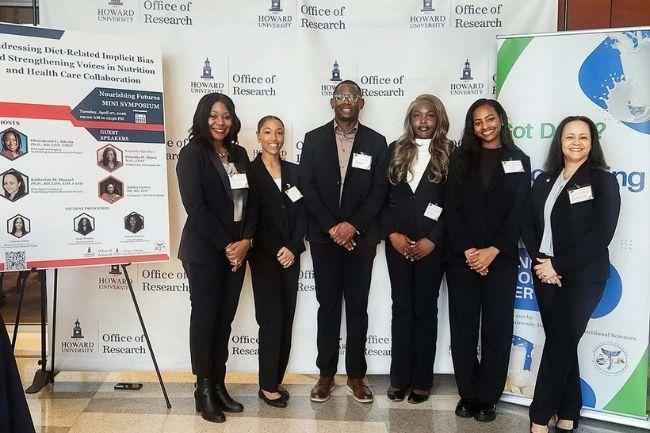
On Apr. 7, during Howard University’s annual Research Month, a room full of students, clinicians, and researchers gathered with a shared purpose: to rethink how nutrition care is delivered — and who it truly serves.
The symposium, “Addressing Diet-Related Implicit Bias and Strengthening Voices in Nutrition and Healthcare Collaboration,” brought together leading voices in healthcare and nutrition to examine how bias, culture, and communication shape patient outcomes.
A Case That Challenged Assumptions
The event opened with keynote speaker Priscilla Michelle Mpasi, a pediatrician at ChristianaCare Health System, whose presentation — “Closing the Nutrition Gap: How Dairy Supports Pediatric Nutrition from Infants to Adolescents” — set the tone for the day.
Through a clinical case study, Mpasi challenged the audience to confront how quickly assumptions can form in healthcare settings. For example, a patient presenting elevated body mass index (BMI) and A1C levels led many to anticipate a familiar diagnosis — but the underlying cause told a different story.
The moment underscored a central theme of the symposium: implicit bias, even when unintentional, can shape how providers interpret data and deliver care.
Mpasi emphasized that disparities in nutrition and the health outcomes tied to them often begin in childhood. From infancy through adolescence, access to nutrient-dense foods and accurate information plays a critical role in long-term health. Dairy, she noted, remains an important and accessible source of key nutrients that support brain development, bone health, and disease prevention.
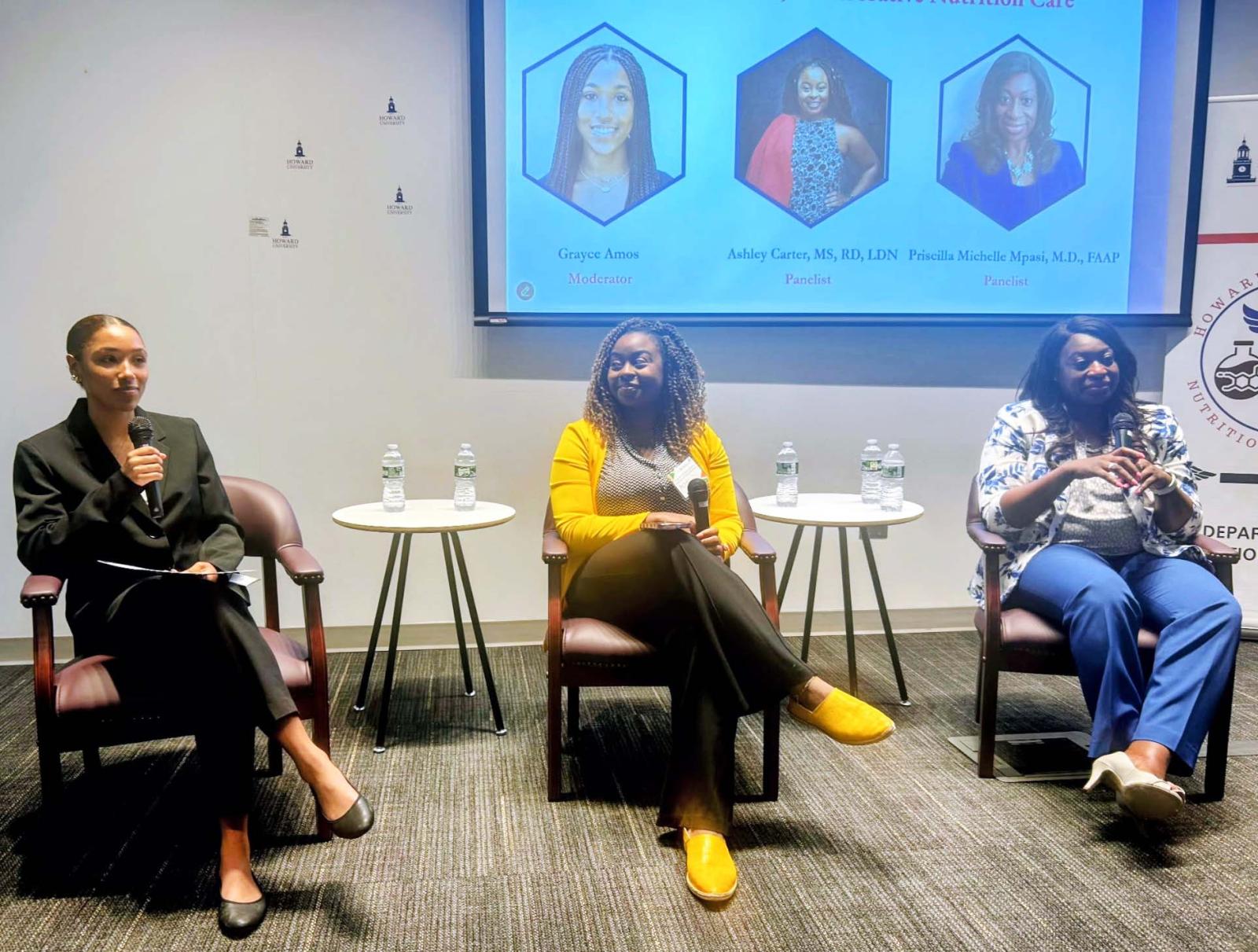
Yet gaps persist not only in access, but in understanding. Misconceptions, cultural perceptions, and inconsistent communication can all contribute to those gaps, reinforcing the need for providers to engage patients with both clinical expertise and cultural awareness.
From Research to Real Impact
That approach is central to Howard’s Nourishing Futures initiative, led by Dr. Oluwakemi Adeola and Dr. Katherine Manuel.
Launched in 2024, the program examines dietary behaviors, nutrition knowledge, and health outcomes among Howard students — particularly those pursuing healthcare careers. However, the program’s impact extends beyond research.
“We’re not just collecting information — we’re translating it into action,” Adeola said, describing the program’s campus-based interventions and activations designed to meet students where they are.
Manuel emphasized the importance of preparing students to think beyond traditional boundaries.
“We’re training students to work collaboratively across disciplines, where nutrition is integrated into the full spectrum of care,” she said.
At the heart of the initiative is a shared vision for lasting impact:
“Through our Nourishing Futures initiative, our HU campus will be transformed into a hub of health and wellness for our students,” said Adeola and Manuel jointly, “and we envision our model being used as a catalyst for improving health outcomes, nationally.”
Bridging the Nutritional Gap
Throughout the symposium, speakers returned to a key challenge: the disconnect between dietary guidelines and real-life application.
While guidelines provide a scientific framework, patients navigate daily realities shaped by culture, access, and lived experience. When providers overlook those factors, recommendations can become impractical or ineffective.
Addressing that gap requires shifting the focus from what patients should do to what they can do.
The symposium also highlighted the importance of interdisciplinary collaboration in improving nutrition outcomes.
Patients often interact with multiple providers — physicians, pharmacists, and dentists — before ever seeing a dietitian. Therefore, ensuring those professionals are equipped to provide accurate nutrition guidance and appropriate referrals is critical.
By embedding collaboration into both research and training, Howard is preparing students to lead a healthcare system that increasingly depends on teamwork.
Through our Nourishing Futures initiative, our HU campus will be transformed into a hub of health and wellness for our students, and we envision our model being used as a catalyst for improving health outcomes, nationally.” — Drs. Adeola and Manuel
Training the Next Generation
Students played an active role in the symposium and the broader Nourishing Futures initiative — participating in research, leading discussions, and engaging in community-based interventions.
Through this work, they are gaining not only technical knowledge, but also the skills needed to translate that knowledge into meaningful, real-world impact.
As the symposium concluded, one idea stood out: Improving health outcomes requires more than better data — it requires better understanding. Understanding patients’ experiences, understanding cultural context, and understanding that effective care begins with listening.
At Howard University, that understanding is shaping a new model — one that starts on campus but is designed to influence communities far beyond it.
Related Story
Physicist Kim Lewis Brings Energy and Experience to Help Shape Howard University’s ‘R1’ Vision
Keep Reading
-
 Epiphanies, Discovery, and Research
Howard University Professor Lemir Teron Examines Environmental Justice
Jul 22, 2026 4 minutes -
 Epiphanies, Discovery, and Research
Howard University, NEON Bridge High School & Higher Education
Jul 15, 2026 6 minutes -
 Epiphanies, Discovery, and Research
Howard University Mental Health Advocates Discuss How Black Men Can Maintain their Mental Health Wellness with Resources Like Yoga
Jul 8, 2026 6 minutes