

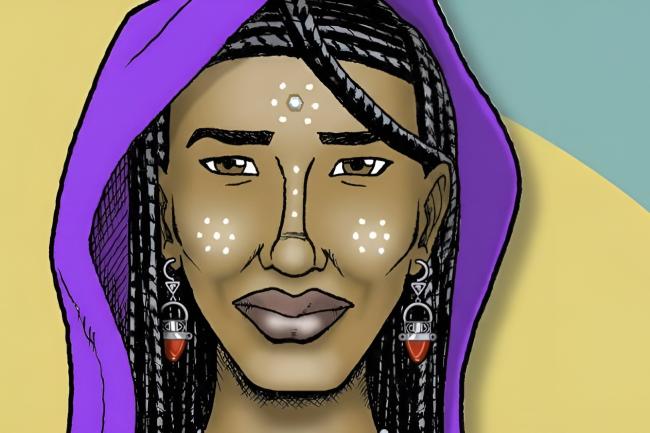
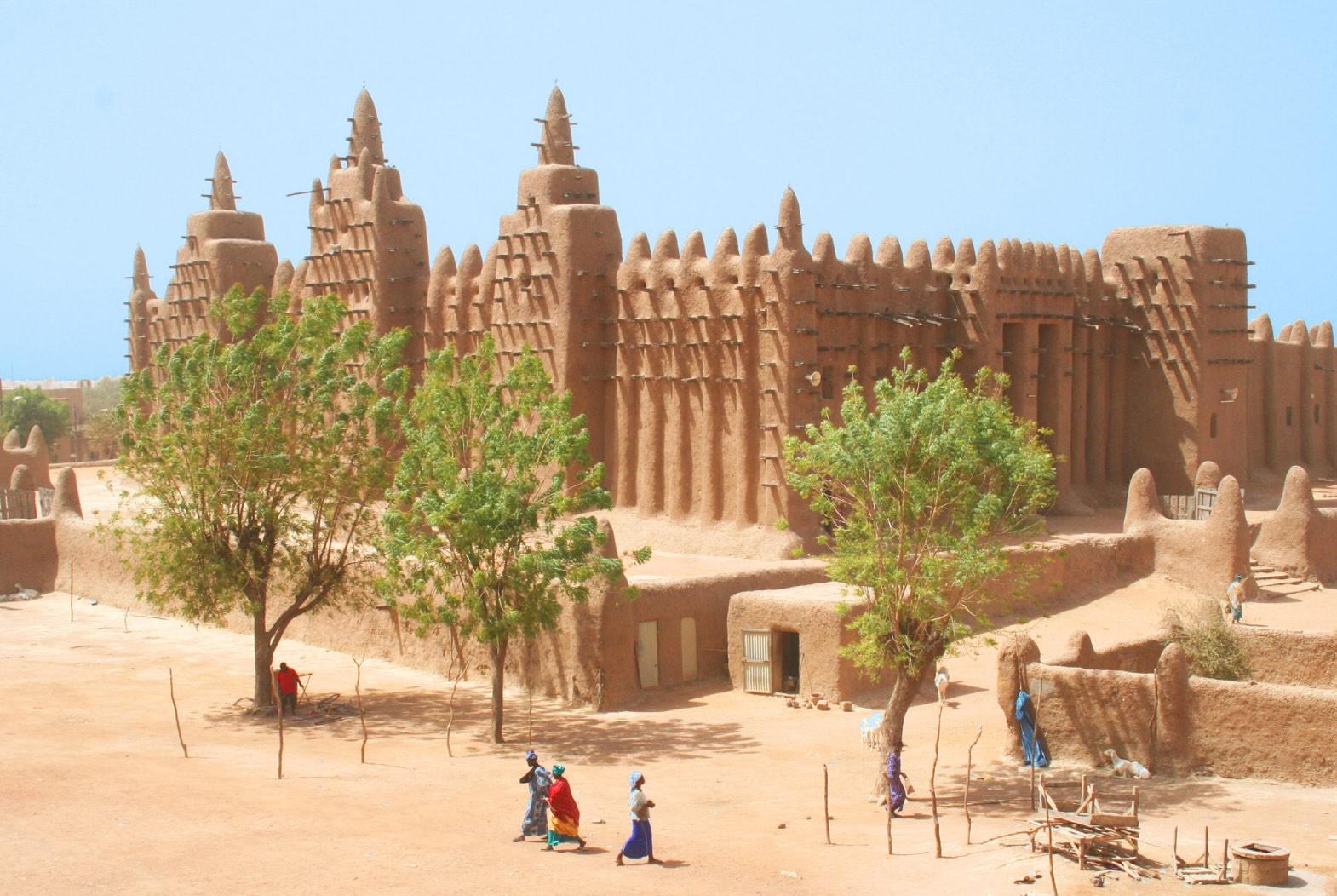
Most people have heard of Timbuktu, a name often used to describe far-off places at the edge of the world, but few know much more than that. Many also recognize Mansa Musa, the medieval West African ruler known largely as a symbol of immense wealth.
But the familiar narratives only scratch the surface of Africa’s past. Since 2014, educators with Howard University’s Center for African Studies have focused on reaching K–12 teachers nationwide to help bring a fuller picture of Africa’s place in global history into American classrooms.
“We are saying African history is more than bartering, ‘salt for gold,’ and Mansa Musa,” said Brenda Randolph (M.A. ’87), co-outreach director at the center, which works closely with the Department of African Studies on programming and faculty exchanges.
“People are often shocked to see how many other actors there were and how much more information we actually have,” Oyugi said.
That effort to reach teachers and reshape how African history is taught will be on display this week through “Following the Gold Road: Global Medieval Africa in the Time of Ghana, Mali, and Songhai,” a three-part virtual lecture series. The program will explore Africa’s role in the medieval world economy through gold while also highlighting its contributions to learning, governance, art, and architecture. The events are part of the 10th Annual State of Education on Africa Conference, hosted in partnership with the Center for African Studies, Boston University’s African Studies Center, and the Africa-America Institute.
The conference is held virtually on Wednesdays between runs from Jan. 14-28. Register here for the three-part lecture series in January Wednesdays from 12.30 - 1:30 pm EST.
The series is structured as a discussion-driven program featuring scholars followed by open Q&A, with sessions recorded so educators can revisit the material and integrate it into their classrooms. Scholars connected to the programming include historian David Conrad, who helped shape the project’s historical framework, and Michael Gomez, whose work anchors the academic depth of the discussions.
This year’s lecture series unfolds amid tightened federal budgets, including recent cuts to Title VI African Studies funding, prompting a shift from a planned in-person conference to a virtual format.
The Center for African Studies at Howard University is one of roughly 100 federally designated area-studies centers nationwide, created to deepen U.S. understanding of world regions through language and cultural study. Howard is the only HBCU ever to receive a Title VI African Studies grant, first awarded in 1980 and renewed in 2014.
Krista Johnson, Ph.D., director of the Center for African Studies, said the outreach program has reached approximately 50,000 K–16 students and 1,200 educators nationwide over the past four years. The Center for African Studies also publishes Bouctou, an Africana magazine for teachers and students,
“This collaboration with the Africa America Institute reframes not only African history but medieval world history by centering Africa’s role in global commerce through gold and showcasing its profound influence on art, governance and education” Johnson said.
The Gold Road
Randolph led the effort to coin the term “Gold Road.” Before joining Howard University, she spent over 22 years working at the middle school level. During that time, she noticed that instruction on the Sudanic empires, including Ghana, Mali, and Songhai, was often reduced to brief references to Mansa Musa and simplified trade narratives.
“It was not done well,” Randolph said. “We coined the term the ‘Gold Road’ so that we could quickly capture the attention of teachers.”
Her objective became to place the study of these empires on equal footing with the Silk Road, a framework familiar to nearly every history teacher. From there, the work expanded into a comprehensive Gold Road website designed to support classroom instruction. The site has logged more than 176,000 views, with consistent traffic throughout the year, reflecting its use as a reference point for educators.
Support teaching and learning about Africa and the Gold Road. Join the mailing list for the Center for African Studies to stay up to date with its programming. For more information, contact Vanessa Oyugi at vanessa.oyugi@howard.edu or Brenda Randolph at brenda.randolph@howard.edu
###
Keep Reading
-
 Global and Diaspora
Former President of Trinidad and Tobago Visits Howard University for Fireside Chat on Global Leadership
Sep 3, 2026 6 minutes -
 Global and Diaspora
Howard University’s Global Impact Takes Center Stage During King of Ghana’s Ashanti Kingdom Campus Visit
Aug 28, 2026 11 minutes -
 Legacy and Lineage
Class of 2030 Begins Howard University Journey with 14th Annual ‘Day of Service’
Aug 14, 2026 7 minutes