

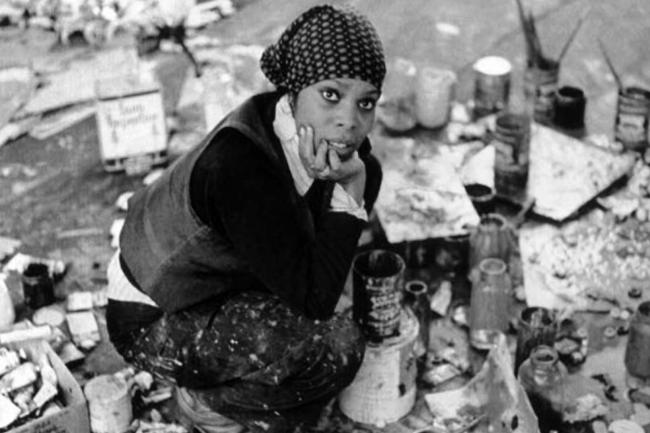
Howard University joins the national arts community in mourning the loss of alumna Mary Lovelace O’Neal (BFA ’64), a visionary artist, educator, and activist whose career expanded the language of American abstraction and insisted upon the full presence of Black women in the arts.
Born in Jackson, Mississippi on February 10, 1942, Lovelace O’Neal arrived at Howard as the Civil Rights Movement was reshaping the nation. She passed away on May 10, leaving behind a vibrant and intellectually courageous body of work defined by scale, force, color, and experimentation. Across monumental canvases, lampblack paintings, unstretched works, and later explorations in printmaking with artist Robert Blackburn, she forged a visual language of memory, protest, migration, ancestry, and possibility.
In a message to the Howard community, Interim President, President Emeritus, and Charles R. Drew Professor of Surgery Wayne A. I. Frederick, M.D., MBA, reflected on the depth of Lovelace O’Neal’s impact, stating:
“Her life reminds us that beauty and justice are not separate pursuits; at their highest calling, they strengthen one another.”
Mary Lovelace O’Neal’s Time at Howard
Lovelace O’Neal’s fusion of beauty and justice began early in life, taking root in the College of Fine Arts at Howard during one of the most consequential periods in American history. Her studies in fine art were shaped by prolific figures in African American art, including James A. Porter, Loïs Mailou Jones, David C. Driskell, and James Lesesne Wells. The foundation Lovelace O’Neal found at Howard, across the arts and civil rights movements, led to lifelong friendships with classmates Starmanda Bullock, Karen Edmonds Spellman, Sylvia Snowden, Mildred Thompson, and Stokely Carmichael.
For Dr. Melanee C. Harvey-Fryar, associate professor of art history within the Department of Art in the Chadwick A. Boseman College of Fine Arts (CABCoFA), and former chair of the James A. Porter Colloquium on African American Art and Art of the African Diaspora, Lovelace O’Neal’s significance within the Department of Art was already unmistakable when Harvey-Fryar joined Howard in 2013.
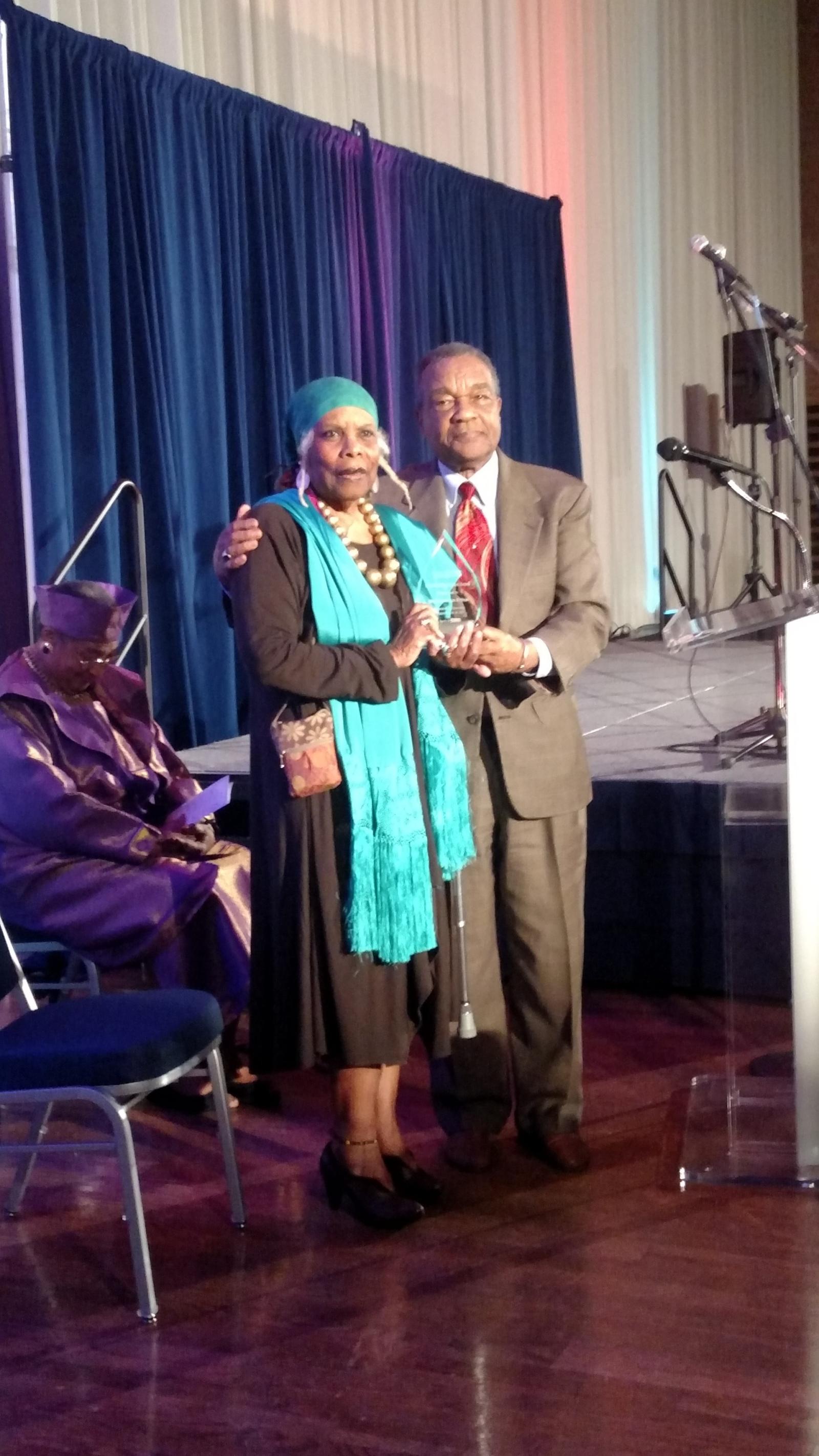
As programming chair for the James A. Porter Colloquium, Harvey-Fryar said she knew Lovelace O’Neal was among the first alumni she wanted to honor with the Lifetime Achievement Award. In 2018, Lovelace O’Neal returned to campus for the Porter Colloquium, convened under the theme “Abstraction: Form, Philosophy, & Innovation.”
“Mary Lovelace O’Neal held a mythic weight in the Department of Art when I arrived at Howard,” Harvey-Fryar recalled.
“As a student of James A. Porter and David C. Driskell, Lovelace O’Neal was a leader in a generation of modern abstractionists trained at Howard University.” She noted that Lovelace O’Neal helped lead abstractionist experimentation in painting and design alongside fellow artists and Howard classmates, including Starmanda Bullock and Sylvia Snowden.
Harvey-Fryar said Lovelace O’Neal’s 2018 return to Howard reflected the throughline of her life, revealing the continuity between her student activism and the concerns of a new generation. At the time, Howard students were engaged in protest and before attending the colloquium proceedings, Lovelace O’Neal insisted on visiting the site of the student protest to offer words of wisdom drawn from her own experience.
“Mary Lovelace O’Neal is the link between civil rights protest, liberation movement development, and abstractionist exploration,” Harvey-Fryar said.
During her return to campus, Lovelace O’Neal was reunited with David C. Driskell, her former professor, and paid tribute to her lifelong mentor, James A. Porter. Harvey-Fryar recalled that Lovelace O’Neal was deeply moved by the occasion, especially by the opportunity to honor Porter, whose rigor and investment helped shape her development as an artist. For Harvey-Fryar, the moment affirmed Lovelace O’Neal’s place in a Howard-trained generation of modern abstractionists.
In a 2021 BOMB Magazine interview with artist Suzanne Jackson, Lovelace O’Neal spoke about Howard students’ role in the Civil Rights Movement, recalling the involvement of students from historically Black colleges and universities in voter registration, labor issues, Freedom Rides, and other efforts that helped define the student movement.
She also described the difficulty and necessity of forging her own path as a Black woman artist working in abstraction during an era when cultural and political expectations often demanded more literal representation.
“I was again living that duality of social concerns and racial justice and trying to be a painter,” Lovelace O’Neal said in the interview.
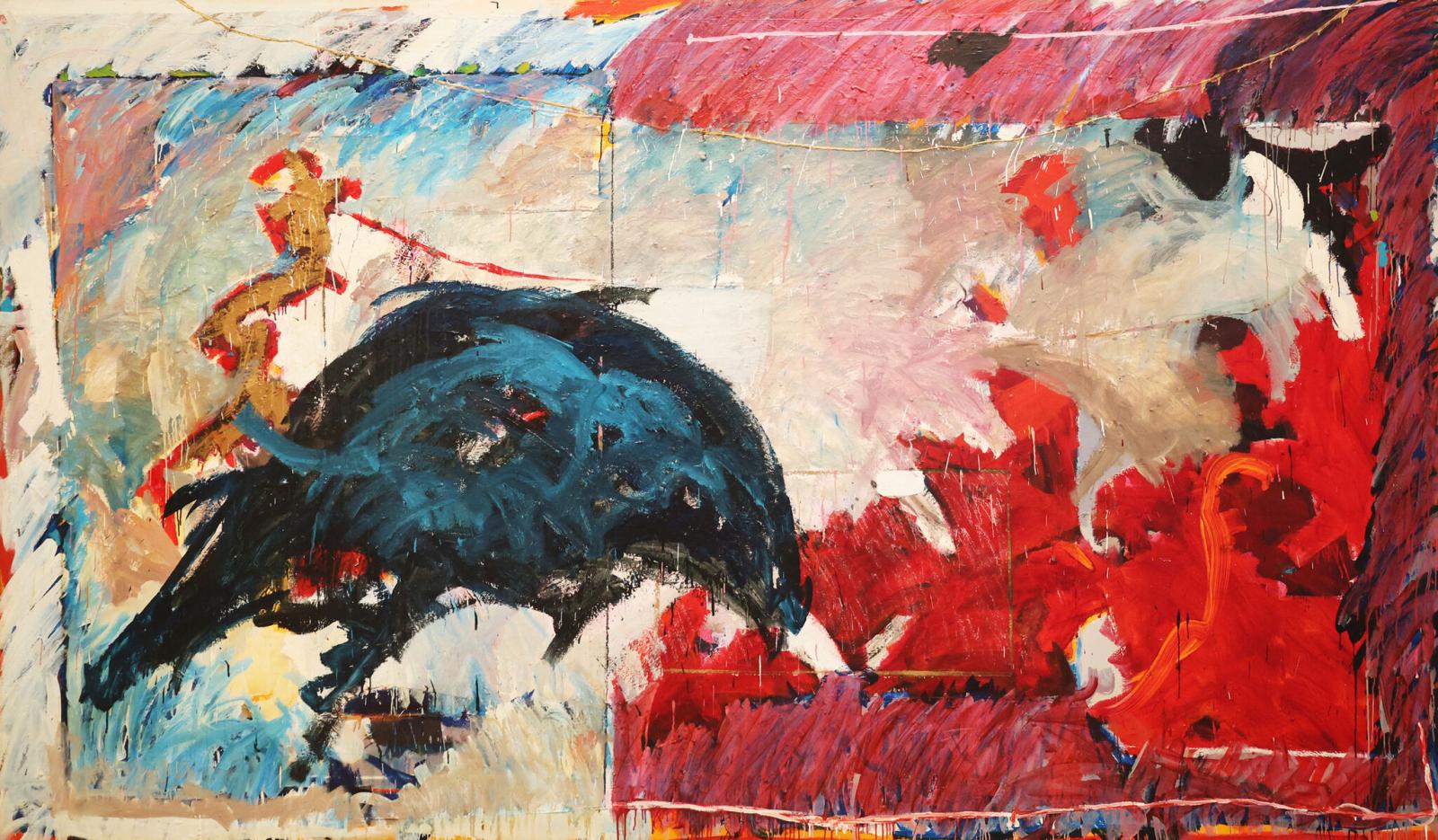
Her lampblack works, including “The Four Cardinal Points Are Three: North and South,” reflected that duality. In the BOMB interview, Lovelace O’Neal described discovering lampblack pigment and using it to push the possibilities of blackness, flatness, space, and abstraction. The works challenged assumptions about what Black art should look like and what abstraction could hold.
“Whatever is part of my life is what my painting is about,” Lovelace O’Neal said.
Artist, Educator, and Social Activist
James Phillips, professor and MFA coordinator in the Department of Art at CABCoFA, remembered Lovelace O’Neal as someone whose impact extended beyond the canvas. Phillips met Lovelace O’Neal during a 1983 residency in California at the University of California, Berkeley, where she was teaching. Though they had not previously known one another, Phillips said Lovelace O’Neal welcomed him immediately.
“She just opened up and embraced me and took me in,” Phillips recalled.
Lovelace O’Neal introduced him to Black artists throughout Berkeley, Oakland, San Francisco, and the broader Bay Area, including major figures such as Bob Colescott and Raymond Saunders. For Phillips, that generosity reflected her role as both artist and connector, someone who understood that artistic community was itself a form of legacy.
Phillips also emphasized Lovelace O’Neal’s complicated and important place within the Black Arts Movement. As an abstractionist, she challenged narrower expectations that Black art had to be figurative or explicitly people-centered to carry cultural and political meaning. Her work stood at the intersection of Black artistic experimentation, civil rights, Black Power, and the broader struggle for recognition.
For Kathryn Coney-Ali, executive director of the Howard University Gallery of Art who is also an adjunct lecturer of art history, Chair of the James A. Porter Colloquium, and a proud alumna, Lovelace O’Neal’s legacy rests in the way she expanded the possibilities of Howard’s artistic tradition while inspiring others to understand liberation as a practice of intentional action.
“Mary Lovelace O’Neal’s legacy as an artist, educator, and social activist reflects her lifetime commitment as a changemaker who challenged systemic oppression in pursuit of liberation,” Coney-Ali said. “Through abstraction, activism, teaching, and fearless imagination, Lovelace O’Neal’s work served as a catalyst for expanding conversations around intersectionality and artistic experimentation.”
That refusal to be confined became a defining feature of her career. After earning her MFA from Columbia University, Lovelace O’Neal went on to build a distinguished practice as one of the most original abstract painters of her generation. She later served as a professor and department chair at the University of California, Berkeley, where she shaped generations of artists while continuing to create work that expanded the visual and philosophical reach of abstraction.
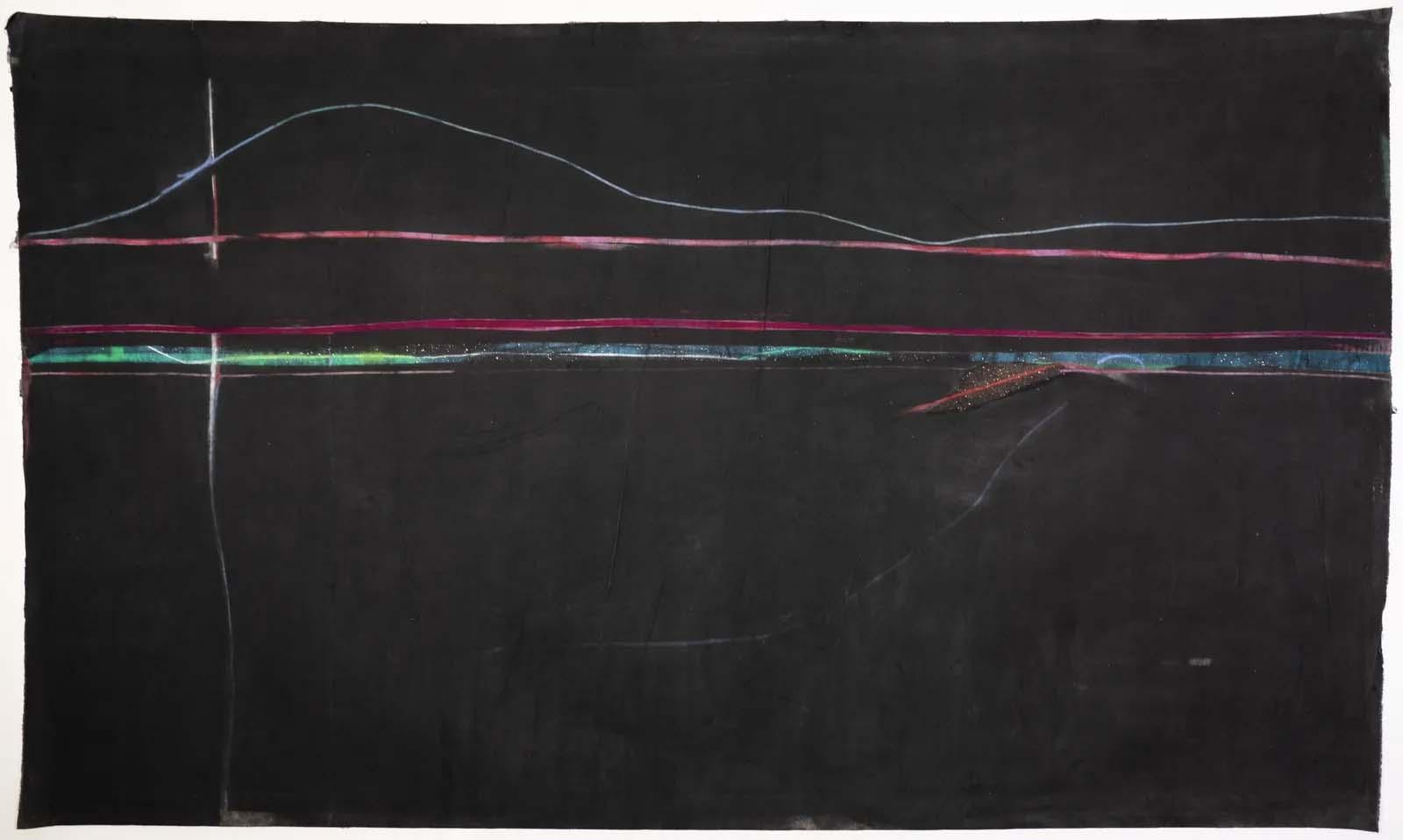
Her paintings traveled across geographies, histories, and emotional terrains. Works such as “The Four Cardinal Points Are Three: North and South,” “Blue Whale a.k.a. #12,” and “Racism is Like Rain, Either It’s Raining or It’s Gathering Somewhere” reflect the force, scale, and conceptual urgency that defined her practice. In 2024, her work was included in the Whitney Biennial, a testament to the continued relevance and vitality of her artistic vision.
Howard University extends its deepest condolences to Lovelace O’Neal’s family, loved ones, students, colleagues, and all who were transformed by her work and witness.
Her life did not separate artistic experimentation from liberation, or beauty from justice. Through abstraction, activism, teaching, and fearless imagination, Mary Lovelace O’Neal expanded the visual language of freedom.
Keep Reading
-
 In Memoriam
Linda Spencer, Howard Volleyball Pioneer and Championship Coach, Leaves an Enduring Legacy
Jun 16, 2026 4 minutes -
 News
NewsFor Howard University, Jesse Louis Jackson Sr. Was A Bridge Between Generations
Feb 17, 2026 14 minutes -
 Culture Creators: Arts and Entertainment
Howard Alumni Honor TLC’s Iconic Legacy in ‘CrazySexyCool’ Musical
Aug 6, 2026 11 minutes