

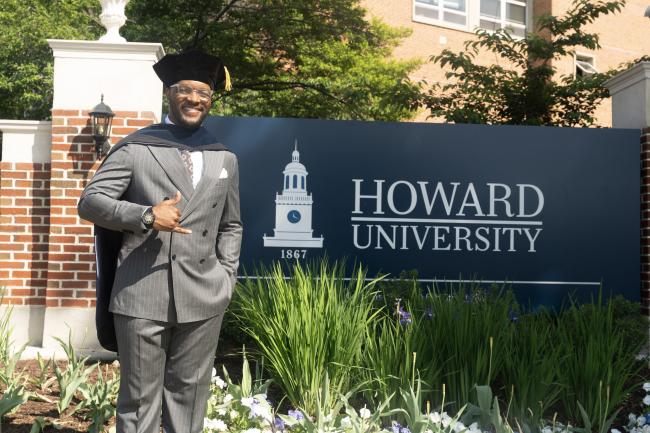
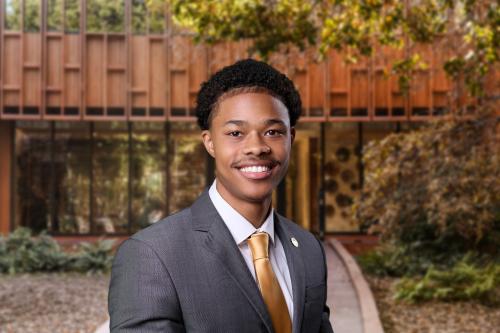
Arsene Frederic Jr., a 2026 graduating doctoral student in Howard University’s School of Education, is working to address legislative barriers to college affordability for HBCU students with his qualitative study.
Frederic recently defended his dissertation, “Policy Advocacy, Institutional Power and Political Engagement: A Critical Study of State Legislative Black Caucuses and College Affordability and Public HBCUs,” a multi-pronged assessment of how state legislators can improve affordability at HBCUs. The dissertation includes three articles focused on advocacy strategies, policy instruments, and the power dynamics of expanding funding opportunities for HBCUs. Frederic’s research examines how state legislators navigate power dynamics and institutional constraints to shape policy design.
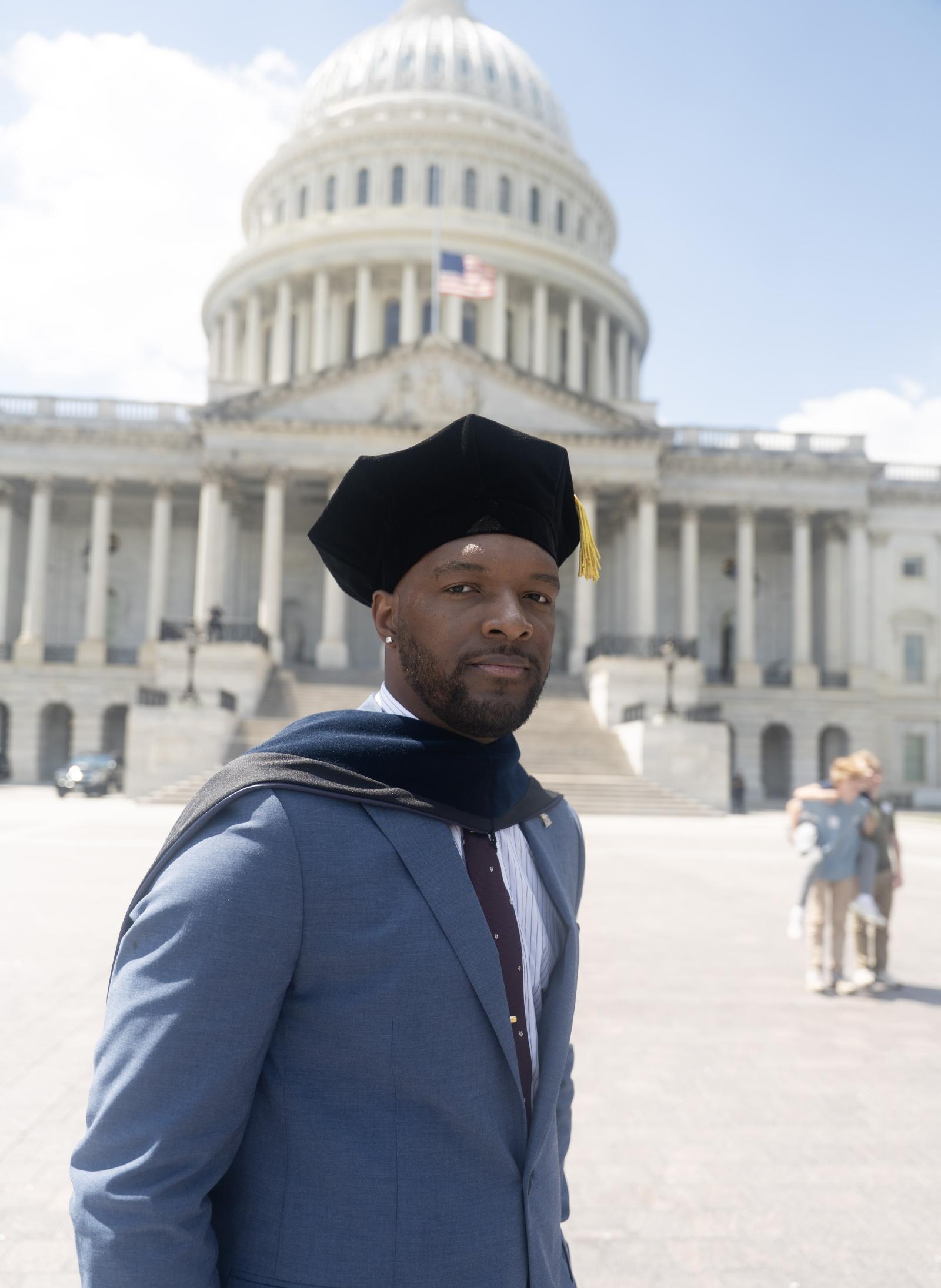
The impetus for this research, Frederic explained, stemmed back to his time as an undergraduate student at Florida State University where he was a recipient of the Florida Student Assistance Grant. That financial support helped him to continue his academic pursuits and later sparked the motivation behind his educational and professional interests. The Fort Lauderdale native was also inspired by his great grandparents, Helen and Fred Watson, who were among the first people to settle and help build a thriving Black community in Carver Ranches, FL. in the 1950s.
“They were towering figures that really pushed the importance of education,” said Frederic. “They believed in the power of education to uplift communities and expand opportunities. With those values and virtues in mind, I knew that I wanted to go and explore that specifically through a public service framework when I came to D.C.”
Informing Legislative Actions with Research
Prior to pursing his Ph.D. in Howard’s Higher Education Leadership and Policy Studies program, Frederic received a Master of Public Administration from American University. In addition to academia, he worked in the public and private sector across industries such as education, cybersecurity, and infrastructure. Frederic previously served as a 2021-2022 Congressional Black Caucus Foundation Aerospace-Defense Fellow. He also worked on the Higher Education Policy implementation team at The Education Trust in 2024 in addition to being a Graduate Fellow in Howard’s Center for HBCU Research, Leadership, and Policy.
Durning the 2025-2026 academic year, Frederic served as a Graduate Research Assistant with Howard’s HBCU Character and Leadership Education Initiative. He was also a recipient of the university’s 2024-2025 Just-Julian Research Fellow assistantship. In 2025, he served as a Government Relations Fellow with the Congressional Black Caucus Institute and completed the institute’s Political Leadership Development Program. Frederic was also named a 2025 Bryce Harlow Government Relations Fellow. His research has been published in journals such as Innovative Higher Education and Education Sciences.
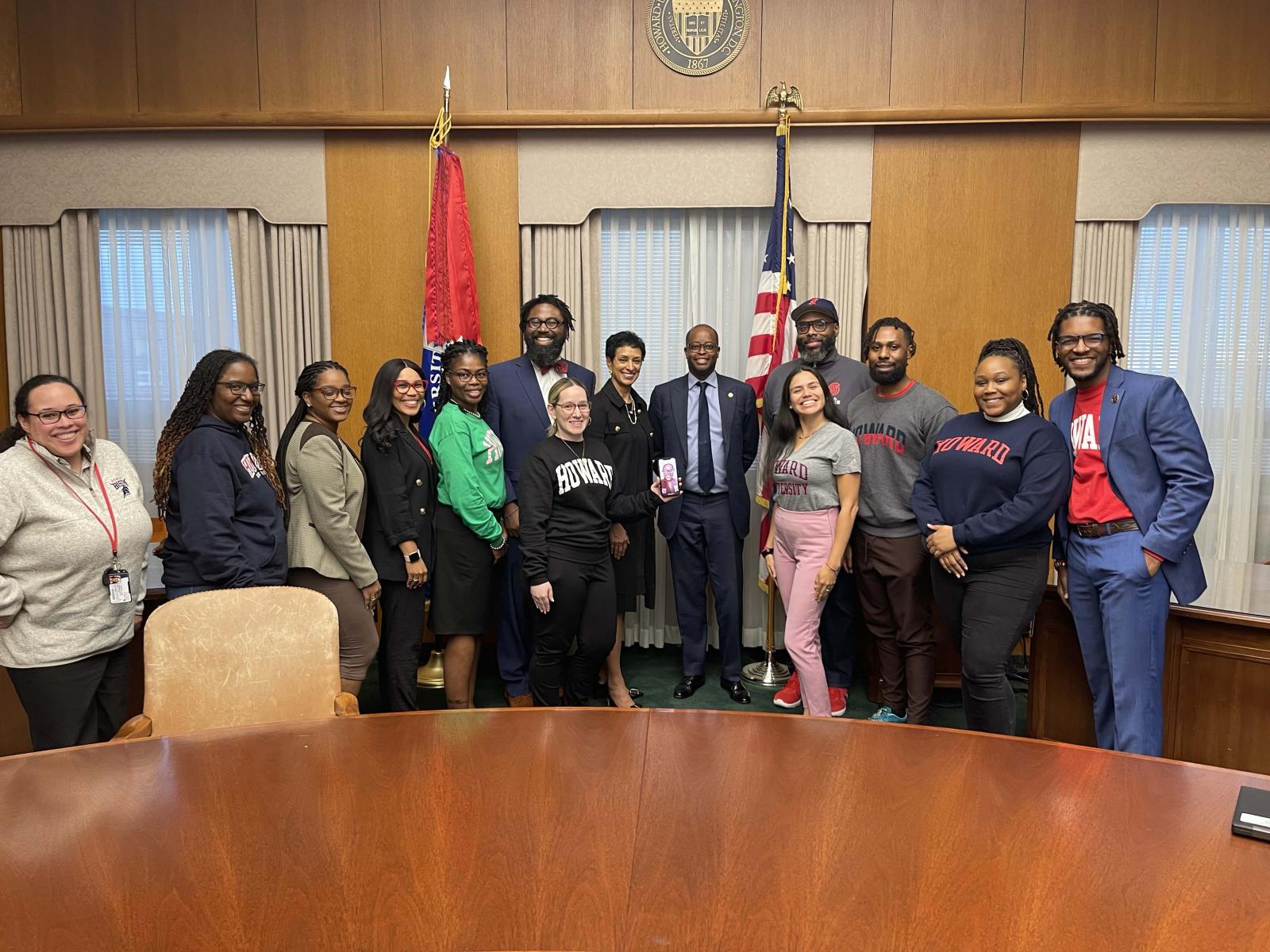
For his dissertation study, Frederic interviewed Black legislators in six states across the East coast to better understand how they’re approaching college affordability and institutional support at HBCUs.
“I looked at state archives and state legislative bills to see what specific legislative items for HBCUs were passed,” said Frederic. “Some of the things that I found is there’s a real robust moral coalition amongst this particular caucus that I think we don't talk about enough.”
Frederic provided recommendations for three distinct stakeholder groups: legislators, researchers, and HBCU stakeholders. His first recommendation, he explained, encourages legislators and their staff to better understand the real material and institutional conditions of HBCUs. His second recommendation challenges researchers to think about how they can utilize their research to inform legislative change for HBCUs. Frederic’s last recommendation outlines tangible actions HBCU stakeholders can do in order push legislative actions forward, such as developing trainings and offering testimonies of their experiences.
“I spent most of my career working in policy and government affairs and stakeholder engagement,” Frederic shared. “I look forward to continuing that work and really thinking about how evidence can inform policy and how policy decisions are made.”
Howard Influences
Frederic shared his excitement about walking across the stage during Howard’s 158th Commencement ceremony May 9 to receive his doctorate. He’s already setting his sights on putting his research into action. Frederic recently started his own consulting company, ULB Solutions, where he’ll continue to work with federal and state stakeholders. Frederic is also aiming to have his three-article dissertation published in an academic journal.
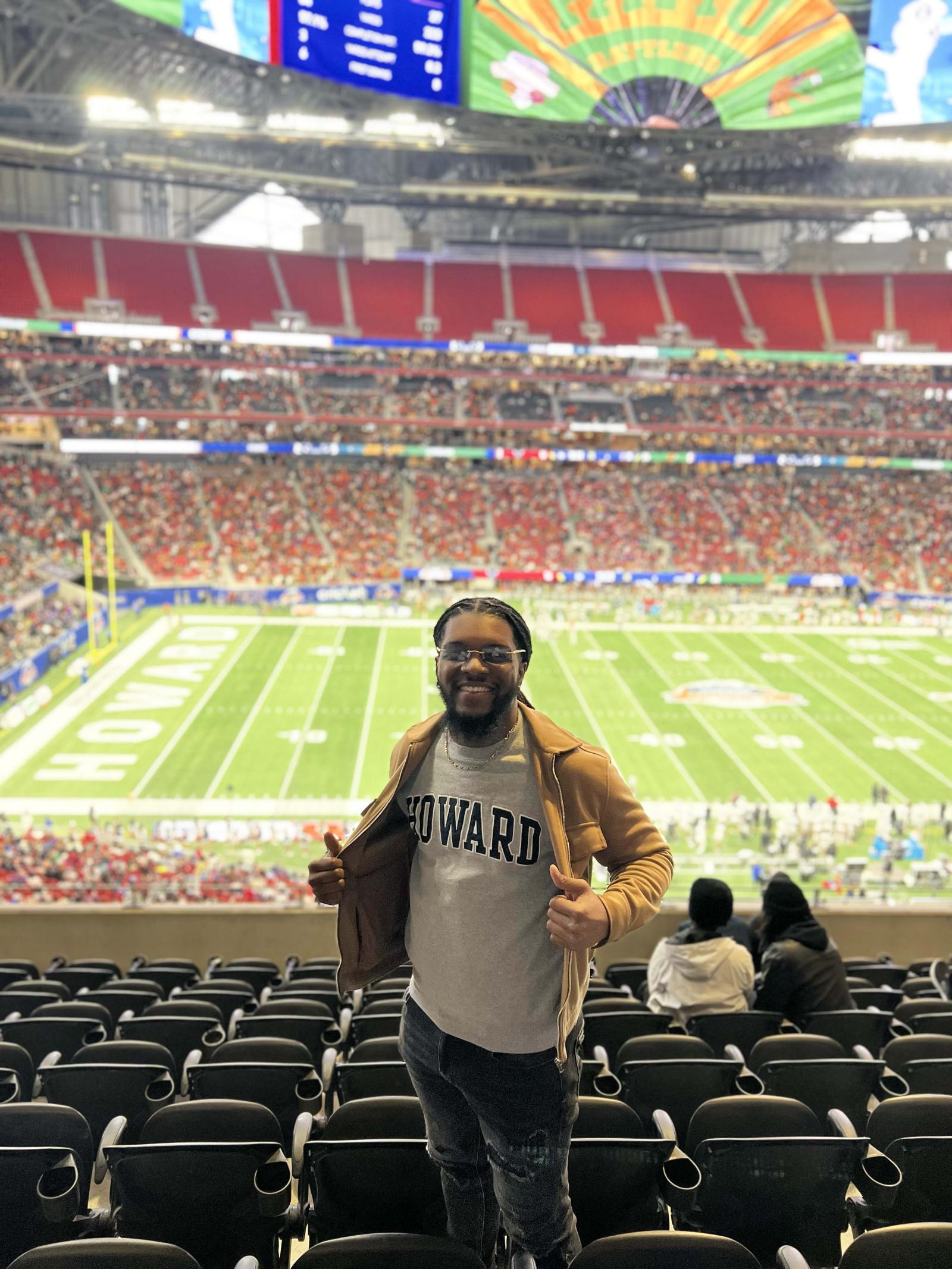
As his Howard journey comes to a close, Frederic reflected on the foundational support of the classmates and faculty who helped him make it to the finish line. He mentioned that support from Dr. Dana Williams, dean of the university’s Graduate School, was instrumental throughout his doctoral journey, and his dissertation advisor, Dr. Jorge Burmicky, helped to strengthen his skills as a researcher.
“I’m very appreciative of Dr. Burmicky’s mentorship and his guidance in helping me understand not only how to formulate my argument, but the methods to use,” said Frederic. He added that his decision to attend the university was a part of his destiny: “When it comes to an institution like Howard, I mean, do I even need to finish the sentence? I chose Howard and Howard chose me back.”
When thinking about the impact he wants to make in the world, Frederic pointed to the legacies of influential leaders who also came from Howard.
“We think about figures like Thurgood Marshall, Toni Morrison, Pauli Murray, and Ralph Bunche — these are people who have contributed not only to solving domestic issues, but global issues as well,” he said. “I really see myself as someone who will be a part of that conversation, a part of that tradition, a part of that lineage, not only thinking of myself as a community-engaged citizen, but a global citizen.”
Keep Reading
-
 Legacy and Lineage
Perfect Performance: Nearly 200 Howard University Class of 2026 Graduates Earned a 4.0 Grade Point Average
Jun 22, 2026 11 minutes -
 News
NewsHoward University Alum Jayson Johnson Named to 2026 Cohort of Knight-Hennessy Scholars
May 19, 2026 2 minutes -
 *Research and Discovery
Howard University Study Links Medicaid Expansion to Lower Breast Cancer Deaths
Oct 6, 2026 5 minutes