

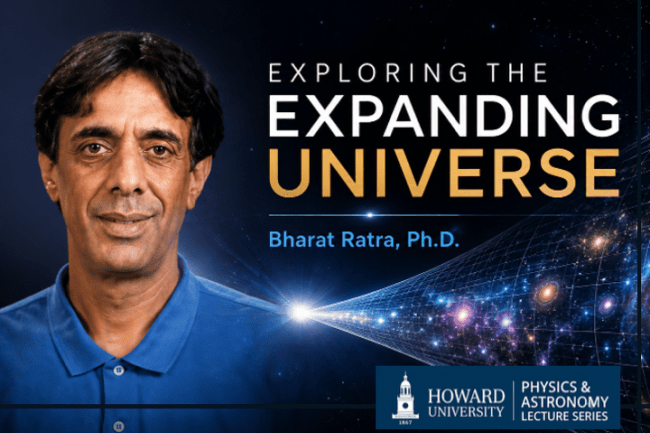
Questions about the universe’s accelerating expansion will be the focus Wednesday, Aug. 19, when Howard University Department of Physics and Astronomy welcomes renowned cosmologist Bharat Ratra for a public lecture exploring some of the biggest mysteries in modern science.
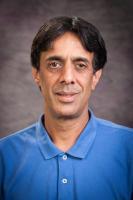
Ratra, a distinguished professor of physics at Kansas State University, will present “The Accelerating Expanding Universe: Dark Matter, Dark Energy, and Einstein’s Cosmological Constant” at 3 p.m. in the Howard University Department of Physics and Astronomy’s Banneker North Building. The free event is open to the Howard community and the public.
According to Kofi Deh, Ph.D., an assistant professor in Howard University’s department of physics and astronomy, the discovery of the universe’s accelerating expansion transformed modern cosmology. Scientists now understand that dark matter and dark energy make up most of the universe, though their nature remains one of physics’ central unanswered questions.
“We've seen that the universe has been expanding. We know that it's getting bigger and bigger,” Ratra said. “And in the last 25 or so years, we've discovered that the expansion is speeding up. It's accelerating.”
Ratra’s lecture will examine the astronomical evidence behind those ideas and how it has contributed to the development of the standard model of cosmology—a framework describing the evolution of the universe from an early period of inflation to the formation of galaxies and other large-scale structures.
Ratra’s work has helped advance understanding of dark energy and the universe’s accelerating expansion. In 1988, he and Nobel Prize-winning physicist Jim Peebles proposed a model of dynamical dark energy, an important development in modern cosmology.
The professor said audiences do not need an advanced background in physics to attend. The presentation will include a live weather balloon demonstration to make the expansion of the universe more tangible and accessible.
For students, that intersection of fundamental science and advanced technology can also open doors to careers well beyond academia, Ratra said.
The Howard lecture is part of an effort to expose students and the broader community to cutting-edge scientific research and the people working to expand our understanding of the universe.
Keep Exploring
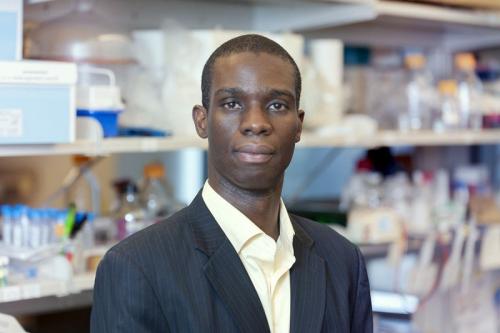
Research Rewind: Super-Resolve Imaging Using AI May Help Detect Disease Early
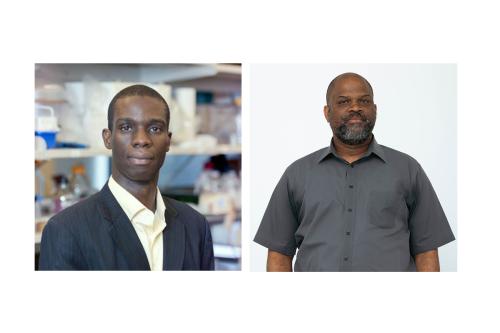
AI Boosts Brain Research of Howard’s Dr. Kofi Deh and Dominique Pritchett
Keep Reading
-
 Epiphanies, Discovery, and Research
Howard University Professor Lemir Teron Examines Environmental Justice
Jul 22, 2026 4 minutes -
 Epiphanies, Discovery, and Research
Howard University Engineering Professors Recognized as Fellows of the American Association for the Advancement of Science, the World’s Largest Scientific Society
May 29, 2026 5 minutes -
 Epiphanies, Discovery, and Research
Howard University Engineering Professor Advances Soil Thermal Behavior Research with $780K DOD Grant
May 22, 2026 3 minutes