

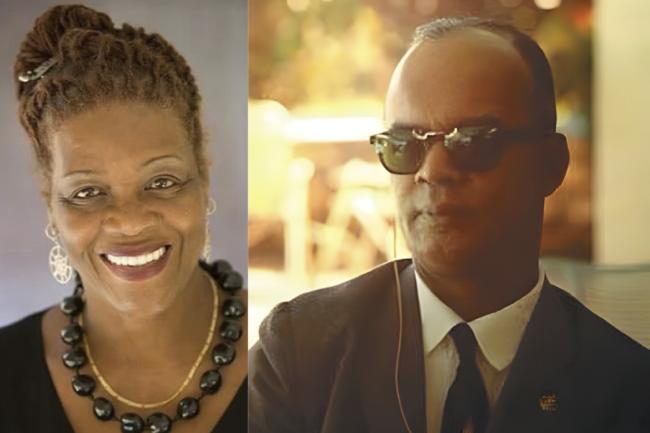
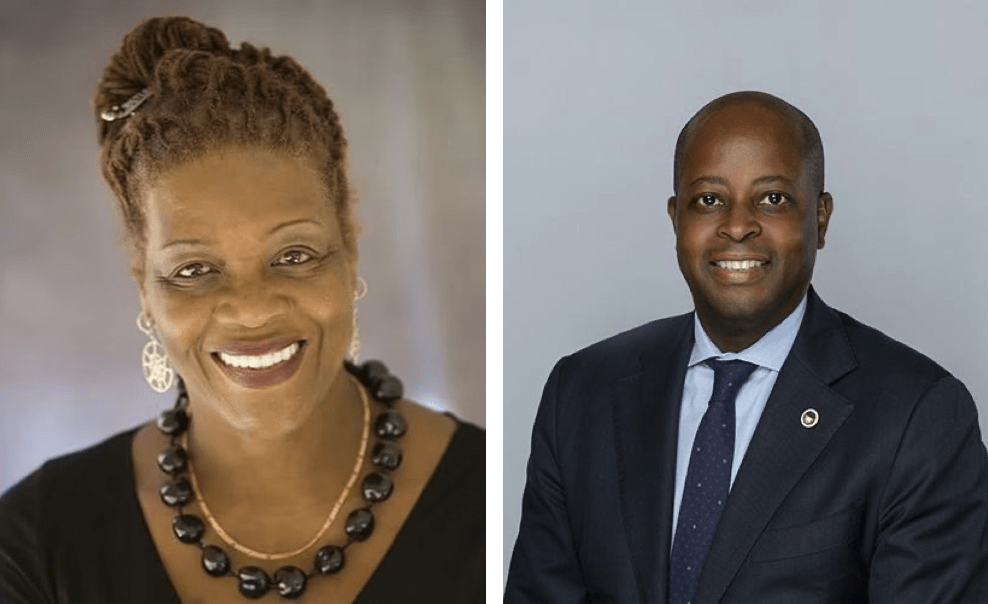
Howard University will formally confer upon African diaspora scholar and alumna Carole Boyce-Davies (MA ’74) a new endowed chair in Caribbean Studies, named in honor of Eric Williams, one of the most illustrious and influential scholars in the history of Howard University.
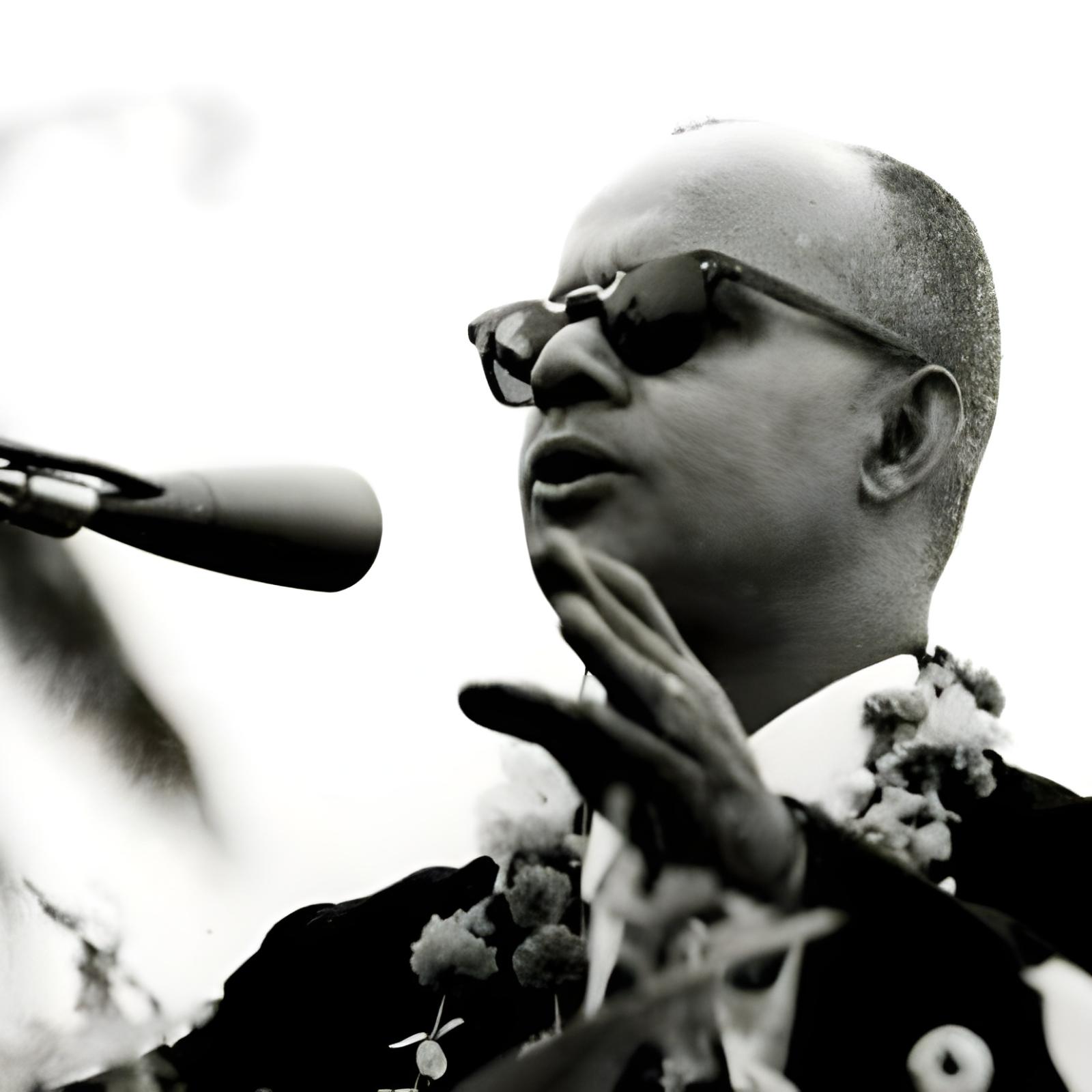
Williams is known as a founding father of independent Trinidad and Tobago. After helping lead the country toward independence, he became its first prime minister, serving from 1962 until his death in 1981. Before entering political life, Williams was a member of the Howard University faculty from 1939 to 1946, joining the faculty as an assistant professor of political and social science. While at Howard, he continued the research that would become his landmark 1944 work, “Capitalism and Slavery.”
Wayne A. I. Frederick, M.D., MBA, interim and emeritus president of Howard University, was born and raised in Trinidad and Tobago and said Williams’ years at Howard were an important chapter in a journey that helped shape the future of Trinidad and Tobago and the Caribbean.
“Eric Williams’ journey from colonial Trinidad to Oxford, Howard and ultimately the leadership of Trinidad and Tobago reflected a powerful connection between scholarship and service, education and liberation, and intellectual leadership and nation-building,” Frederick said. “He understood that scholarship carries its greatest power when it moves beyond the academy and is put into service to people, communities and nations.”
The investiture ceremony will take place on Howard University’s campus Thursday, Sept. 17, formally recognizing Boyce-Davies’ appointment to the Eric Eustace Williams Endowed Chair in Caribbean Studies and celebrating Williams’ enduring Howard legacy.
Frederick commended Boyce-Davies, who, like Williams and Frederick, was born and raised in Trinidad and Tobago, for embodying a tradition of rigorous scholarship, global engagement and service. She has served as chair of Howard’s Department of English since 2023 and is a professor of English literature and writing. The department, the largest in the College of Arts and Sciences, spans scholarship and instruction in Caribbean, African and African diaspora literatures.
Boyce-Davies is an internationally recognized scholar of Black women’s writing, Caribbean Studies and the African diaspora. She has authored several influential works, including “Caribbean Spaces: Escapes from Twilight Zones” (2013) and “Left of Karl Marx: The Political Life of Black Communist Claudia Jones” (2007), which has emerged as a classic of the academy, regularly appearing on syllabi in history, African Studies, women’s studies and Caribbean Studies.
In 1974, Boyce-Davies earned a Master of Arts in African Studies, with a focus on literature and sociology, from Howard University. She later earned her Ph.D. in African/Caribbean Literature from the University of Ibadan in Nigeria in 1978. She describes her years at Howard as foundational to her development as a scholar.
“My intellectual life, my intellectual conception of myself, was formed out of that Howard experience,” she said.
Before returning to Howard as a faculty member, Boyce-Davies was a professor at Cornell University, where she held the Frank H.T. Rhodes Professorship of Humane Letters, a named professorship honoring Cornell’s ninth president.
She noted that endowed chairs are often named for major donors whose contributions help support universities and their academic missions. For her, the significance of the Williams chair hits as a deeper honor.
Boyce-Davies said her generation can only approximate the work undertaken by leaders such as Williams and Ghanaian independence leader Kwame Nkrumah, who helped guide formerly colonized nations toward independence despite the enormous challenges left by colonial rule. She said that legacy remains unfinished, with some nations continuing to experience forms of colonialism and others facing what she described as a return to colonial practices.
“The kind of work it must have taken for people in the cohort that included Eric Williams, Norman Manley and all of the others—leaders who really held down those nations as they moved to independence— was extraordinary,” Boyce-Davies said.
The Sept. 17 investiture ceremony formally recognizing Boyce-Davies’ appointment to the Eric Eustace Williams Endowed Chair in Caribbean Studies, honoring both her contributions to Caribbean and African diaspora scholarship and the enduring legacy of Williams at Howard, will feature reflections on Williams’ life, scholarship and connection to Howard. Dr. Frederick will offer remarks, along with reflections from Williams’ daughter, Erica Williams Connell, and Trinidadian scholar and historian Selwyn Cudjoe, along with other members of the Howard community.
For both Frederick and Boyce-Davies, Williams’ powerful ideas were part of the intellectual landscape of their childhoods in Trinidad. Both heard Williams’ public lectures at Port of Spain’s Woodford Square, where he began speaking in 1955 about history, politics, colonialism, self-government and the future of the Caribbean. Altogether, he delivered more than 150 lectures, sometimes before thousands of people.
Frederick has said the lectures influenced him, including Williams’ vision of Howard University as the “Black Oxford,” a description that helped shape Frederick’s understanding of Howard as a place of excellence and intellectual possibility.
Growing up in San Juan, just outside Port of Spain, Boyce-Davies also remembers hearing Williams’ teachings on the radio.
“Think of your soundtrack as a child being him as a radio voice talking about history, talking about colonialism, saying words you’d never heard before that you have to look up,” Boyce-Davies said. “I never would have imagined such an amazing recognition. It is just beyond all expectations and quite a lovely culmination of a career for me.”
Related Story
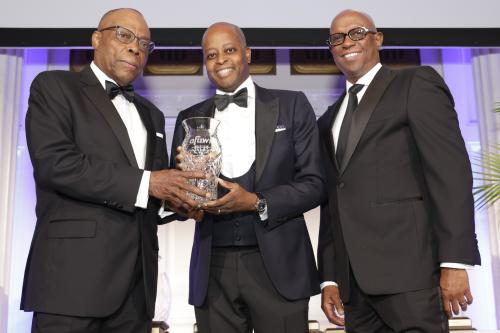
From Dr. Eric Williams to Dr. Wayne Frederick: Howard’s Enduring Caribbean Legacy
Keep Reading
-
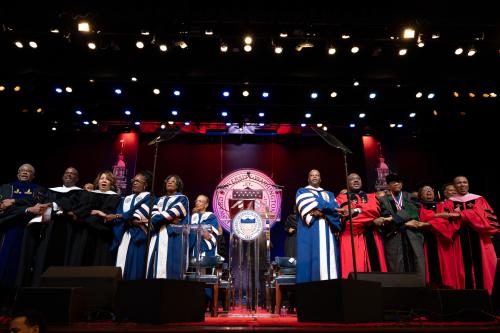 Legacy and Lineage
Howard University Honors Retirees, Inaugurates Academic Year at 159th Opening Convocation
Sep 25, 2026 6 minutes -
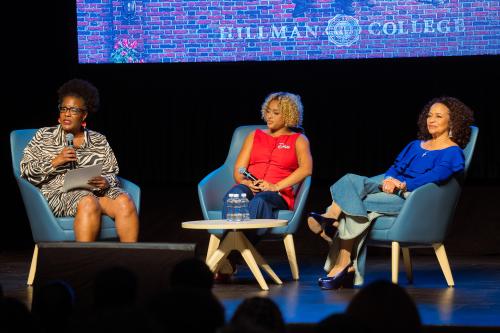 Culture Creators: Arts and Entertainment
‘A Different World’ Stars Come Home to Howard Ahead of Netflix Sequel Premiere
Sep 25, 2026 4 minutes -
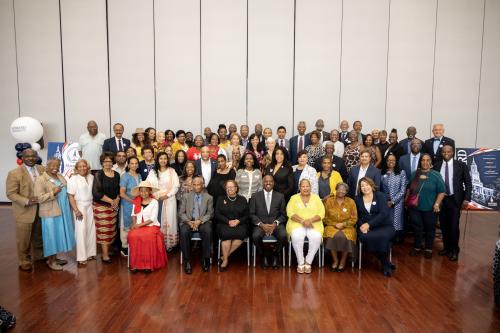 Legacy and Lineage
2,000 Years of Service: Howard University Retirees Honored at Celebration
Sep 24, 2026 7 minutes