

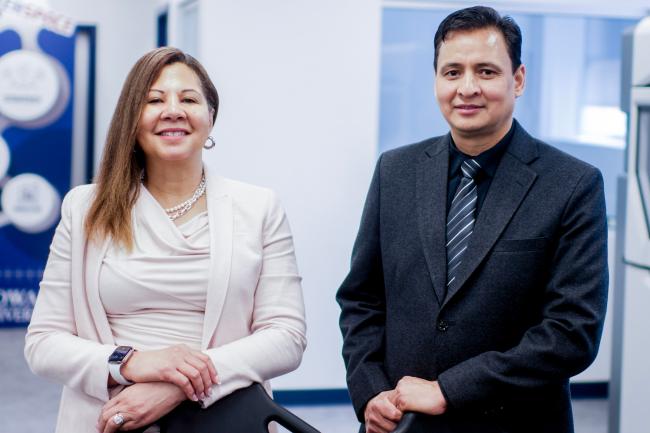
Pictured above: Sonya Smith, Ph.D. and Danda Rawat, Ph.D. Photo by Simone Boyd.
The American Association for the Advancement of Science (AAAS) recently announced its distinguished 2025 Class of AAAS fellows. Howard University College of Engineering and Architecture professors Danda B. Rawat, Ph.D. and Sonya Smith, Ph.D. are honored as fellows among 449 scientists, engineers, and innovators from around the world. The fellowship is a lifetime recognition that honors a distinct cadre of high achievers across disciplines, including research, teaching, and technology; administration in academia, industry, and government; and excellence in communicating and interpreting science to the public. In a tradition stretching back to 1874, these individuals are elected annually by the AAAS Council and are ceremonially presented with a certificate and blue and gold rosette.
"The elevation of Dr. Danda Rawat and Dr. Sonya Smith as AAAS fellows demonstrates their extraordinary prowess in innovation, research, and academic excellence," said Dawn Williams, Ph.D., Howard University's interim provost and chief academic officer. "Howard faculty members continue to show that Howard is home to the world's most impactful and ingenious leaders in scientific discovery and global problem solving, who every day seize the opportunity to tackle the most pressing challenges of our time. Just as importantly, their work profoundly shapes the student experience by exposing our students to cutting edge research, meaningful mentorship, and opportunities to engage directly in innovation that advances communities around the world. Through faculty excellence, Howard student students are not only learning about the future. They are helping to create it.”
Rawat and Smith join an elite roster of fellows representing modern scientific history, including Thomas Edison, W.E.B DuBois, Maria Mitchell, Steven Chu, Ellen Ochoa, and Irwin M. Jacobs.
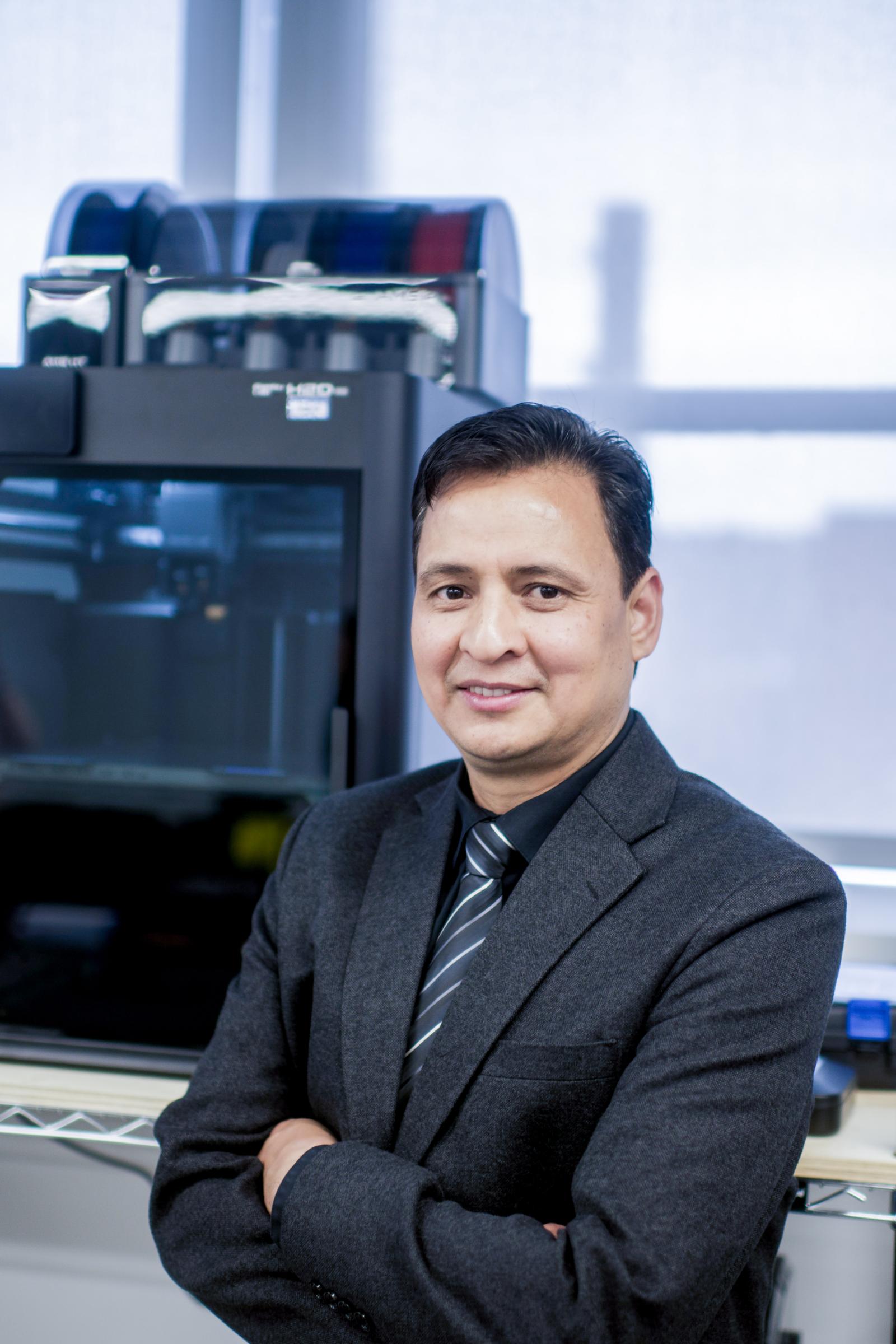
Rawat is an internationally recognized research leader whose work spans cybersecurity, artificial intelligence, machine learning, big data analytics, and next‑generation wireless networking for emerging cyber‑physical systems. He was recognized by AAAS for distinguished contributions to the field of secure and trustworthy AI and machine learning for resilient critical infrastructure and intelligent networked systems. A computer science professor and associate dean for research and graduate studies at Howard, he is also a fellow of the Institution of Engineering and Technology (IET).
“My research focuses on using AI and machine learning to strengthen the security and resilience of critical infrastructure and complex networked systems, where uncertainty and strategic considerations shape decision-making,” Rawat said. “I am also deeply committed to mentoring students — sharpening their analytical thinking and inspiring them to engage with real-world challenges that make a meaningful difference in society.”
Over the course of his career, Rawat has secured more than $110 million in research funding from federal agencies and industry partners as a principal investigator, as well as over $18 million as a co‑principal investigator. Rawat has successfully supervised over 45 students who graduated with Ph.D.s and over 30 master’s degree students. He has mentored 10 postdoctoral students and over 200 undergraduate students.
Rawat successfully led the establishment of the Research Institute for Tactical Autonomy (RITA), one of only 15 U.S. Department of Defense University Affiliated Research Centers (UARC). He served as principal investigator and founding executive director. As the founding director of RITA and multiple high‑impact research centers and labs, including the Data Science & Cybersecurity Center, the Department of Defense Center of Excellence in Artificial Intelligence and Machine Learning, and the CWiNs Research Lab, Rawat has played a transformative role in advancing interdisciplinary research at Howard University.
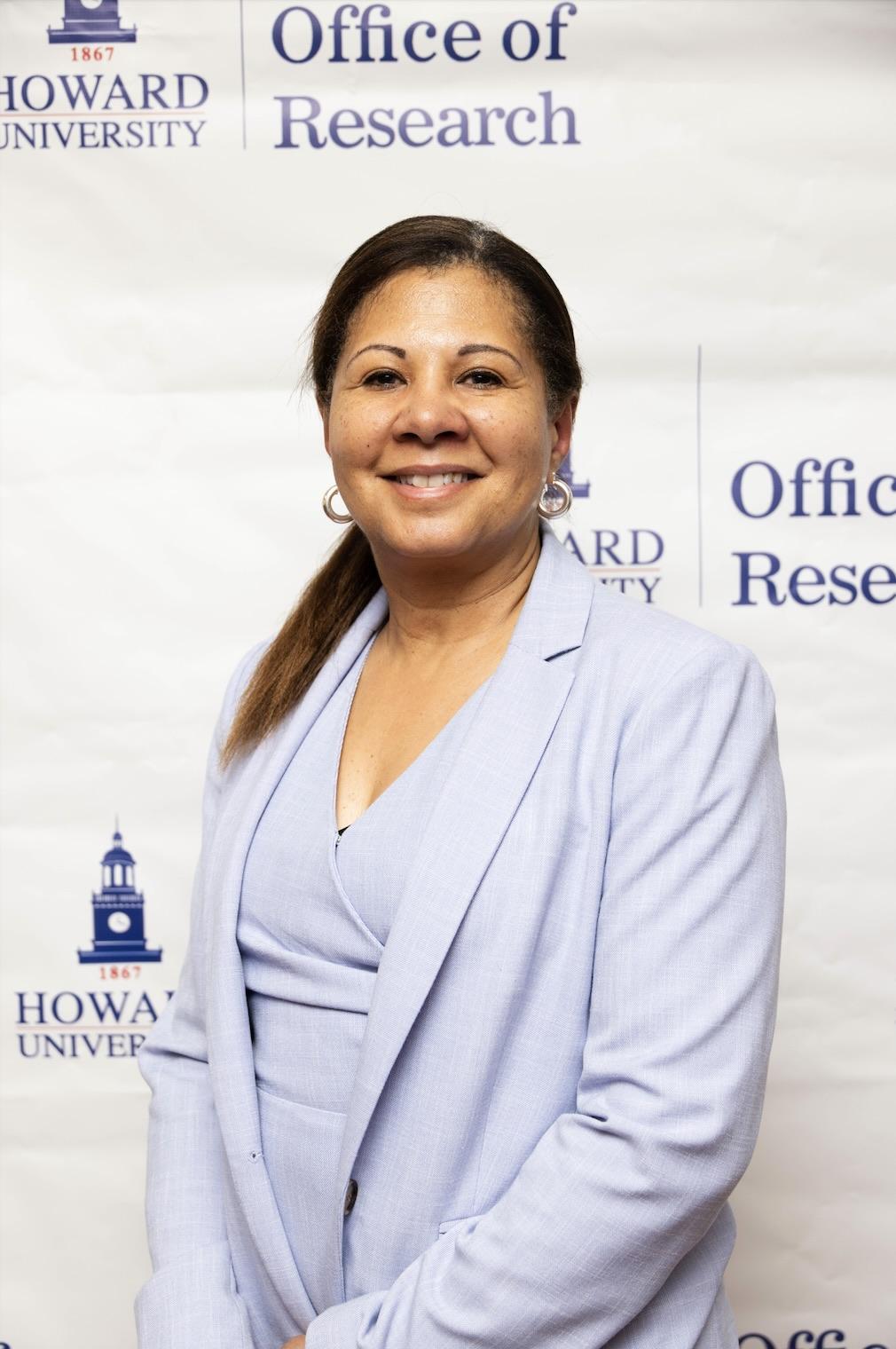
Sonya T. Smith, Ph.D., professor of mechanical engineering at Howard University and current RITA executive director, was recognized for her work in experimental and computational fluid dynamics and for pathbreaking accomplishments increasing opportunities for underrepresented students and researchers in STEM.
“I am honored by this recognition, which reflects the impact of advancing fluid dynamics research and its application to complex engineering challenges of national importance,” said Smith.
A pioneering scholar and trailblazer in engineering, Smith made history as the first African American woman to earn a Ph.D. in mechanical and aerospace engineering from the University of Virginia. She also became the first woman to achieve a tenured professorship in Howard University’s Department of Mechanical Engineering. Her career reflects both technical excellence and sustained leadership in expanding access and opportunity in science and engineering.
Smith has built an internationally recognized research program at the intersection of experimental and computational fluid dynamics, thermal sciences, and emerging technologies. She founded the Applied Fluids and Thermal Engineering Research Laboratory (FTER Lab), an interdisciplinary hub advancing research in complex flow physics, energy systems, and thermal management. Her work has been supported by major sponsors including the NSF, NASA, NIH, and the U.S. Department of Defense, as well as leading industry partners.
As executive director of RITA, Smith leads cutting-edge research in tactical autonomy, artificial intelligence, and human–machine teaming in support of national security priorities. Under her leadership, RITA has become a key driver of innovation while also serving as a pipeline for developing the next generation of STEM talent.
Smith's achievements in engineering have received widespread recognition. In 2021, she was honored as a fellow of the American Academy of Arts and Sciences and she was selected as an MLK Visiting Faculty Member in the Department of Aeronautics and Astronautics at the Massachusetts Institute of Technology. That same year, she was elected president of Sigma Xi: The Scientific Research Honor Society. She is also a fellow of both the American Society of Mechanical Engineers and of the American Institute of Aeronautics and Astronautics. Smith actively serves on the U.S. National Committee on Theoretical and Applied Mechanics and the Space Technology Industry-Government-University Roundtable at the National Academies of Sciences, Engineering, and Medicine.
In addition to her professional achievements, Smith is committed to mentoring students and young professionals. Recognizing the critical nature of providing guidance and support to the next generation, Smith has mentored over 500 students at various academic levels, including postdoctoral, Ph.D., master’s, and undergraduate.
“This year’s AAAS Fellows have demonstrated research excellence, made notable contributions to advance science, and delivered important services to their communities,” said Sudip S. Parikh, AAAS chief executive officer and executive publisher of the Science family of journals, in the association’s official announcement. “These fellows and their accomplishments validate the importance of investing in science and technology for the benefit of all.”
Keep Reading
-
 *Accolades
Howard University CEA Professor Sonya Smith Elected to AIAA Class of 2026 Fellows
Sep 28, 2026 3 minutes -
 Epiphanies, Discovery, and Research
Howard University Researchers Advance Decade-Long Study of HIV and Sickle Cell Disease
Sep 23, 2026 4 minutes -
 *Research and Discovery
Howard University Study Links Medicaid Expansion to Lower Breast Cancer Deaths
Oct 6, 2026 5 minutes