
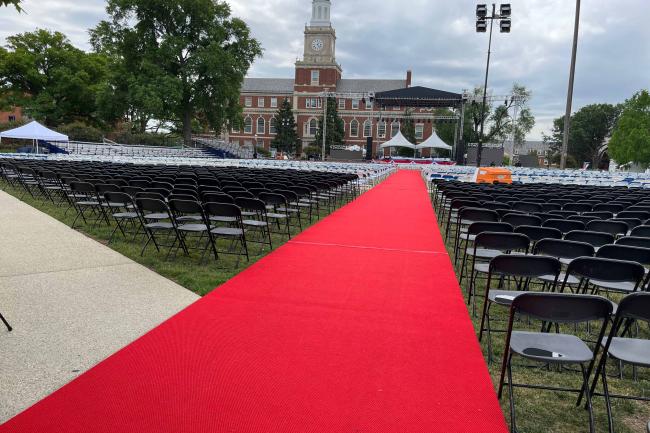
In its purest form, the symbolism of the Long Walk is a sacred gift that strikes fire within the human spirit. Like fire, it must be kindled and tendered.

Did you know that before Howard students can graduate, they have to take what is called the "Long Walk?"
Actually, they take it twice.
Before classes begin for freshmen, they symbolically walk together in a procession from Founders Library and down the center of the university's upper quadrangle, called The Yard, to Greene Stadium. Once they are at Greene Stadium, they receive a pin and are officially initiated into the Howard family. Per tradition, the class will take that journey together only once more: when they graduate. During Commencement, they process from Greene Stadium back down the center of The Yard, where they gather to receive their degrees.
Howard Bison know those two processionals as the "Long Walk."
The Long Walk symbolizes the arduous journey of dedication, maturity, and tenacity which begins as a talented but untested freshman and ends as a degreed Howard graduate on a pathway to make a difference by bringing "truth and service" to the world as a professional and a community leader. In theory, the journey is a full circle odyssey, ongoing throughout a student's academic progression and completed only after they replace the footprints they made as academic neophytes with those of credentialed scholars.
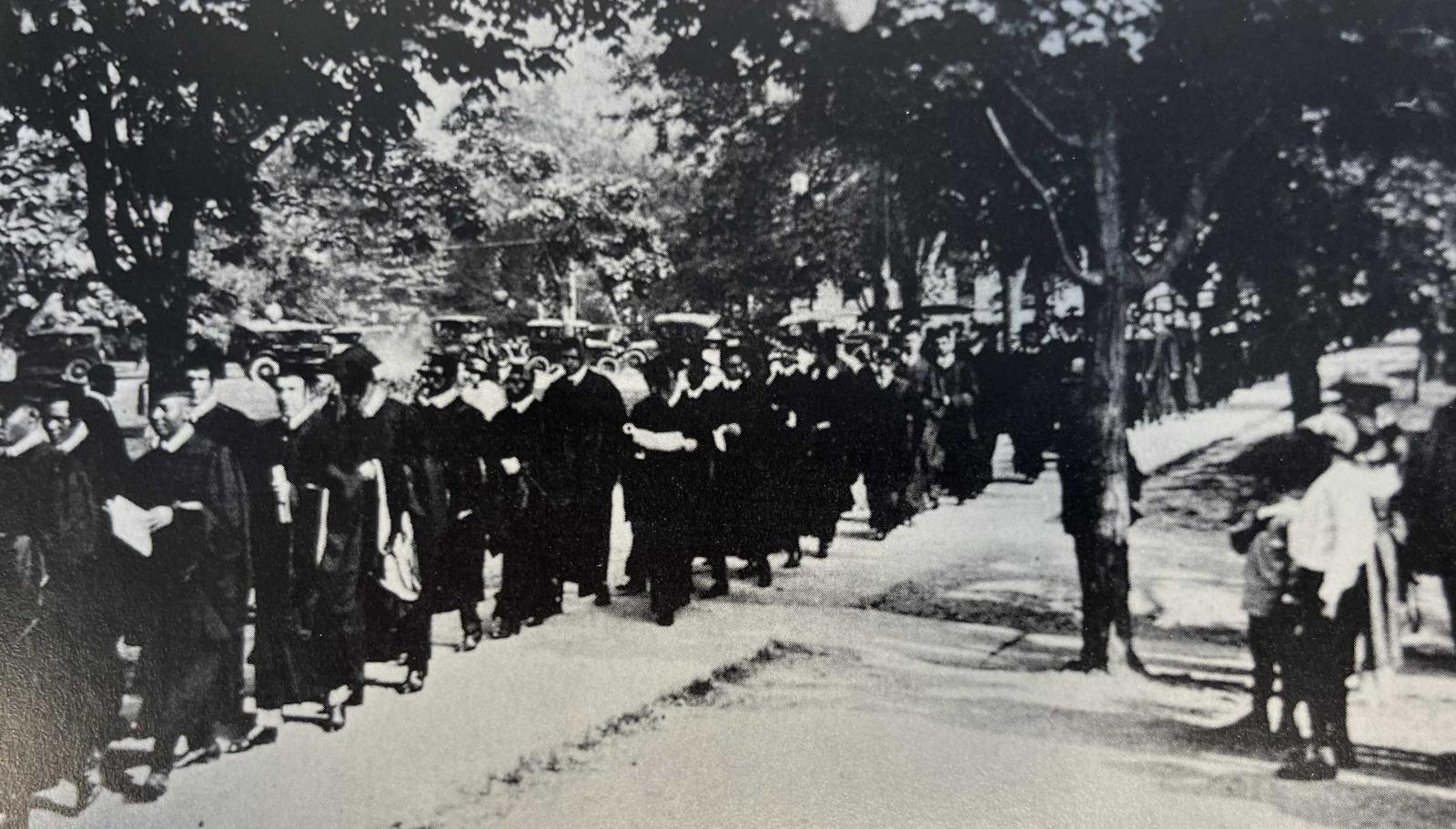
The Long Walk has a mythical symbolic meaning, but it is rooted very much in physical location and tradition. The Yard has been the center of campus since Howard's early days. As on most college campuses, it was designed to create a sense of openness on campus and a relief to the conglomeration of buildings which house academic and research spaces, campus activities, students, and faculty. Originally, The Yard was bordered mostly by trees with no pathway in the middle, creating an uninterrupted green space to be used then, as now, for formal activities such as Commencement and informal activities such as student gatherings and simple meet-ups.
Then, The Yard was bordered on the south end by the Main Building, the 36-room center of campus administration, including offices for the university president, until it was demolished in the 1935 to make way for Founders Library, which was constructed in 1937. The north end was bordered by Clark Hall, which was built in 1874 and served as a men's dormitory until 1958. It was demolished to construct Lulu Childers Hall, which opened in 1961.When the early students walked from the Main Building to Clark Hall across or adjacent to the quadrangle, they called it the "Long Walk."
"The path from Main to Clark created a sense of place within the expansive acreage of Howard University's central campus," Harry G. Robinson and Hazel Ruth Edwards, Ph.D., wrote in their book about Howard's campus architecture and open spaces, aptly titled, "The Long Walk." "It provided direction, it linked physical components, it created identity, and it fostered vitality among the physical elements of the campus. It was both a passageway and a destination. It came to be a defining point of the Howard University experience."
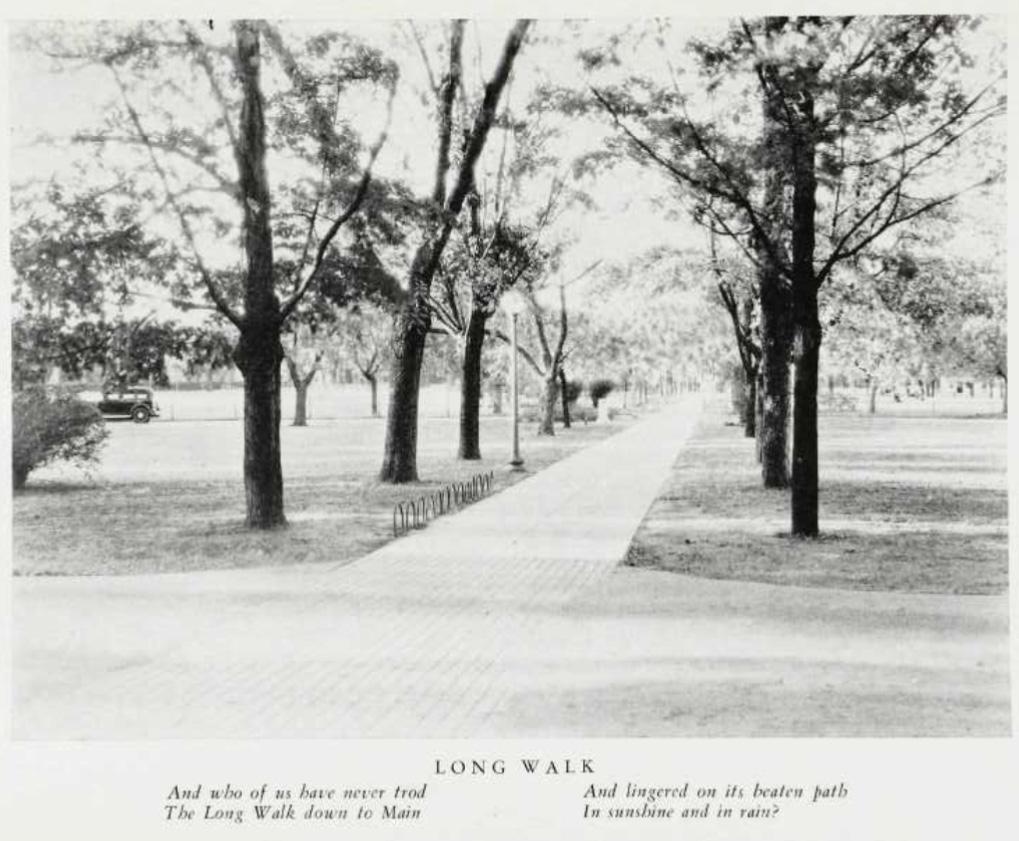
By 1910, a straight, dirt path had been created intersecting the quadrangle, lined by trees, and had become the primary artery for pedestrian movement around campus. By the 1920s, the path was narrowed and paved. Eventually, even more formal elements were added, such as lamp posts. Many of the trees were removed and diagonal walkways were added across the Yard to connect the newer buildings being erected on the east and west of the quadrangle. However, the Yard's central pathway, in existence since the first decade of the twentieth century, continues to serve as the campus' main connection point.
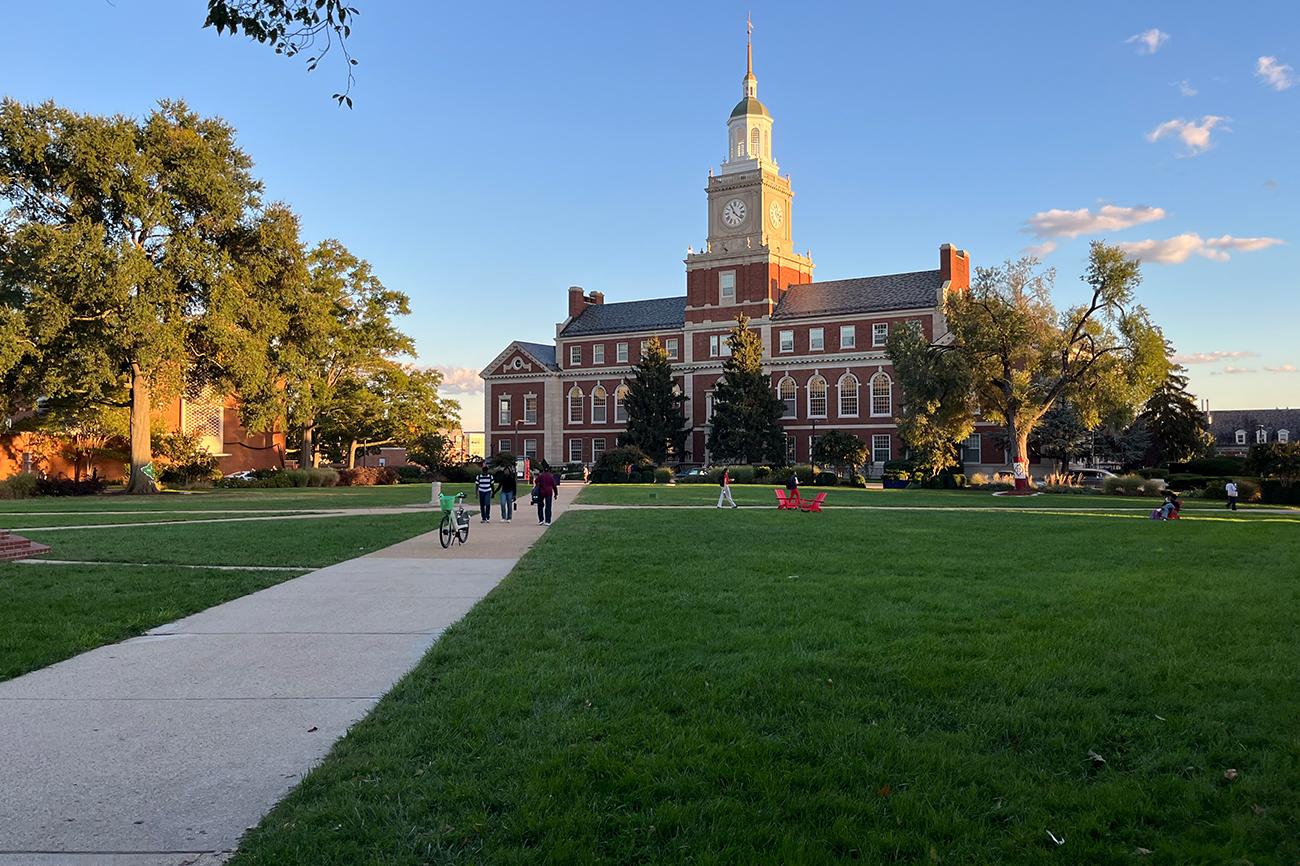
For most of their time at Howard, The Yard's central pathway is a simple stone walkway. For Commencement, however, to symbolize the grandeur of the moment when Howard graduates step out into the world as leaders, the pathway is covered in a red carpet as students process from Childers towards Founders. As much as the Long Walk symbolizes the end points of a journey, it is also central to the journey itself. It connects the various parts of the university; not just the buildings, but also the people who form relationships and share ideas which have impacted intellectualism, discovery, and culture in ways that have transformed the world. It is fitting that the final steps Howard students take as graduates is the pathway which has, both physically and symbolically, enabled so many of the connections which have made them the people that they have become.
Edna Burke Jackson's 1931 poem, also titled "The Long Walk," reflected on the real life experiences that took place down "the Long Walk to Main." As happens in life, she explained that some students encountered there were experiencing days of renewal and refreshment, while others were cheerless. Some students would gather for more boisterous activities, while others would simply talk quietly. Half of the students, she posited, were happy and cheerful, while others were in the middle of heartbreak.
And who of us have ever thought
The Long Walk played a part —
And knew one-half possessed a laugh.
The other a broken heart?''-The Long Walk (poem) by Edna Burke (Jackson)
In their book, Robinson and Edwards articulate the importance of the space and what it means. It is worth noting that even the ground upon which the students walk as they process to receive their degrees represents the triumph of tenacity and achievement over adversity and exclusion. The book points out that the owner of the land purchased to build Howard, John A. Smith, did not initially "wish to have a Negro school in the middle of his property," relenting only after a monetary offer was made that he could not refuse. The fact that Howard students achieve intellectual mastery in numerous fields on land where they were at first unwanted speaks volumes about the historical irony that often, accompanies the "moral arc of the universe which bends towards justice," to paraphrase Rev. Martin Luther King Jr., Ph.D. (LLD ’57), who received an honorary doctorate on The Yard in 1957.
"The Long Walk as a memorable communal landscape element in the pattern of the university's main campus has been the host to everyday pedestrian circulation and the path of manner of heads of state, including presidents, kings, foreign ministers, and other distinguished individuals," Robinson and Edwards write. "Jackie Robinson, Muhammed Ali, W.E.B. Dubois, Mary McLeod Bethune, and the Reverend Dr. Martin Luther King, Jr. share the distinction of having graced that walkway."
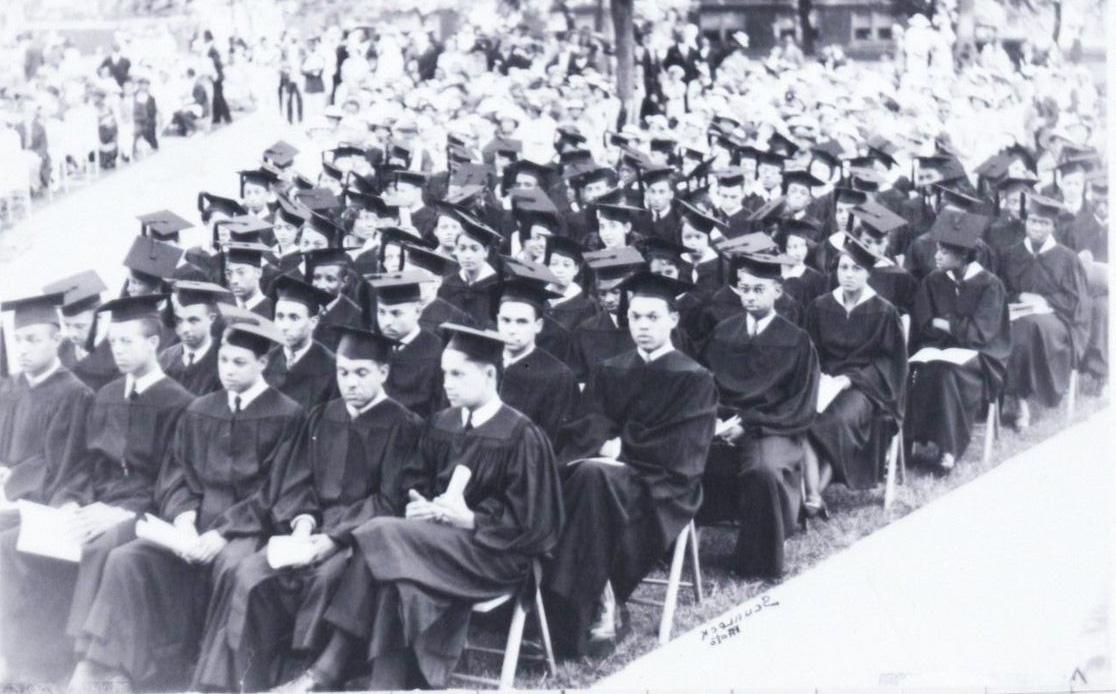
"Annually, Commencement participants traverse its mystical passage in the university's 'town square' as a spiritual thing of the mind (and not just one motion)," they added. "In its purest form, the symbolism of the Long Walk is a sacred gift that strikes fire within the human spirit. Like fire, it must be kindled and tendered."
Historical footnote:
Jackson graduated early from Howard in 1931 (as Edna Burke) after studying Romance languages and social studies and then earned a master's degree from Howard. She was one of the first two Black teachers at Washington D.C.'s Woodrow Wilson High School, which at the time was segregated with only white students attending. In 2020, activists insisted that the name of Woodrow Wilson, a U.S. president who believed in segregation, be removed from the school. The school was named Jackson-Reed High School in honor of Jackson and the school's first Black principal, Vincent Reed.
Keep Reading
-
 Legacy and Lineage
Perfect Performance: Nearly 200 Howard University Class of 2026 Graduates Earned a 4.0 Grade Point Average
Jun 22, 2026 11 minutes -
 News
NewsHoward University Alum Jayson Johnson Named to 2026 Cohort of Knight-Hennessy Scholars
May 19, 2026 2 minutes