

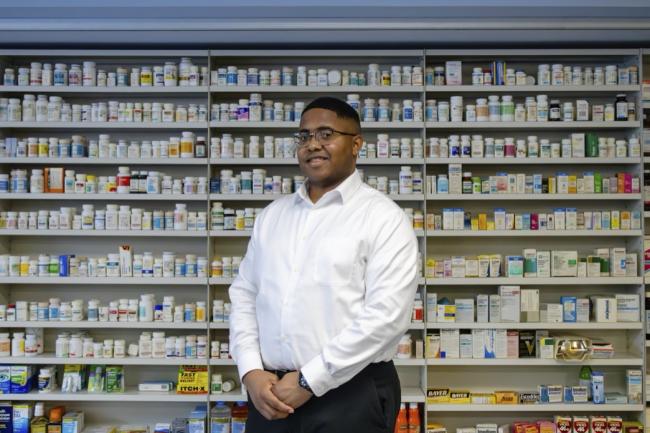
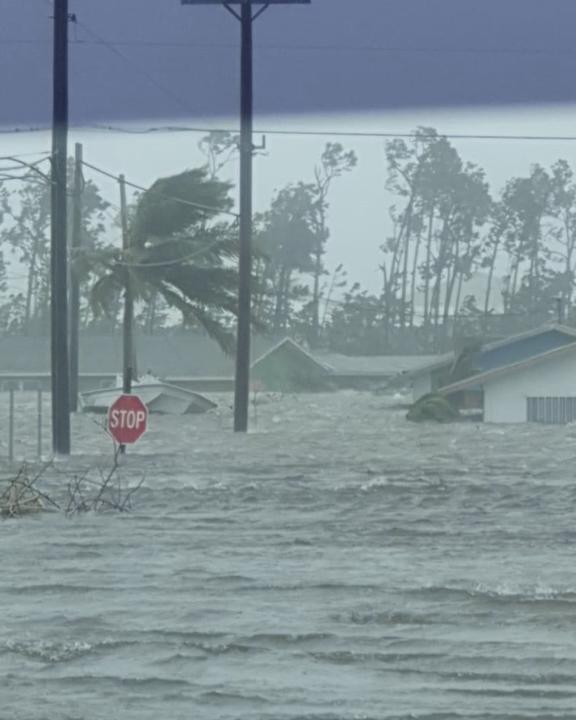
In September 2019, Hurricane Dorian stalled over the northern Bahamas as a Category 5 storm, battering Grand Bahama for nearly 72 hours and leaving catastrophic damage in its wake. For David Ferguson, who is from the island, the experience was overwhelming.
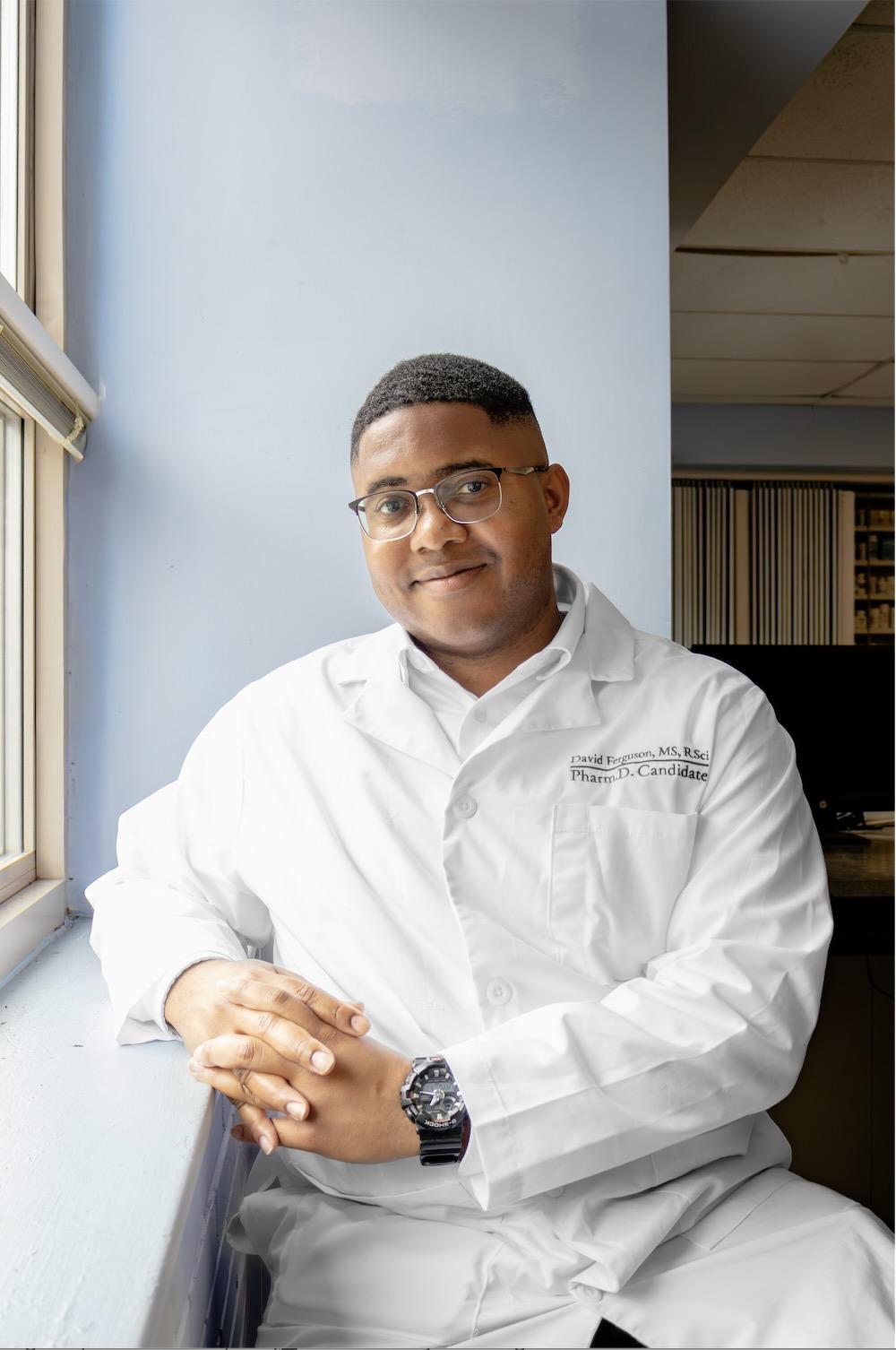
“It looked like Venice, and that’s putting it lightly,” said Ferguson, a third-year student in the Howard University College of Pharmacy who grew up on the island. “The water was so high you needed a boat to get around.”
Schools were destroyed. Entire neighborhoods flooded. Many residents fled the island altogether. Watching from afar, he began thinking about what he could do to help.
“I thought, I’m not an engineer. I’m not a politician,” he said. “I’m a scientist. How can I contribute?”
At the time, Ferguson was in graduate school in the United States pursuing a master’s degree in chemistry at Indiana University Bloomington. He later enrolled in the Doctor of Pharmacy (PharmD) program at Howard University. Howard University’s College of Pharmacy is the only college of its kind in the District of Columbia, offering a range of programs, including a four-year PharmD, an online PharmD pathway, PharmD/MBA, PharmD/MPH dual degrees graduate degrees in sciences, and a post-doctoral fellowship program.
Ferguson said he plans to pursue a clinical pharmacy residency after graduation and hopes to make a meaningful impact in clinical pharmacy practice. College of Pharmacy Dean Ranti Akiyode, PharmD, said Ferguson exemplifies the college’s mission by cultivating excellence grounded in service, embodying the principles of truth and service that define the institution.
The Answer: A Textbook Built From Crisis
The response to the question he’d posed to himself shortly after viewing the aftermath of Hurricane Dorian took shape in an unexpected form: a superhero-themed chemistry textbook.
Ferguson is in his third year of the PharmD program and is expected to graduate in 2027 before pursuing a residency.
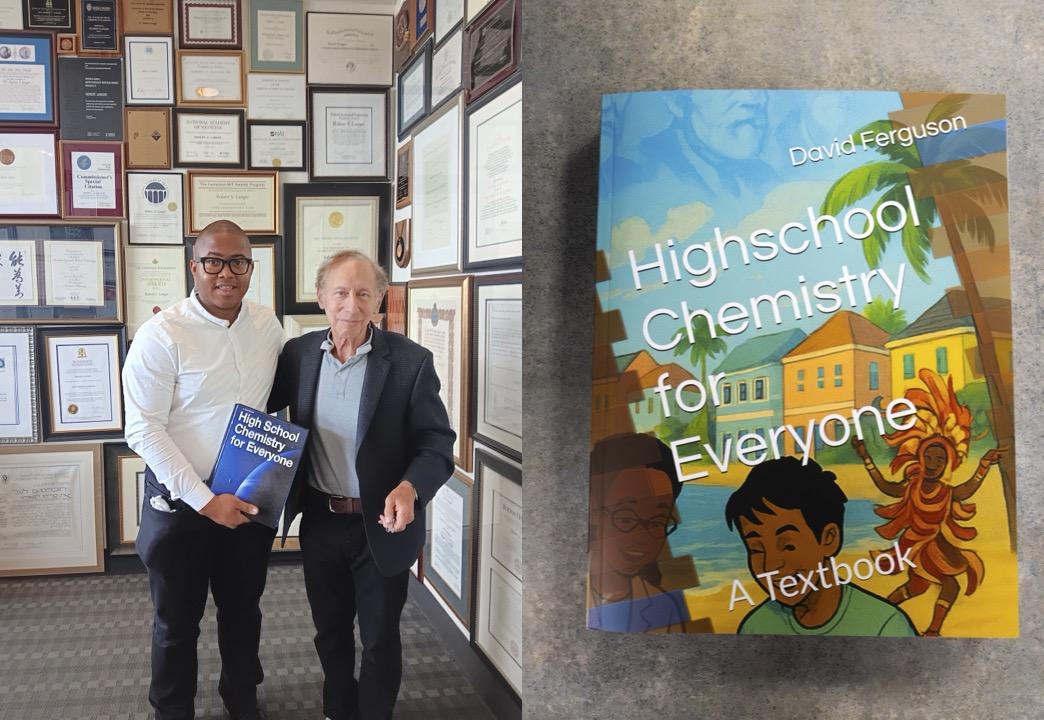
Now 29, he began writing the textbook a few years after the storm to support science education in the Bahamas and help rebuild school labs. Titled “The New Chemist’s Company: Bahamian Superheroes High School Chemistry Book,” it combines elements of a graphic novel, textbook, and workbook. He later developed a second, more advanced version that builds on the first with more detailed, higher-level content.
Unlike traditional textbooks, both are set in a real-world environment. It unfolds on Grand Bahama, one of the Bahamas’ largest and most developed islands outside of New Providence, and follows characters as they move across real locations — illustrating chemistry concepts tied to places like hospitals and industrial sites.
“It’s like a memory palace, connecting places to concepts,” Ferguson said.
Ferguson also included characters of different backgrounds, including women and people of color in science. He saw himself as doing something rare in STEM textbooks: helping students recognize themselves in the material in ways that they hadn’t before.
A Foundation of Discipline
Ferguson’s academic trajectory was shaped long before college. His father attended Meharry Medical College for medical school and later completed a pediatric residency at Riley Children’s Hospital at Indiana University, where Ferguson was born.
Both of his parents are Bahamian and moved the family back when Ferguson was 1 to be near extended family and raise their children in an environment that would support their growth. His mother, Veronica Ferguson, Ed.D., worked as a professor, while his father, Wilfred Ferguso, MD, practiced as a physician. His father now practices pediatrics in his private clinic while his mother rose to become dean of faculty at the University of The Bahamas, Northern Campus.
Education was central in the household. Each evening from grades 1-6, Ferguson completed assigned pages from his regular textbooks along with additional exercises from Abeka workbooks his father selected.
“I did that from grade one until grade six, every single day,” he said. “It taught me hard work. It taught me a structured routine.”
Summers included structured learning and household responsibilities, reinforcing discipline and accountability.
“It wasn’t high pressure,” he said. “It was just clear expectations.”
That foundation led to early academic advancement, including exposure to advanced chemistry concepts such as “electrochemistry” and “galvanic cells” while still in middle school.
“I learned I could enter new spaces with confidence having done the hard work beforehand,” Ferguson said. “If I do the work, then I can contribute meaningfully.”
From Chemistry to Pharmacy
After completing his graduate studies at Indiana University- Bloomington, Ferguson turned to pharmacy to translate his love of chemistry into a real-world profession. He said understanding drugs (chemical compounds) means understanding how they affect the body, including dosage, side effects, and interactions.
“You have to know a great bit of detail when applying chemistry to medications, not just what is going on, but how it works,” he said.
For example, topics introduced in basic chemistry, like sulfur compounds and lithium, later resurface in clinical settings, such as in cases of sulfur allergies or lithium toxicity.
In chemistry, particularly mechanistic organic chemistry, students learn to break processes down into mechanisms. That same approach carries into pharmacy, where understanding how drugs work requires analyzing their effects step by step, including how they are cleared by the kidneys or the liver.
“That’s where we really shine on the healthcare team,” he said. “Having a deep understanding of how drugs work.”
That same connection between theory and application also shapes his textbooks, which are designed to help students see how chemistry operates beyond the classroom. Ferguson said his textbooks remain part of a larger vision, which includes a long-term goal of integrating them into the Bahamian national curriculum.
A Howard University Mindset
Ferguson said he had many colleges to choose from but chose Howard University for a more unique academic experience. Having previously attended mainly predominantly white institutions, he wanted an environment where he could be academically challenged, yet socially grounded.
At Howard — the only historically Black college or university classified as a top-level R1 research institution — he found both, as well as a culture that normalizes ambition.
To prove his point, he references the seminar opportunities which facilitate engagement with leading scholars in STEM sciences, including events that brought such notable scientists as Louis-Charles Campeau, Emery N. Brown, as well as Nobel and Kavli laureates Brian Kobilka and Robert Langer to campus for virtual and in-person seminars.
“The grass is greener where you water it,” he said. “My upbringing and my time at Howard University have shown me that what I want to achieve is doable with good values and hard work. I see people on campus who are striving to achieve.”
Main photos by Skyla Jeremiah, Office of University Communications.
###
Keep Reading
-
 Global and Diaspora
Former President of Trinidad and Tobago Visits Howard University for Fireside Chat on Global Leadership
Sep 3, 2026 6 minutes -
 Global and Diaspora
Howard University’s Global Impact Takes Center Stage During King of Ghana’s Ashanti Kingdom Campus Visit
Aug 28, 2026 11 minutes -
 Legacy and Lineage
Class of 2030 Begins Howard University Journey with 14th Annual ‘Day of Service’
Aug 14, 2026 7 minutes