

A Reach Alliance research team from Howard University is addressing postpartum care gaps in the United States and Ghana. Their newly published research report, “Improving Black Maternal Health: Postpartum Care, Mental Health, and Technology in the U.S. and Ghana,” highlights persistent barriers to care in both countries, despite their distinct healthcare structures.

“It is deeply troubling that the maternal health inequities affecting Black mothers today are rooted in enduring historical legacies and systemic trauma that can be referenced as far back to the shores of Elmina Dungeons in Ghana,” said Amy Yeboah Quarkume, Ph.D., faculty mentor at the Reach Alliance and associate professor at Howard University.
In Ghana, limited resources and a legacy of colonial era-policies shape a health system that relies heavily on informal support networks. The United States, by contrast, spends far more per person — $8,353 in 2023 on inpatient and outpatient care — yet maintains a fragmented, insurance-driven system riddled with racial inequities in both care and policy.
Despite this high spending, the United States still records 18.6 maternal deaths per 100,000 live births, several times higher than in most European countries, highlighting that high costs do not automatically translate into better outcomes.
The research finds that across both countries, the same troubling pattern emerges: Black mothers are overlooked, neglected, and discriminated against. Systems that are meant to protect their health and well-being instead treat postpartum care as an afterthought, withdrawing institutional attention when women face the highest risk of preventable complications and death.
“The barriers look different, but the outcomes are similarly heart breaking,” said the research team.
“Black women often die from pregnancy-related causes, not because they lack contact with healthcare, but because of delayed recognition of complications, dismissal of their symptoms, fragmented care across providers, and failures in escalation and follow-up.”
In fact, Black women in the United States are three times more likely to die from complications related to pregnancy, as detailed in an article published in Howard Magazine in 2024 titled “Black Moms are Dying. What’s the Prescription?” The same article reported that though more than 80% of all maternal deaths are preventable, Black women were found to be 53% more likely to die while in the hospital during childbirth.
The Reach Alliance is a global consortium of cross-sector partners developing student leaders to co-create climate, public health, and economic solutions with hard-to-reach communities. As part of this project, the team conducted a mixed-methods study which analyzed existing health databases with interviews of maternal health advocates, healthcare providers, and postpartum mothers. It centers the experiences of postpartum women to identify solutions to the global crisis of Black maternal health.
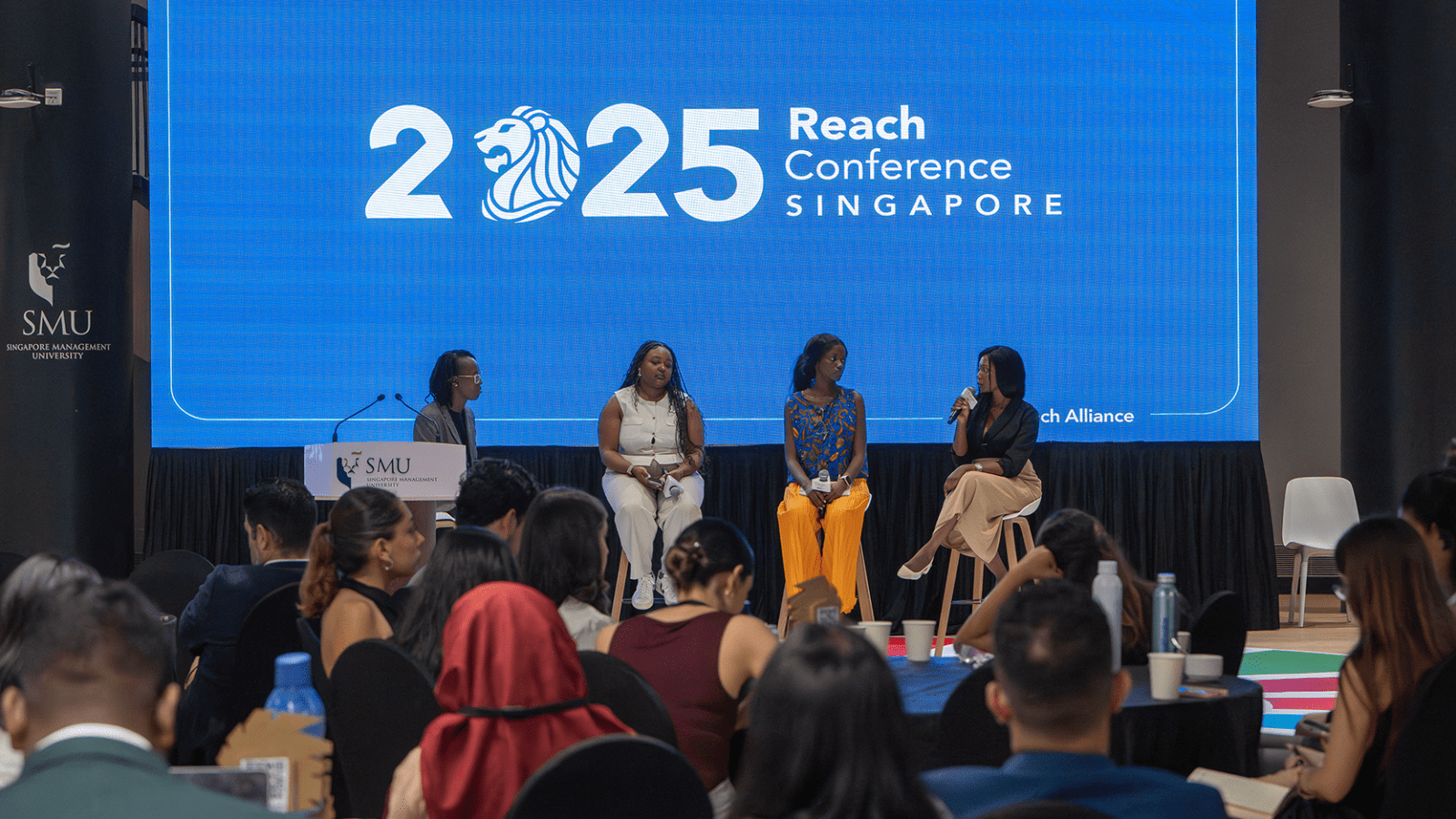
The study arrives at a tumultuous political and historical moment for women’s health, marked by cuts to reproductive health funding, declining access to maternal care, and the reversal of Roe v. Wade.
“We are grateful to the Black women who participated in our surveys and interviews,” the researchers write. “Their willingness to document their realities during one of the most hostile political periods for maternal health in recent history was invaluable to our work. We recognize that bravery and are deeply grateful for their trust.”
Black maternal health continues to be a global emergency, fueled by systemic inequities that place mothers at grave risk.
“My mother was worried about giving birth in Ghana, and I remember thinking the same when I was pregnant with my daughter. I didn’t want to die,” said Quarkume.
“From Washington, D.C. to Accra, Black maternal health is not only a national crisis; it is a global one.”
Black maternal health week (April 11-17) is a reminder that solutions to maternal mortality must amplify the voices and experiences of Black mothers and target the systemic inequities that have led to so many preventable deaths.
Read the full report here: https://reachalliance.org/case-study/improving-black-maternal-health-across-the-african-diaspora-holistically/
Keep Exploring