

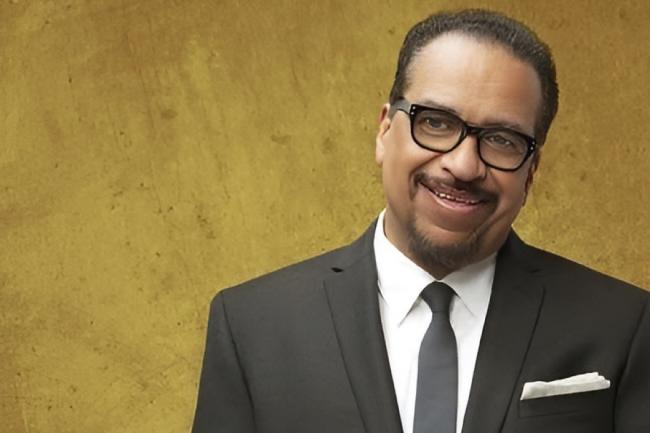
Before Richard Smallwood became a gospel great, he was a 2-year-old humming hymns in his crib. A toddler offering melodies from a tiny piano, a child staging his toys into a make-believe choir, a born impresario already blessing the world with his gifts.
“He would hum music he heard in church,” said Robert Clements Sr., Smallwood’s brother. “His mother exposed him to classical music and gospel, concerts on Fridays, church on Sundays.”
At home, his stepfather, the Rev. Chester Lee “C.L.” Smallwood, pastor of Union Temple Baptist Church in Washington, D.C., brought discipline and structure, while the church became his first training ground at the piano. The late gospel artist’s brother, Robert, remembered those early moments: “We would go over to his house, and his mom would help him with songs on the piano. He would sing and play.”
On Saturday, Howard University will award a posthumous Doctor of Music degree to Smallwood (B.A. ’71, M.Div. ’04) at its 158th Commencement ceremony. His family, including his niece Robyn Clements and her father Robert Sr, will be on The Yard to accept it. They credit Howard with bringing Smallwood’s early gifts to fruition.
The foundation laid by his family was sharpened at Howard, where teachers in the late 1960s held him accountable, family members said, refusing to let him coast on talent.
“He had a lot of support — Roberta Flack was his teacher, and he worked with Donny Hathaway at Howard. They stayed on him. They didn’t let up. He said it really pushed him.”
Smallwood's signature compositions — “Total Praise,” “Center of My Joy,” and “I Love the Lord” — have become enduring staples in churches and performance spaces around the world, blending classical structure with the gravity and soulfulness of gospel expression.
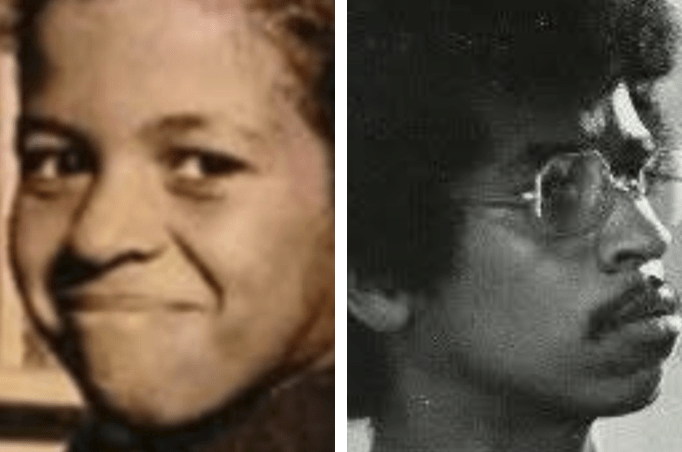
But long before those successes, his family recalled how Smallwood helped reshape the view of gospel music in the academic world. As a Howard student in the late 1960s, he “grew his afro out, had his fists in the air,” Smallwood’s nephew, Robert Clements Jr., stated.
Smallwood and his peers, shaped by rising Black consciousness and a spirit of rebellion, pushed back against academic leaders at Howard who had not yet embraced gospel music.
“They weren't allowed to sing gospel back then,” Clements Jr. added. “They would go from playing classical music, and then when the dean or someone would walk away, they would actually transition to gospel music.”
Smallwood would go on to become a founding figure in that tradition, helping shape what is now known as the Howard Gospel Choir.
###
Related Story

Remembering the Life of Double Alumnus, Gospel Music Pioneer Richard Smallwood
Keep Reading
-
 Commencement 2026
Going Viral: Howard College of Medicine Graduate Shay Taylor's Journey From Hospital Janitor to Doctor Becomes Global Inspiration
May 5, 2026 3 minutes -
 Commencement 2026
Graduating Supply Chain Management Major Joshua Taylor Turns Mentorship into Meaningful Impact
Apr 29, 2026 4 minutes -
 Commencement 2026
Howard University Graduating Senior Zoe Cummings is Paving the Way for New Generation of Black Journalists
Apr 29, 2026 7 minutes