


When a year comes to an end, we often reflect on what was and look forward to what can be. In doing so, many set resolutions for the new year — a promise to themselves and sometimes to others to reach some goal, achieve a milestone, start something new, or end something old. A tradition with ancient roots, New Year’s resolutions have changed throughout history, as has the timing of setting them, and while a noble endeavor, setting, sticking to, and achieving said resolutions can be challenging.
To shed some light on the psychology behind the success and/or failure of New Year’s resolutions, as well as gain insight on the behaviors which influence our individual outcomes, we decided to consult a professional.
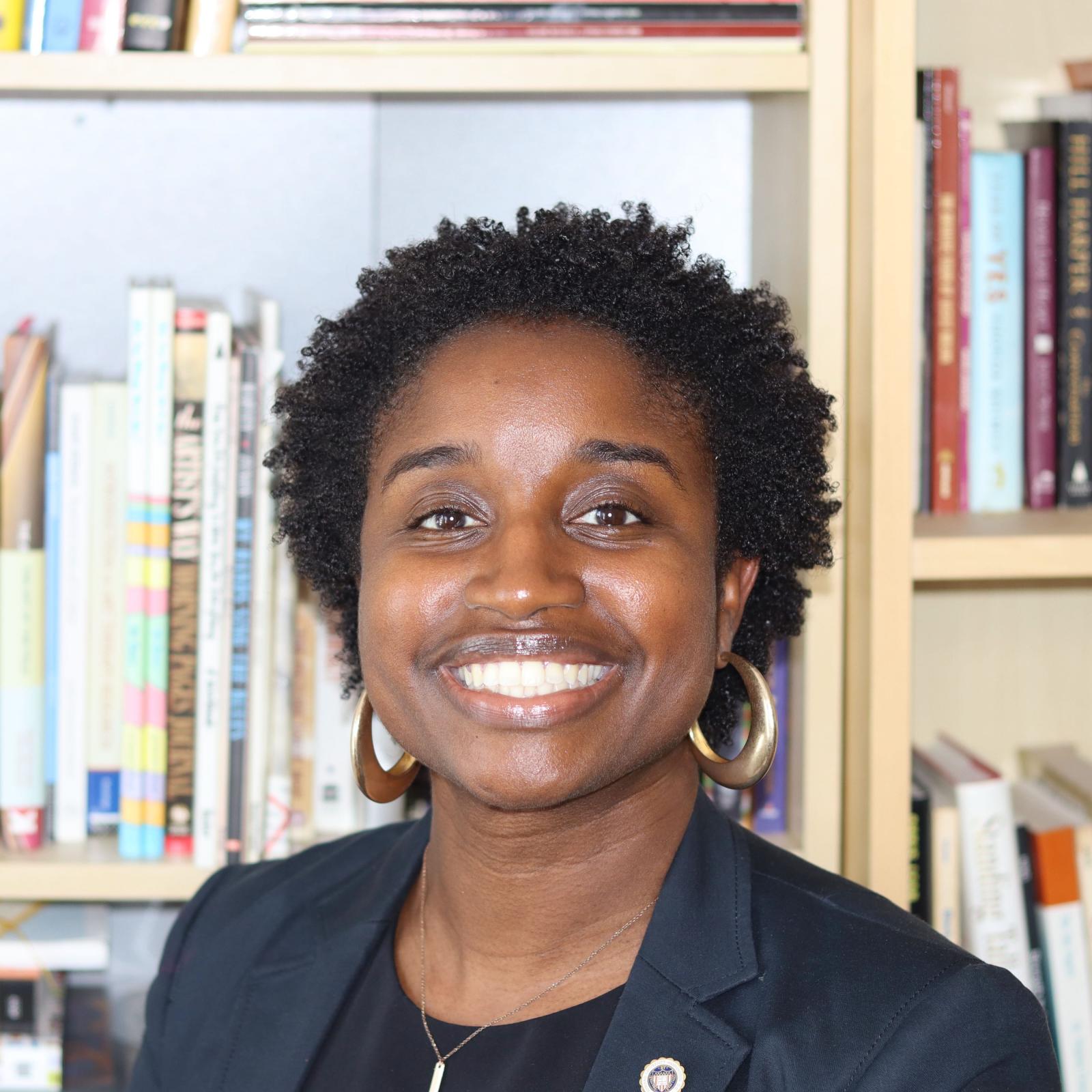
Dr. Monique A. Major (B.S. ’11, M.S. ’13, Ph.D. ’16) is a senior lecturer in the Department of Psychology at Howard University and a faculty fellow with the Georgetown-Howard Center for Medical Humanities and & Health Justice. With a master’s and doctorate in personality psychology, Major’s has always been interested in what makes people different.
“Why is this person like that outside of things like gender, race, etc.?” she questioned, before noting that two people born and raised in the same household can be completely different, for example. Not aware of the field of study before she began her undergraduate studies at Howard, Major said her first personality psychology course really piqued her interest, expanding her mind and thinking in this area.
“We are studying this individual person as the unique combination of behaviors, traits, goals, characteristics, values, problem-solving skills, interests, narratives — all of these different components,” explained Major. “What is this unique combination that makes this person who they are? And then, how is this person not only like themselves, but then how are they also like other groups of people, and then like everyone else who has ever lived? Another layer to it is what parts of personality are consistent across time and situations — it’s a unique field.”
As someone who studies the behaviors of individuals daily, Major’s is qualified to offer a unique perspective on resolutions, especially as it relates to how different people build and develop habits and approach their goals, no matter the date on the calendar.
“I think that New Year resolutions are important,” began Major. “I think that having a time period where we reflect and then we set goals is important. When that happens doesn’t necessarily have to be in January.”
New Year’s Day and Resolutions — A Brief History
Ancient Babylonians are reported to be the first people to make New Year’s resolutions approximately 4,000 years ago. The first to record such celebrations, their new year began in mid-March to correspond with the planting of crops. During a 12-day festival known as Akitu, a new king was crowned (or an existing one reaffirmed), and promises were made to their gods, that if kept, would result in prosperity and good favor for the coming year. This practice happened in Rome as well, with the collective making promises to the gods, including Janus, the god of transitions and beginnings, and participating in rituals which supported the broader group.
Julius Ceasar updated the Roman calendar in 46 B.C. (previously consisting of 10 months and 304 days, with the new year beginning at the vernal equinox) to sync with the sun. Introducing the Julian calendar that most closely aligns with the Gregorian calendar many countries follow today, Jan. 1 became the “first” day of the year, partially in honor of Janus. Though Christian leaders in medieval Europe temporary changed the first of the year to correspond with religious days like the birth date of Jesus in December and the Feast of Annunciation in March, Pope Gregory XIII reestablished Jan. 1 as New Year’s Day in 1582. That said, other cultures — like those in China, Korea, and Vietnam — use their own calendars to mark significant celebrations. For example, the Lunar New Year, celebrated between late January and February, coincides with the first new moon on the lunar calendar.
The origins of traditions can be interesting on their own, but in the case of goal setting or making resolutions, they’re particularly noteworthy. For centuries, people have decided that on this particular day, we set our goals or intentions for the year ahead. However, one size doesn’t fit all.
“There is power to making resolutions in January, if you need it,” said Major. “For some people, a lot can happen between January and December. So, they need a hard stopping point to say, ‘This is the end of the year; now I’m moving into something new.’ If that needs to happen for them in January, that’s fine.”
As evidenced by ancient practices aligning with agricultural calendars or those following the cycles of the moon, others may find winter or simply Jan. 1 to be a less-than-opportune time to embark on implementing new habits or goals. Especially those living in places where it’s cold and/or dark during that time of the year.
“For some people, the winter months are a time for resetting, for hibernating, for reflecting and thinking about their individual lives and what’s happening in the world around them. And then when spring comes, it becomes an opportunity for them to bring to light what they’ve been working on,” explained Major.
“Understanding how you operate and exist as an individual in the world is very helpful when it comes to achieving your goals.”
Why Some Succeed and Others Don’t
No matter when you start, it’s important to do some self-reflection beforehand if you hope to be successful in setting and achieving goals.
“Understanding how you operate and exist as an individual in the world is very helpful when it comes to achieving your goals,” said Major. “That requires some self-study that might require seeking out counsel from those around you. It might also require talking to a therapist or a mental health professional to help you figure out your natural cycles for helping you to achieve the goals.”
Major believes that having a plan and strategy for implementation greatly impacts one’s ability to meet their goals.
“Sometimes people have an idea without a plan,” she said. “I love personality psychology because it’s a wonderful lens for creativity research — the study of creative outcomes (including experiences) and the people, processes, and environments that shape them. If an artist is making a work of art, they start with an idea, but there are certain steps along the way before they get to the final outcome.”
In other words, one needs a plan to get from point A to point B.
“If [someone has] an initial goal, that goal then needs to be broken down into smaller, more digestible parts so that they’re able to achieve that larger goal,” said Major. “Factors like personality and the way people were raised is going to have an impact on goal achievement and what goals look like for them, as well as other social factors.”
Those who are able to be flexible and allow themselves some grace tend to fare better when it comes to meeting resolution goals.
“Goals can work when people are flexible about what they are trying to achieve,” said Major. “If the goal is to quit smoking, they must understand that it might not be a linear path to cutting back — they may have some days or weeks when they meet the goal, and other days or weeks when they don’t — and they shouldn’t beat themselves up.”
Major went on to discuss the importance of rewarding oneself for the small wins.
“It’s easy to say I want to quit [smoking] cold turkey, and you might have the plan, but it’s also nice to have some kind of reward system along the way,” she said. “So, you say to yourself, ‘If I only smoke half a pack this week as opposed to a pack a week, I’m going to reward myself by getting some ice cream.’” She emphasized that the reward itself needs to be personally motivating to the individual.
“It has to be consistent with who the individual is,” she explained. “A person could say, ‘Monique, if you run every day for five miles, I’ll give you ice cream at the end of the week.’ I’m going to say no, thank you. I’m a Philly girl. Give me water ice!” she laughed. “The reward has to align with the individual, their interests, and their goals.”
What’s Your Why?
In today’s hyper-connected world, we are often influenced without even knowing it in good and bad ways. While being more health-conscious and practicing self-care is a good thing, for example, your resolution to exercise and meditate should come from you first and be something you honestly want to do.
“If your goal is to run a marathon, why do you want to run a marathon? And it doesn’t have to be because you want to win the marathon, it might just be because you want to run a marathon — I want to experience what it’s like to achieve this,” said Major. “Understanding your why, I think that’s a big, big component of it.”
Major recommends examining your motivations to ensure your desired goal is coming from within and not only being influenced by outside forces.
“I love mentoring our undergrads here at Howard, and sometimes they’ll come to me and say, ‘I have a goal of doing X, Y, or Z,’ and I’ll say, ‘that’s wonderful. Why?’”
The students often don’t have an answer to the question outside of what a parent has told them, or what they’ve been exposed to via social media.
“That’s not to say that people can’t achieve those goals when they are what we call extrinsically motivated,” explained Major. “But what we know, especially when it comes to creativity, oftentimes when people are intrinsically motivated to do something, the results tend to be more creative and they’re more likely to commit to it and achieve that particular goal.”
An argument can be made that extrinsic motivation via social media, for example, is why some people do not set New Year’s resolutions, being influenced to make better health-related choices or lean into self-care, etc., on a consistent basis. A recent report from Brandwatch found that resolutions specific to Jan. 1 actually fell about 50% last year compared to the year before. As more people engage with social media and the personalities behind the screen, collective movements can begin. In other words, perhaps an influx of people discussing health and fitness online has influenced or inspired others along the way, making these traditionally longer-term goals part of our everyday lives.
In this way, the communities we build online can be helpful, as they allow us to create shared spaces for connection and in some cases motivation to meet our goals. However, Major urges us all to remember the benefits of in person connection.
“We also need to make sure that we are getting together outside of those social media and digital spaces because it’s good for us on so many different levels.”
... oftentimes when people are intrinsically motivated to do something, the results tend to be more creative and they’re more likely to commit to it and achieve that particular goal.”
Community Support and Grace
That said, building and being in community is still important. We often need the support of others to achieve goals — personal and otherwise, digital and in real time.
“Another factor that can impact if people are able to achieve their New Year’s resolutions is social support,” said Major. “We live in a society where people want to set goals and they have these dreams, and sometimes they feel they have to do it on their own.” This may not be surprising in relation to New Year’s resolutions, which are much more personal today than in the past.
Shifts from collective well-being and community-based resolutions to more personal and self-focused ones are perhaps to be expected as civilizations have changed and grown. For example, in the United States, a Gallup poll found that in 1947 the most popular resolution focused on improving one’s disposition, understanding, and ability to control their temper. This resolution seems tied to being a better neighbor or in better community. However, in 2024, Gallop reported resolutions tied to exercising, health, and diet, personal goals that an individual is ultimately responsible for achieving themselves.
No matter the goal or resolution, or what day on the calendar you begin, the keys to success lie in understanding our why, having a flexible plan which allows for the celebration of little wins, knowing who we are and what motivates us as individuals, and remembering to lean into community.
“What we know is that when people work together to achieve goals, they can move through them, and it helps them to achieve them,” said Major.
She also stresses that just because a goal may not happen on a certain timetable doesn’t mean it never will.
“Understand that sometimes there are factors that can prevent you from achieving the goal, but that doesn’t mean that the goal cannot ever be achieved. Be flexible and give yourself grace.”
Keep Reading
-
 *Community
A Backpack, a Fresh Start: Howard University Supports D.C. Students
Sep 29, 2026 3 minutes -
 *Partnerships
Marriott Leaders Bring Knowledge, Experience, and Advice During Howard University Student Visit
Sep 28, 2026 8 minutes -
 News
NewsHoward University Names Jasmine Gurley as Senior Director of Public Relations
Oct 14, 2026 3 minutes