

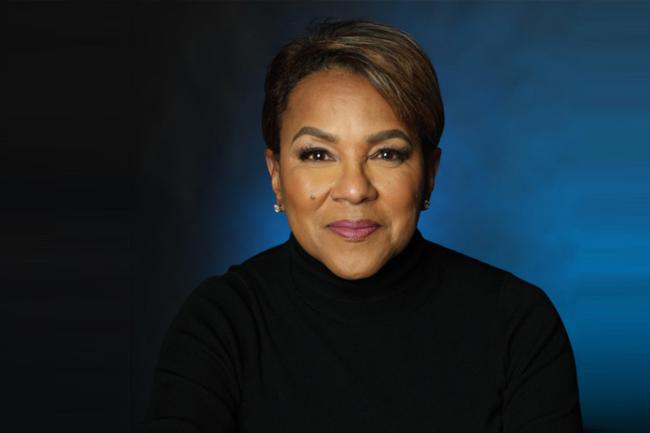
There’s no better time than now for us to be partners in how we educate young Black people.”
Spelman College Interim President and Chair Emerita Rosalind Brewer will receive an honorary Doctor of Laws degree during Howard University’s 158th Commencement Ceremony on May 9.
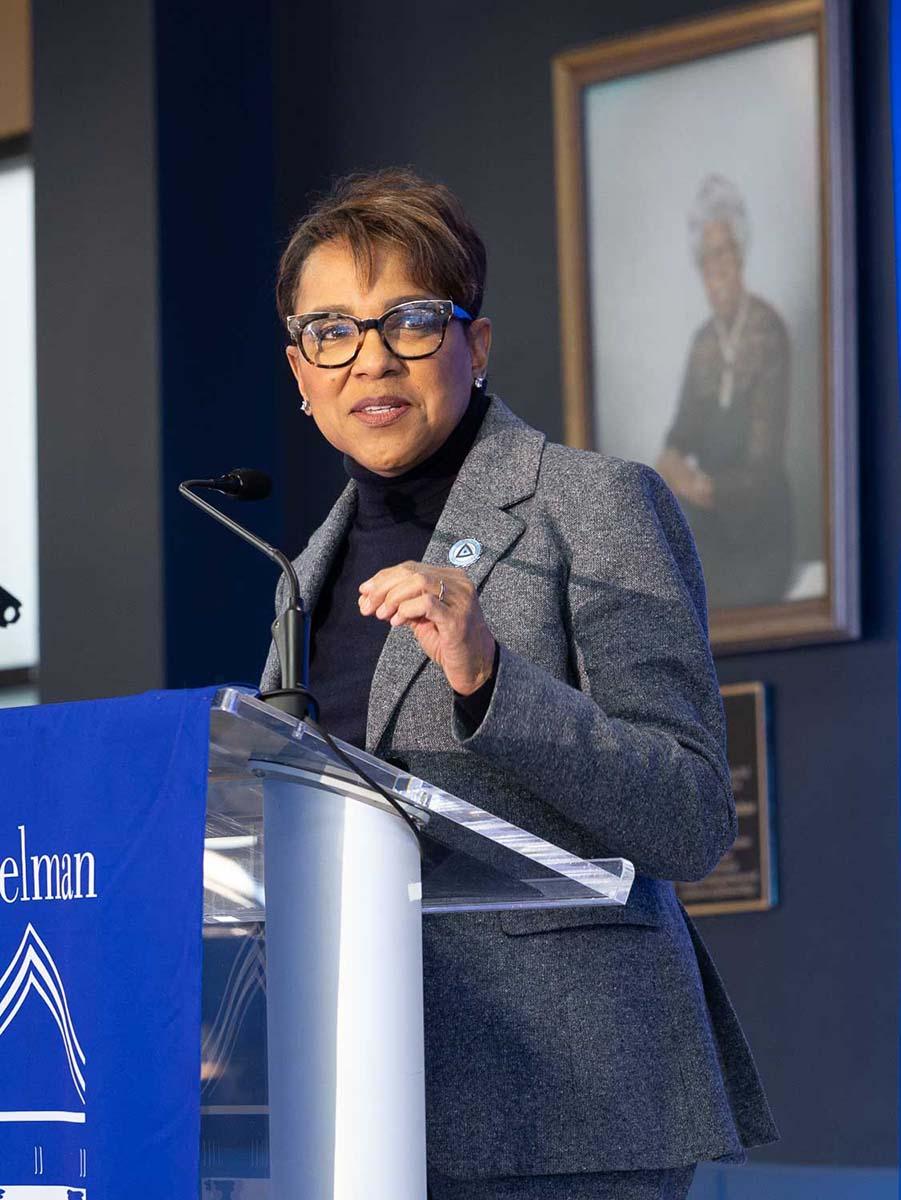
“I’m really excited about receiving this honorary Doctor of Laws from Howard University.” said Brewer. “It means a lot to me. To be recognized by a fellow HBCU gives me great pride and honor, and actually to represent the students and graduates of Howard University means everything.”
Coming from another highly regarded and much-loved HBCU, the renowned corporate executive — and one of only a handful of Black women to reach the C-suite of a Fortune 50 company — Brewer better than most knows the importance of institutions like Howard and Spelman, not to mention the power they wield when coming together to shape and prepare the next generation of Black leaders.
“The message I bring to Howard University from the gates of Spelman College is that there’s no better time than now for us to be partners in how we educate young Black people,” said Brewer. “I think that HBCUs are so relevant right now because our young people need to know where they can thrive. We need to give them the best preparation, and having been an alum of Spelman College, I absolutely know what is going to be required for these young people as they finish.”
The Importance of HBCUs
As we enter graduation season and prepare to send the Class of 2026 out into the world — a world that looks very different than it did even 10 years ago — we think about the role Historically Black Colleges and Universities (HBCU) continue to play. Providing a solid education is at the core of any university’s mission and responsibility to the students who fill its halls and walk its campus. Brewer notes that HBCUs, however, have traditionally been institutions of higher learning of not only academics, but of self.
“I don’t think there’s any other place in a young Black person’s life that they can fulfill whole agency for themselves,” explained Brewer, stating that students at Spelman and Howard not only receive “what they can learn in the classroom, but the nurturing from the faculty, from the staff, from the alums, that help them understand that their voice matters, their agency matters.”
She went on to express the holistic aspect of HBCUs and how that uniquely prepares students for life after their schooling is complete.
“We want them healthy on the inside. We want them to be able to matriculate in any workforce environment. We want them prepared for this next workforce. And we also want to make sure that they know that they have a home to come back to,” she said. “That’s one of the things that I think an HBCU can do hands down better than any other institution, and probably any other factor in their life, is to have what I call a second home.”
We, as HBCUs, need to address the issues that we are uniquely capable of solving for this country.”
Preparing the Business Leaders of Tomorrow
Today’s business climate can be described as fraught, to put it mildly. According to recent data from the Bureau of Labor Statistics, approximately 7.2 million people were unemployed in March of this year, and when you look at the date by group, those identified as Black account for 7.1 percent of that number compared to 3.6 percent identified as white, and 4.8 percent identified as Hispanic. When it comes to Generation Z, those born between 1997 and 2012, that rate sits at 8.3 percent — roughly double. Combine those numbers with the rise of artificial intelligence (AI) replacing some entry level roles, today’s graduates are facing new challenges on top of the normal barriers typically faced when entering the job market, no matter the industry.
On the institution side, what can be done in support of Black students who, from the numbers, are likely to be more significantly impacted in the current environment where certain programs and even terminology is no longer allowed? While it can seem like this is all new territory, Brewer reminds us that we’ve been here before.
“One of the things we’ve been talking about at Spelman is that we feel like we are in the fourth reconstruction of this country, and we go back to 145 years ago when institutions like Spelman and Howard were coming into fruition,” she began. “Many of us started in the Black church, close to the Black church, with less than $500. And that was reconstruction of 1887, 1881 timeframe, and then Jim Crow laws came about, and if you just really think about that, it feels oddly familiar to me right now, in that same vein.”
She continued, noting that therefore, there are a few things institutions like Spelman and Howard and their fellow HBCUs should be thinking about to prepare our young people to “become the Roz Brewers of the world and the academics of the world.”
“First of all, it does start with strengthening our institutions so that we’re financially sound for the long haul. I think that some of the pullbacks that we’ve seen from all of the government changes tend to impact us the most,” she said, before expressing her concerns around AI.
“Secondarily, I would tell you that I’m very concerned about matriculating in the workforce. I think that making sure that our students are AI proficient, understand it, respect it, but also know how to discern social justice in AI — that’s equally as important as learning how to integrate AI into the academy,” she continued.
“Lastly,” Brewer said, “it’s important for us to think about the business of higher ed.” The businesswoman called it a “transformative time for HBCUs and young Black people in higher ed,” recommending that HBCUs consider looking into various revenue models to support students, as well as Black male enrollment.
“We, as HBCUs, need to address the issues that we are uniquely capable of solving for this country,” she said. And I think we have a really amazing role in what we can do to really change the trajectory of what I call this fourth reconstruction.”
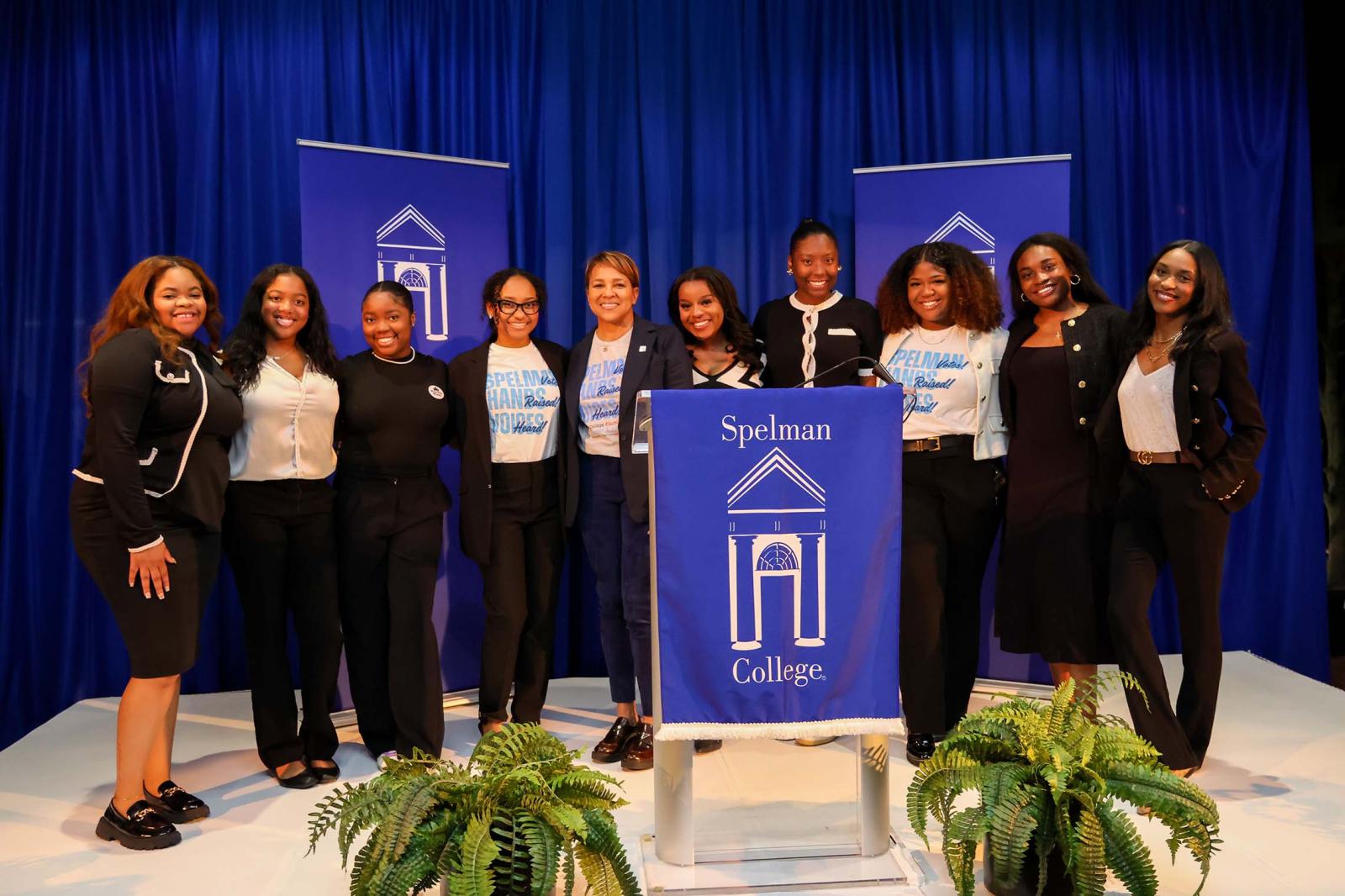
When asked about pushing back on narratives that attempt to diminish the impact or worth of institutions like Howard and Spelman, especially as it relates to current rhetoric around DEI, Brewer recommended claiming the uniqueness of being HBCUs.
“Let’s claim who we are,” she said. “Our students that leave HBCUs, they know who they are. They know what they’re made of. They know how to say no, and they know when to say yes. And I think that’s the difference in our graduates that we see from HBCUs. We should be proud of that. We should be pressing that issue.”
“This is not an issue around DEI,” she added. “This is an issue around competence, and our students are more fully prepared, and I’ve seen it time and time again, than their competitive set.”
Leadership is how you treat people, your integrity, your honesty, your dignity, and how you carry the brand that you work for.”
On Leadership and Business
Brewer’s career is marked by extraordinary leadership and impressive firsts. She served as the president and CEO of Walgreens Boots Alliance, chief operating officer of Starbucks, and president and CEO of Sam’s Club — just to drop a few household names — and was recognized as one of Fortune’s “Most Powerful Women in Business.”
At times the only Black woman to sit in the C-suites of these companies, Brewer used her position to not only lead, but to do so with grace and with a mission to uplift those around her. Admitting that her competitive nature propelled her through the corporate environment, what she learned early on was that leadership is about people.
“Leadership is how you treat people, your integrity, your honesty, your dignity, and how you carry the brand that you work for,” she said. “That leadership comes from not only your technical competency, but who you are as a person.”
An example, and one of the many reasons she is so deserving on the honorary degree she is receiving on May 9, involves the work she did at Sam’s Club.
“I chose to work for Walmart Stores Inc., back in 2006,” began Brewer, who said she accepted the role knowing that of the 2.2 million employees they had at the time, 50 percent were people of color. “I knew if I could make one decision, I could affect over a million people. That, to me, was significant impact.”
She would be named CEO of Sam’s Club after just five years. “I was responsible to look at Sam’s Club as a whole, and the first thing I looked at was my HR and compensation position, and I asked them to align my reporting by race and gender, and I noticed inequities. I just shared it back with HR and just asked the question. When I asked the question, they said, ‘Well, that’s interesting. We didn’t realize that.’”
“We were able to immediately provide comparable raises to people of color and minorities by race and gender,” Brewer said. “We led the industry, the retail industry, and then Target followed, and others followed on race and gender equity in terms of pay and compensation.”
Brewer took a chance on the role with Walmart, knowing that she could have been what she called a “token” hire, but understood the importance of being in the room. She also understood how to use her voice as a Black woman to bring about change and lead others to do the same. And she did it by being herself.
“What I learned sitting at some of these uncustomary tables for us as Black women and Black leaders is that it is really important that you be authentic, because every moment is a teachable moment. And sometimes when I’m sitting around a table and there’s no one else that looks like me, I really take the opportunity sometimes to be provocative, because I feel like it’s a learning moment. Many of them haven’t been around people like ourselves, and they’re curious, but then I want to make sure that they leave with an impression of competence, engagement, and willingness to work.”
“I also think, too, that it’s an opportunity, when you’re in these rooms, to bring other people along,” she continued. “I take the opportunity to talk about my circle of other Black people, Black folks that we all know and share their experiences. Because you’re not sitting there just to collect a paycheck — you’re sitting there purposefully, intelligently.”
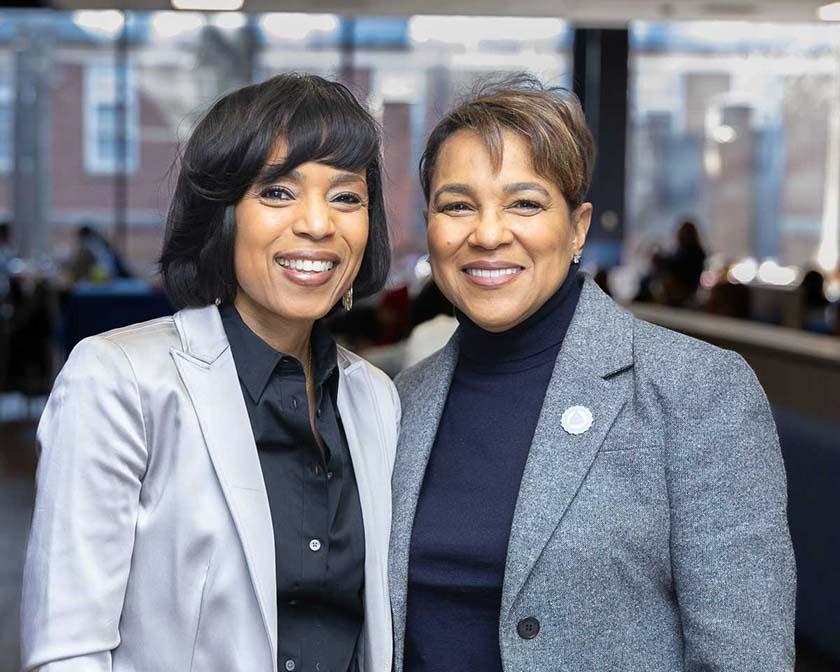
To the Graduating Class of 2026
When asked what advice she had for the graduating class of 2026, Brewer again acknowledged the workforce they will be entering, as well as the challenges facing those who may want to continue their education through graduate and Ph.D. programs, noting research dollars and loans being cut, as well as the unemployment rate for people of color.
“We’re talking about being undaunted at Spelman College, about making sure that we are broadening what you are getting in your four-year degree,” she said. “We’re trying to analyze right now, what does it mean to have a certificate that could maybe put you a little bit further ahead if you had combined a certificate like in project management along with your four-year degree. I think I would love for these students to really develop the relationship with their advisors right now.”
She also advises attending company events on campus and emphasized planning for what’s next, now.
“This is a time to really plan and plot and be very clear about what you want to do,” she said, noting that five years ago her advice would’ve been to enjoy college and not be too planful. “Unfortunately, this is a time to plan, and this is a time to put those summer internships into gear and pay attention to what’s happening in this world of new technology because it is advancing.”
Again, she encouraged learning about AI and how it is integrating into work practices, as well as seeking out mentors, though she encourages that those mentors look a little different.
“I think it’s time for peer mentorship,” said Brewer. “When you come in and there are other young people coming into the company at the same time, I think that it’s time for us to make sure that they bond together, because I think the family feeling that our young students that attend HBCUs, I think they’re going to need it a little bit more to talk through what they’re feeling, because the resources won’t be there. When DEI programs were there, there were a lot of programs for them to engage in. But I think peer mentorship is really important, sticking with other people like you, and then integrating in areas where people don’t look like you.” And of course, network.
I think this is a prime time for us to think about building our own, and I get excited about that.”
Looking Forward with Hope
As one of Fortune’s “Most Powerful Women in Business,” and president of one of the top HBCUs, what gives Rosalind Brewer hope for the next generation of business leaders? Their tendency to want to own their own.
“One of the things I’m most excited about is to see how many young people are interested in entrepreneurship, and I know that may sound uncommon for me, someone who chose a corporate career ladder, but I really am excited about how these graduating classes are thinking about being independent business owners,” said Brewer. “The way they’re thinking about learning first maybe from a company and then jumping out maybe in a couple of years, getting an MBA, and then going into their own business. I think this is a prime time for us to think about building our own, and I get excited about that.”
While Brewer believes that young people can benefit from time in a corporate environment in order to get a feel for business and how it works and also advises a focus on financial acumen, she’s impressed with the options and centers for entrepreneurship, for example, being developed on her college campus (and at Howard). Again, she compares this time to reconstruction of the past.
“I think during this period of reconstruction, remember how we got started, and remember Tulsa. Where’s our Tulsa? I get excited thinking about these young people: They’re independent thinkers. They’re capable. They can do this. Let’s start some new companies, some new ideas.”
Keep Exploring
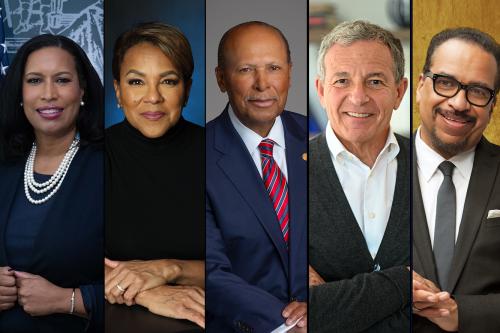
Howard University’s 158th Commencement Returns to The Yard on May 9, 2026 Featuring Address by Washington D.C. Mayor Muriel Bowser

Stay Studious: Former Disney CEO Bob Iger, 2026 Honorary Degree Candidate, Has Advice for Howard Grads
Keep Reading
-
 Legacy and Lineage
Perfect Performance: Nearly 200 Howard University Class of 2026 Graduates Earned a 4.0 Grade Point Average
Jun 22, 2026 11 minutes -
 News
NewsHoward University Alum Jayson Johnson Named to 2026 Cohort of Knight-Hennessy Scholars
May 19, 2026 2 minutes -
 Legacy and Lineage
Howard University Honors Scholar Carole Boyce-Davies with Eric Williams Endowed Chair
Sep 14, 2026 4 minutes