

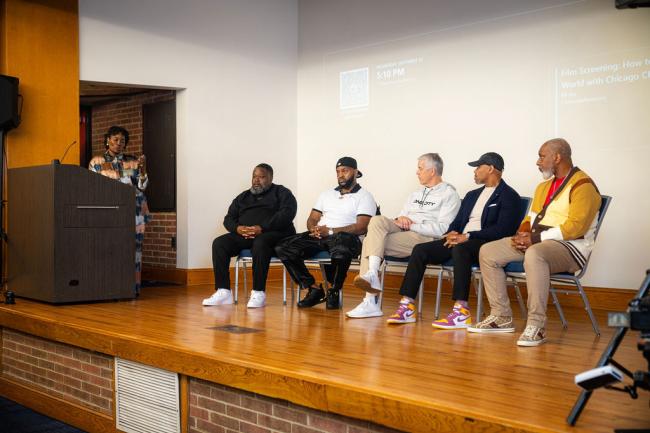
A highly engaged Howard University community came to the Blackburn Digital Auditorium Sept. 23 to screen “How to Change the World (Ep. 6, Chicago CRED),” focusing on the Chicago organization Chicago CRED (Create Real Economic Destiny) and its holistic approach to gun violence prevention in the city. The documentary is part of a 10-episode series following social entrepreneurs tackling pressing challenges through innovation, determination, and community-driven solutions.
The sixth episode focuses on Chicago CRED, founded in 2016 by Howard University Board of Trustees member Arne Duncan. Chicago CRED (Create Real Economic Destiny) believes the people most at risk for gun violence — the shooters and those shot — aren’t the problem.
“We believe that those who have been closest to the problem, or quite frankly who may have been part of the problem, are actually the best solution. For folks who watch the documentary, that’s one of the themes that come through,” Duncan said of the work found at Chicago CRED, whose gun violence prevention model utilizes five pillars: – street outreach, therapy, life coaching, education, and job training. The organization is celebrating its 10th anniversary this fall.
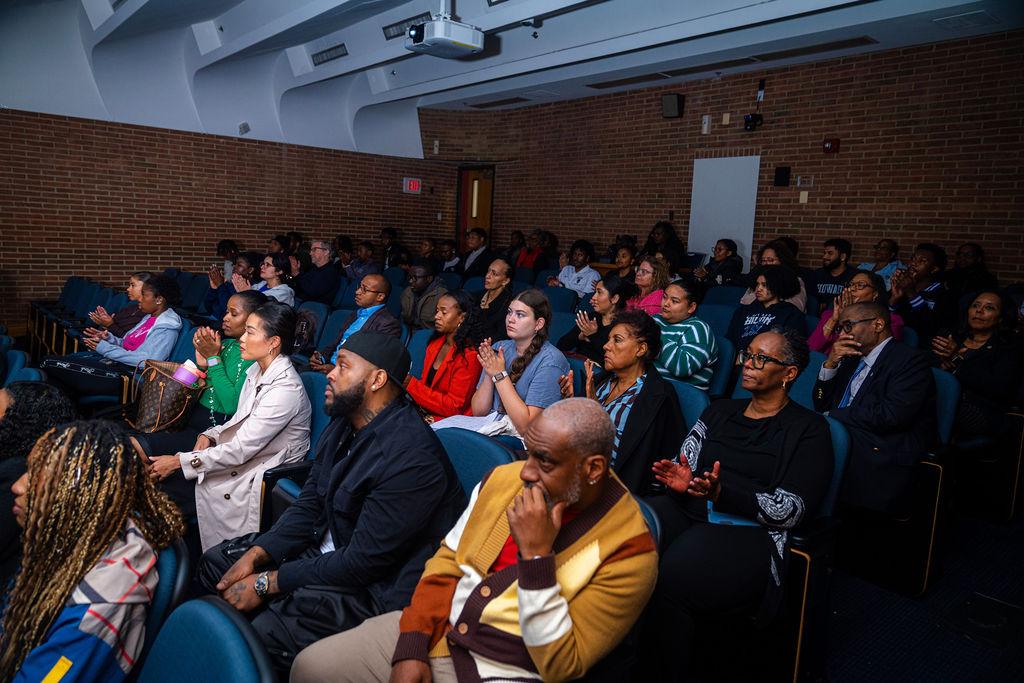
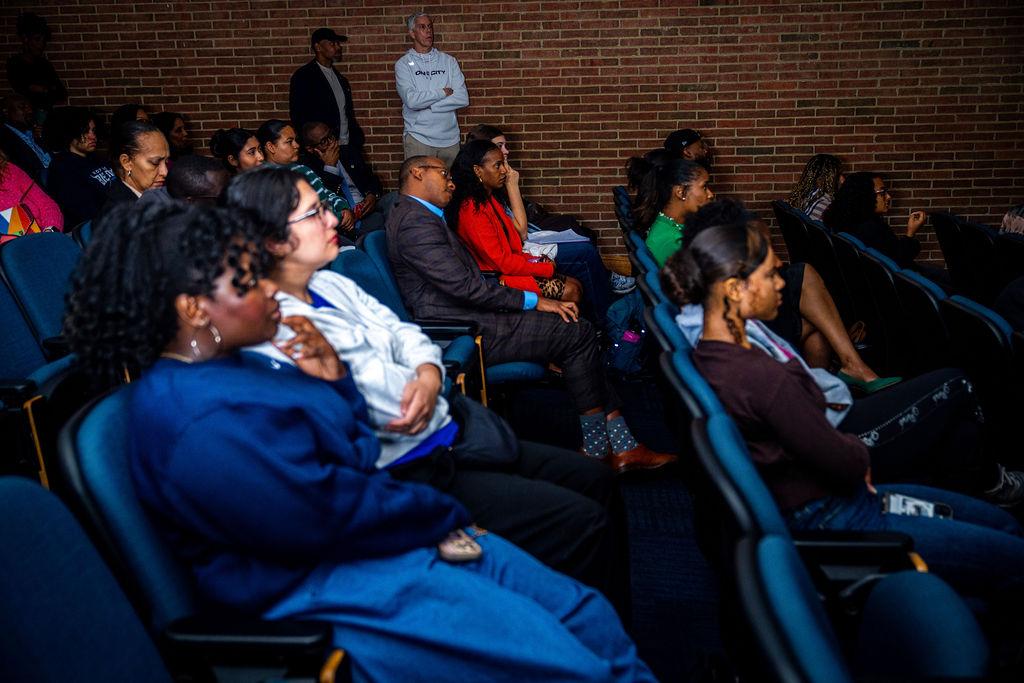
The documentary screening drew Howard students, faculty, staff, and representatives from Peace for DC, one of Chicago Cred’s partners and a nonprofit committed to transforming public safety through healing, hope, and community power.
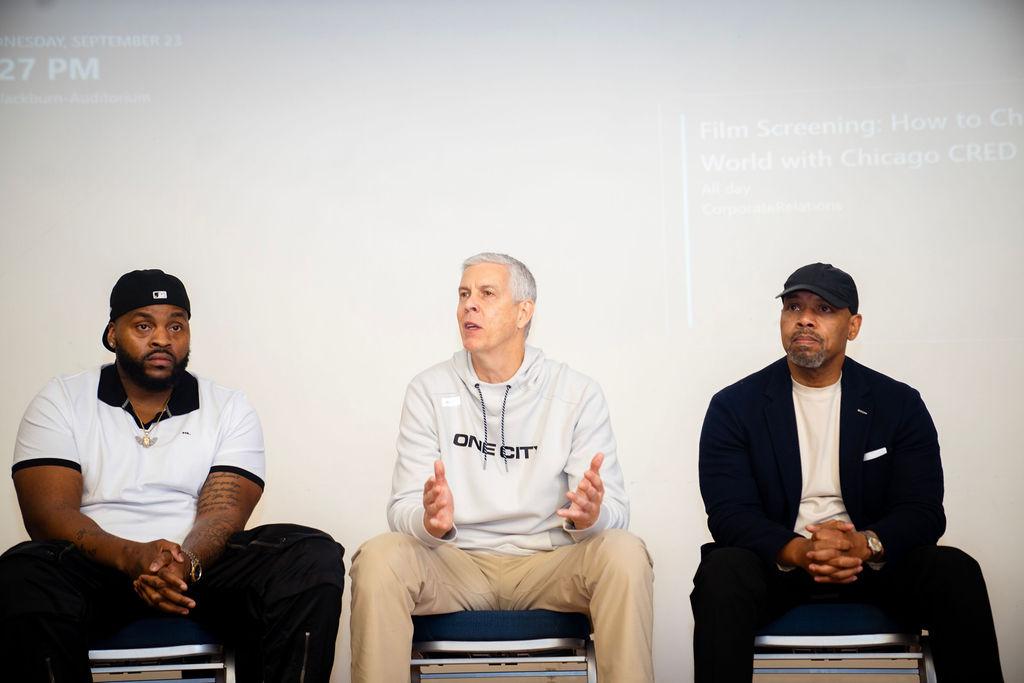
Duncan served on a Q&A panel along with several men from Chicago CRED featured in the documentary including Curtis Toler, director of Community Violence Intervention Innovation for the organization, and Billy Moore, site manager. Toler is a former gang leader; Moore was convicted of first-degree murder and served 20 years in jail. Both Toler and Moore turned their lives around and now engage positively in the community, including through their work with Chicago CRED.
Also on the panel were Lorenzo Sanders, violence intervention specialist with Peace For DC, and William “Juju” Brown, life coach and gun prevention advocate, Chicago CRED. Chandra Dawson, executive director for Peace for DC, moderated the panel.
Duncan previously served as the ninth U.S. Secretary of Education from 2009-2015 under President Barack Obama, where he helped secure congressional support for Obama’s investments in education. Prior to the Obama Administration, Duncan served as chief executive officer of Chicago Public Schools. He is currently a managing partner at Emerson Collective.
The “How to Change the World” series is co-created by World Within founder and CEO Rostam Zafari and co-founder Dylan Mulick and produced by World Within Studios and Religion of Sports.
Q. Can you talk about bringing the documentary to Howard University and why that was an important stop?
A. (Duncan) I’m fortunate to be on the board at Howard. I have tremendous respect for the institution, I understand its power, and I thought it would be a great conversation to have.
Gun violence unfortunately isn’t unique to Chicago. It’s maybe uniquely bad. We’re doing everything we can do to change that, and seen some real progress. But whether it’s D.C or its Howard students who come from across the country or internationally, unfortunately gun violence is something that impacts us all.
There’s a great group in D.C., Peace for DC, who is doing similar work, and I’m on their board. I’m trying to help out and we’re all learning together. But Howard is obviously a special place. It’s not an easy topic, but it’s a stop that was particularly relevant to the students and faculty at Howard.
Q. What do you want viewers’ takeaway to be in watching the documentary?
A. It’s deep, and there are a lot of layers to it. But there are a couple of things. First, redemption is possible. Change is possible. Peace is possible. We've had a 54% reduction in violence here in Chicago coming out of the pandemic. Arrests are also down about 32%. Arrests being down and violence being down shows that people are changing their behavior. Fewer people are shooting. And with our partners across the city, we’re working with more young men and women who are hugely at risk of shooting and being shot, who’ve been through a tremendous amount of trauma and stress and heartbreak.
To see that change--not overnight but over time--that transformation is an extraordinary part of our work. I just want folks to understand what’s possible.
Q: How did the documentary come about?
A: I speak at different things, and Rostam Zafari heard me speak and said he would like to do a documentary. We were actually very leery, cautious, and a little reluctant. I didn’t know him and this is really tough stuff and you have to make yourself vulnerable. But he seemed very sincere. They came in and filmed the whole thing in four days, which is crazy. We didn’t change anything. They just saw us work and they’re just absolute pros in this business. It was an unbelievable gift that he gave us. It was amazing. We could have never done anything like this by ourselves. We’re forever grateful.
Q: What was the filming process like?
A: We gave them our schedules, and we just kept working. They filmed our staff meetings, and they filmed us in the neighborhoods. They embedded themselves, but there was no real process. We said “You can film whatever you want, you’re going to see what you’re going to see, and get what you’re going to get.” We had no idea what would happen. But it was a story that needed to be told, and we didn’t have the capabilities or skills to do it ourselves, at least not in that form. It was just a phenomenal thing to happen to us.
Q. Were there any challenges to overcome during filming?
A. Honestly, I think they (the film crew) had some things they had to overcome. But if you want to film what we do, you have to be present. And they did it with tremendous humanity and empathy. I have tremendous respect for them, and they respect what we do. We built a relationship trial by fire, and they jumped into the deep end with us.
Q. What’s next for the documentary?
A. It’s not our documentary. It’s theirs. It’s about us. I don’t know if they’re submitting it to festivals. I don’t know the film world well at all. We just go where we’re invited. I love the university setting and getting the students exposed to this. We’d be open to doing more. We like to tell our stories. It’s not easy, but it’s healing.”
Top photo: Moderator Chaundra Dawson (far left), Lorenzo Sanders, William “Juju” Brown, Arnie Duncan, Curtis Toler, and Billy Moore at the screening of the documentary “How to Change the World (Ep. 6, Chicago CRED)” at Blackburn Digital Auditorium Sept. 23, 2026. Photo credit: Magik Compound
Keep Reading
-
 *Accolades
Howard University CEA Professor Sonya Smith Elected to AIAA Class of 2026 Fellows
Sep 28, 2026 3 minutes -
 *Change Makers
Howard University Professor Explores Race and Media Literacy in Popular New Book
Sep 8, 2026 5 minutes -
 Epiphanies, Discovery, and Research
Howard University Doctoral Student Receives Competitive Dissertation Fellowship, Examines Faith in Educational Experiences of Black Students
Sep 4, 2026 5 minutes