

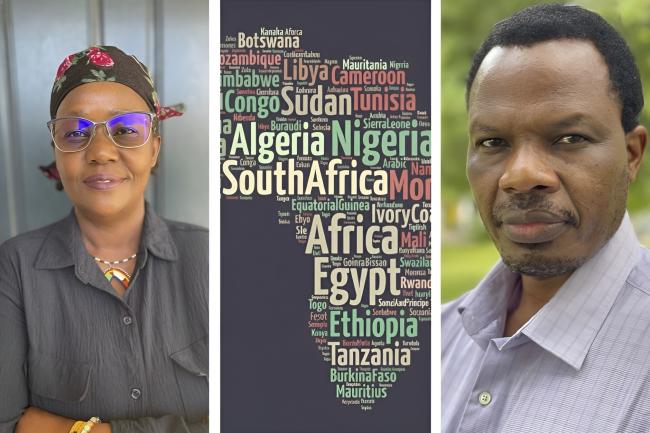
Howard University will host the Second African Indigenous Knowledge and Languages International Conference on Feb. 20–21, bringing scholars, students, and community practitioners together for two days centered on innovation in African languages and cultural knowledges.
Howard University is a national leader in African languages, offering one of the most extensive and consistently enrolled African language programs in the United States.
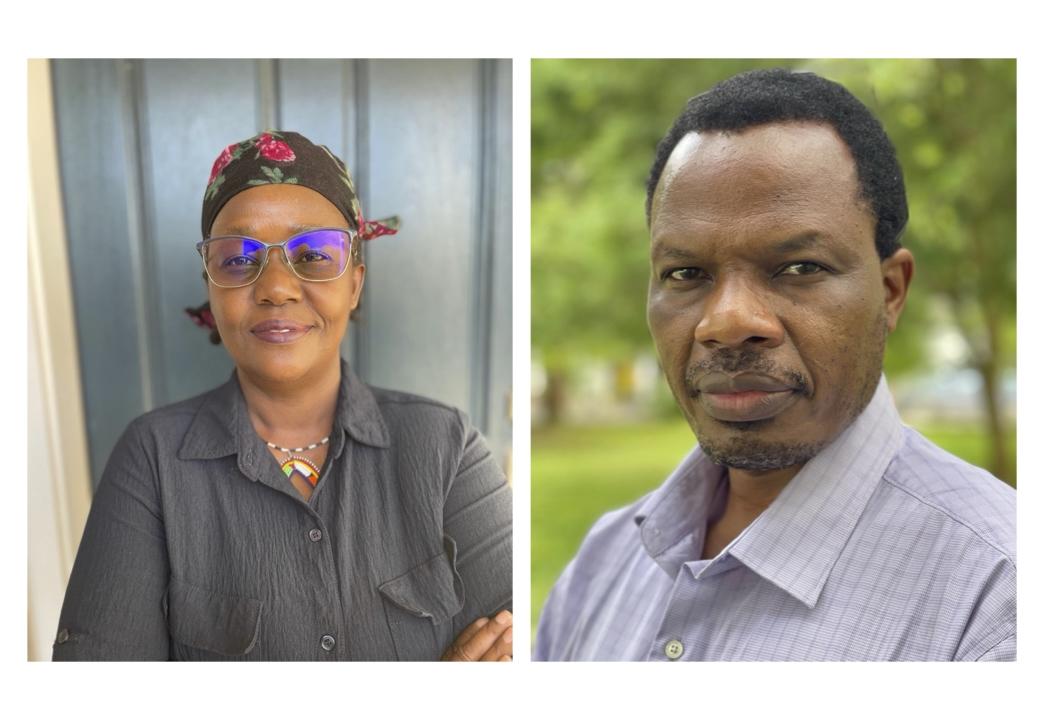
The African Indigenous Knowledge and Languages conference is co-led by Esther Mukewa Lisanza, Ph.D., an assistant professor in the Department of African Studies and director of the undergraduate program, and Leonard Muaka, Ph.D., chair of the Department of World Languages and Cultures in the College of Arts and Sciences at Howard University. It was conceived last year to coincide with International Mother Language Day, observed globally on Feb. 21.
“Every year on the 21st, the world celebrates Mother Language Day,” said Lisanza. “African languages are part of that story, and we believe Howard University has an important role in highlighting them.”
“Languages can die just like human beings, and their death is caused by us if we fail to act.,” Muaka added. “This conference is a call to action for communities and the diaspora.”
She said Africa is home to more than 2,000 languages, many of which have been threatened by colonialism in the past and continue to be threatened today. In fact, about 80 percent of those languages are considered “minority languages,” which means that are not official languages in African countries.

One major highlight is the opening keynote by Paul Banahene Adjei, Ph.D., of Memorial University of Newfoundland, which will center on the role of African elders in education. These voices tend to be marginalized in Western educational systems, yet are extremely important across Africa. On Saturday, Akinloye Ojo, Ph.D., of the University of Georgia will challenge audiences to view African languages as contemporary and active tools for knowledge and innovation.
Alongside international scholars, Howard faculty, graduate students, and undergraduates will contribute to the program by presenting research papers across multiple sessions at the conference. Sessions will cover topics including traditional medicine, food systems, and community-based practices, areas that organizers say resonate well beyond academia.
Lisanza said an emphasis of the conference is the promotion of intergenerational transmission of knowledge. In her own research, Lisanza involves young people in documenting herbal knowledge from elders, including the names of plants, their uses, and the knowledge passed down within their communities.
“It’s not enough for elders to hold this knowledge,” she said. “It must be passed on to young people, including through language.”
Organizers anticipate between 100 and 150 participants, with both in-person and virtual attendance. Participants are expected to join from Tanzania, Uganda, Kenya, South Africa, Zimbabwe, Mali, Canada, Haiti, Brazil, and the United States.
The conference will take place at Howard University’s Health Sciences Library, with programming beginning Friday. and continuing Saturday, Douglass Hall, Room 120.
Lisanza and Muaka said non-indigenous languages such as English and French are often used in government and education, leaving many African languages without institutional or social recognition. The imbalance has long shaped how African languages are valued and transmitted across generations.
“These languages are threatened by linguistic domination from former colonial languages,” Muaka said. “Many Africans feel they must learn colonial languages and forget their own, and that mindset accelerates language loss.”
Howard University enrolls roughly 1,200 students each year in African language courses. The university teaches Swahili, Somali, Yoruba, Wolof, Zulu, Amharic, Arabic, and Akan, representing different regions of the African continent.
Muaka said it is important for younger generations to understand that African knowledge systems are relevant and necessary.
“If these languages die, the knowledge they hold dies with them,” he said.
For more information about the Second African Indigenous Knowledge and Languages International Conference, contact Esther Lisanza via esther.lisanza@howard.edu or Leonard Muaka via leonard.muaka@Howard.edu
###
Keep Reading
-
 Global and Diaspora
Former President of Trinidad and Tobago Visits Howard University for Fireside Chat on Global Leadership
Sep 3, 2026 6 minutes -
 Global and Diaspora
Howard University’s Global Impact Takes Center Stage During King of Ghana’s Ashanti Kingdom Campus Visit
Aug 28, 2026 11 minutes -
 *Accolades
Howard University CEA Professor Sonya Smith Elected to AIAA Class of 2026 Fellows
Sep 28, 2026 3 minutes