


For Howard University’s film program, participation in the Coca-Cola Refreshing Films series has now culminated in a historic first.
This year, Howard became the first historically Black college or university to earn finalist status in the Coca-Cola student film program, with the short “The Usual” — written and directed by Avery T. Harrell (BFA ’25) and produced by MFA Film thesis candidate Aditya Gupta — named one of three finalists in the program’s 2026 competition.
Coca-Cola describes Refreshing Films as a platform for student filmmakers from partnered schools to create content for the big screen. The milestone is especially striking given how recently Howard entered the competition. Last year marked Howard’s first invitation to take part in the program in its near-three-decade history. Now, in only its second year participating, the university has broken new ground.
Dr. Montré Aza Missouri, an associate professor in film who shepherded the university’s involvement, called this achievement both a competitive triumph and a reflection of the talent Howard has long cultivated — talent reflective of the broader university community.
“As a faculty member devoted to the legacy of postcolonialism and Third Cinema that grounds our undergraduate and graduate programs, I recognize that inviting Coca-Cola Refreshing Films to Howard may seem extremely unexpected,” Missouri said. “However, my motivation for doing so has been deeply personal: my three children, beyond being excited by Pixar films or the latest Marvel releases, always wished to watch Howard student work featured at our local AMC Theatres.”
Pressure, Purpose, and the Power of Community
Gupta said Howard shaped the way he led by teaching him how to trust collaborators and build with intention.
“Howard really shaped how I collaborate and trust the people around me,” he explained. “Being in that environment teaches you to lead while also listening, and that played a huge role in how I approached this project.”
He also acknowledged that the Coca-Cola affiliation upped the ante.
“It definitely felt more real,” Gupta said. “The scale, the expectations, and the fact that it’s tied to a global brand added pressure, but in a good way. It made me more focused and intentional with every decision.”
Harrell echoed that point, framing the pressure as an opportunity rather than a burden.
“We’ve been doing meaningful story-driven work at the highest level of quality,” he said. “This was just a platform to display it to a wider audience and get eyes on what we’ve been doing. As far as Coca-Cola adding pressure, it definitely raised the stakes, but that just gave us an opportunity to rise to the occasion.”
Just as important as the finished product, both emphasized what the process says about Howard’s creative ecosystem. Harrell described a culture where collaborations begin almost accidentally and then deepen over years of making work together. Gupta called his partnership with Harrell a reflection of the wider Howard community, where “everyone brought something valuable to the table.”
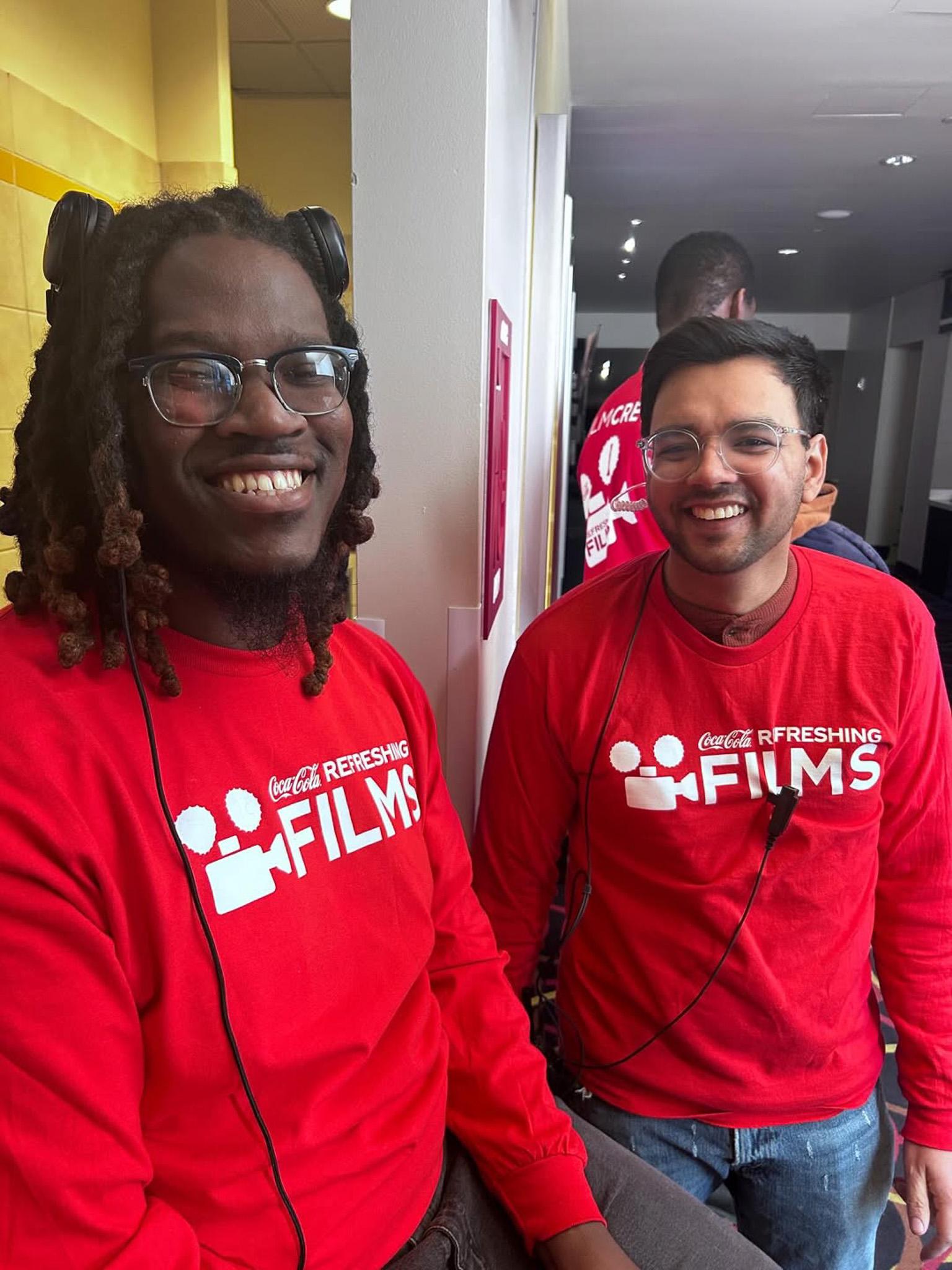
Pryor saw that same communal spirit from the outside.
“It was incredible to see the community rally around Avery and Adi’s film — the crew itself included current students, graduates, and alumni, which speaks to the pride and connection within the Howard community,” she said. “We hope their work inspires others to see themselves in this space and feel empowered to tell their own stories.”
Harrell and Gupta will soon travel to CinemaCon 2026 for a special screening and meetings with studio executives. As finalists, their production is under consideration for the Red Ribbon Panel Grand Prize, which includes screening at AMC Theatres, as well as the Audience Award, where members of the public vote for their favorite film. The winning selection will receive nationwide theatrical distribution through program exhibition partners AMC Theatres, Cinemark, and B&B Theatres.
Beginning April 20, the public will be able to vote for the Cinemark Fan Favorite Award, with polling open through May 10. For Howard, it is another chance for the Bison community to show up for a project that has already made institutional history.
For Harrell, the message behind the moment is clear.
“What our presence in the Refreshing Films program says about the future of HBCU filmmakers is that we’re here,” he said. “We’ve been here, and we have no plans of going anywhere.”
Related Stories from Howard Magazine
Keep Reading
-
 Culture Creators: Arts and Entertainment
‘A Different World’ Stars Come Home to Howard Ahead of Netflix Sequel Premiere
Sep 25, 2026 4 minutes -
 Lineage: Howard Students and Alumni
20 Years in Motion: Models Inc. Celebrates Two Decades of Fashion, Mentorship and Black Creative Expression at Howard University
Sep 14, 2026 7 minutes -
 Homecoming 2026
Howard University Homecoming 2026: Wildest Dreams, Bison Traditions and a Week of Celebration
Oct 12, 2026 16 minutes