

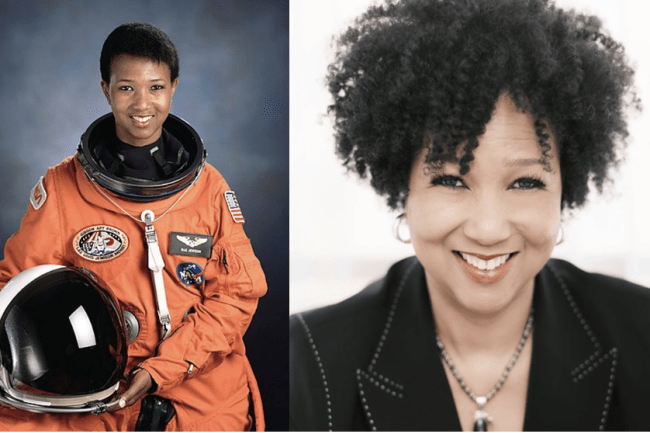
Dr. Mae Jemison to Lead Interstellar Travel Capabilities Workshop at Howard University through 100 Year Starship® (100YSS) Initiative
WASHINGTON, DC —Dr. Mae Jemison—the first woman of color in the world to go into space—will visit Howard University on April 27-28, 2026 to host a visionary workshop centered on the 100 Year Starship® (100YSS®) initiative. Titled “How Fast Can We Go? How Much Energy Do We Need?”, the workshop will bring together students with faculty and leading innovators to explore the profound technological and social breakthroughs required to achieve human interstellar flight.
The 100 Year Starship project, founded by Dr. Jemison with support from DARPA, is not merely about building a spacecraft; it is a global initiative focused on ensuring that the capabilities for human travel to another star system exist within the next century. The Howard University workshop will emphasize the multidisciplinary nature of this journey, highlighting how the challenges of deep space travel—such as sustainable energy, advanced medicine, and resource management—can drive transformative solutions for life here on Earth today.
"Interstellar flight requires a level of radical leaps in knowledge, technical capabilities and human systems that transcends all traditional boundaries," said Dr. Mae Jemison. "By engaging with the brilliant minds at Howard University, we are ensuring that the future of space exploration is built on a foundation of diverse perspectives and multidisciplinary expertise. We are not just reaching for the stars; we are enhancing our capacity for a better life on our home planet."
"Howard University has a storied history of leadership in science and medicine," said Dr. Sonya T. Smith, Research Institute on Tactical Autonomy (RITA) Executive Director and co-host for the workshop. "Welcoming Dr. Jemison and the 100YSS team provides our students with a unique opportunity to lead the conversation on the next frontier of human achievement."
Event Details:
- What: How Fast Can We Go? How Much Energy Do We Need
- When: April 27 & 28, 12 Noon– 5:00 PM
- Where: Multipurpose Room, Interdisciplinary Research Building Howard University
- Admission: Open to Howard University students and faculty; limited press seating available.
About 100 Year Starship (100YSS)
100 Year Starship™ (100YSS) is an independent, non-governmental, long-term initiative to ensure the capabilities for human interstellar flight exist as soon as possible, and within the next 100 years. 100YSS was started in 2012 with seed-funding through a competitive grant from DARPA (Defense Advanced Research Projects Agency) for the purpose of facilitating the type of explosive innovation and technology and social advances born from addressing such an incredible challenge. The organization works to foster the radical leaps in knowledge and technology needed to achieve interstellar flight while ensuring these breakthroughs are used to enhance life on Earth.
To foster such innovation, 100YSS engages in collaborative international programs and projects in research and innovation, science, technology, engineering, and mathematics (STEM) capacity building, entrepreneurship, and education projects with and between organizations, companies, universities and individuals.
About the RITA UARC
Established in 2023, the Research Institute for Tactical Autonomy, University Affiliated Research Center (UARC) is the 15th UARC and the first sponsored by the Department of the Air Force. Led by Howard University, the UARC operates as a consortium of nine universities focused on advancing applied research, development, testing, and evaluation for fieldable tactical autonomy.
About Howard University
Founded in 1867, Howard University is a private, research university that is comprised of 14 schools and colleges. Students pursue studies in more than 120 areas leading to undergraduate, graduate and professional degrees. The University operates with a commitment to Excellence in Truth and Service and has produced one Schwarzman Scholar, three Marshall Scholars, four Rhodes Scholars, 11 Truman Scholars, 25 Pickering Fellows and more than 165 Fulbright recipients. Howard also produces more on-campus African-American Ph.D. recipients than any other university in the United States. For more information on Howard University, visit www.howard.edu.
Keep Reading
-
 Media Release
Howard University Achieves Highest U.S. News & World Report Ranking in University History
Sep 25, 2026 3 minutes -
 Media Release
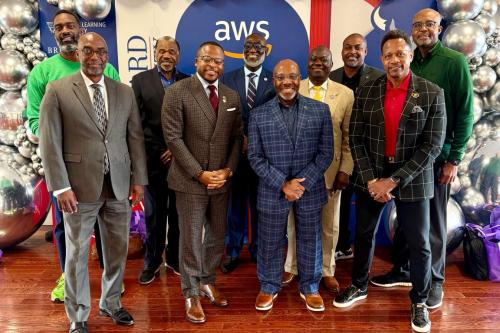
Howard University Hosts Machine Learning Symposium in Collaboration with Amazon Web Services
Sep 25, 2026 3 minutes -
 Media Release
The Center for Journalism & Democracy Names Abiodun Durojaye Executive Director
Sep 15, 2026 4 minutes