

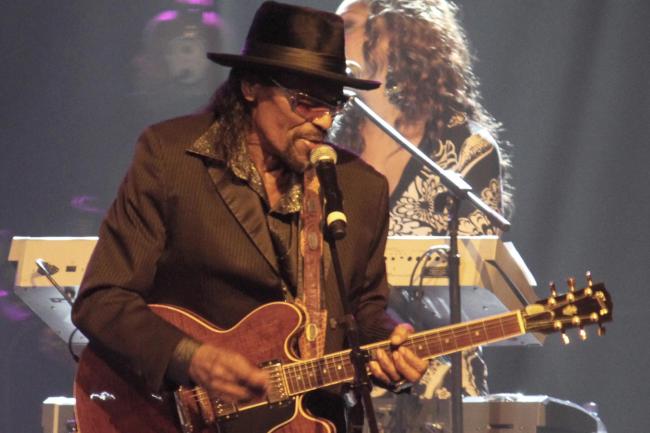
Go-go music’s heartbeat has always kept a steady pulse running throughout Howard University. From go-go’s early days to its 1980s commercial peak to its place today as the official music of Washington, D.C., Howard has stayed in the mix.
The university has always held space for go-go in key and impactful ways. Look no further than the Go-Go Museum & Café in Anacostia, the force of the “Don’t Mute DC” hashtag, or the lineup of go-go bands, past and present, featuring Howard alumni cranking it up to see the university’s influence in creating, popularizing, and cementing the distinct percussive sounds.
Projects such as the new book “Soul Searcher: Life and Legend of Chuck Brown, Godfather of Go-Go,” (Sun Ra Publishing, 2026) written by Howard University Hospital staffer Sundiata Ramin, is believed to be the first comprehensive book solely focused on Brown’s legacy. Go-go was recently used to help spread awareness of colorectal cancer when the university's Department of Community and Family Medicine and the Howard University Cancer Center participated in a March 28 event at the Go-Go Museum & Café that featured on-site health screenings and go-go performances.

Howard’s curriculum has incorporated go-go into academics with courses such as Multimedia Audio Production and Music in Media. The Traditional Arts D.C. project at the university has hosted Go-Go Preservation Week on campus with partners that included the Go-Go Museum & Café and the District of Columbia Public Library.
Howard alumna Cherie “Sweet Cherie” Mitchell-Agurs (B.A. ’94), musical director for all-women go-go band Be’la Dona, took home a Best Keyboardist trophy at the 2026 Go-Go Awards. Dr. Nina Angela Mercer (B.A. ’95), the inaugural Eleanor Traylor postdoctoral fellow in Literary and Cultural Theory at Howard, said “Sometimes with our HBCUs and amongst academics, we can claim cultural authority when it really belongs somewhere else. But since Howard is inextricably linked to the Black community unlike a PWI, our HBCUs really are cultural pillars and spaces where culture can be cultivated, protected, and archived, and that connection (to go-go) exists.”
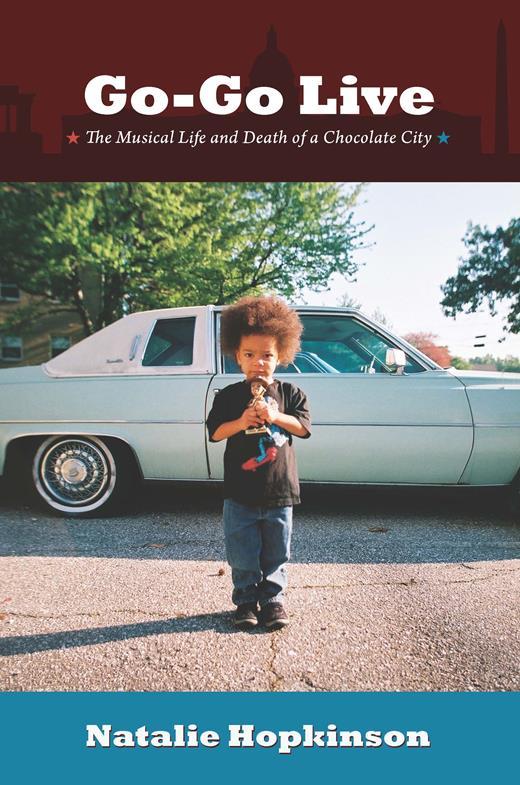
Dr. Natalie Hopkinson (B.A. ’98), an alum and former assistant professor in Howard’s Department of Communication, Culture and Media Studies, is one of the strongest links between the university and go-go. Hopkinson helped shape D.C. Law 23-71 officially designating go-go as the official music of the District of Columbia in 2020. Hopkinson is also the author of the book “Go-Go Live: The Musical Life and Death of a Chocolate City” (Duke University Press, 2012).
She is the founding chief curator at the Go-Go Museum & Café, and co-founder of the Don’t Mute DC petition with the cafe’s CEO and co-founder, activist Ronald “Moe” Moten, and alum Julien Broomfield (B.A. ’26), creator of the hashtag.
“The ties are very close. There are a lot of connections,” said Hopkinson. “And there are tons of go-go musicians that have come out of Howard.”
A Howard-born Hashtag is Famous Forever
“Don’t Mute DC.” Those three words came to Broomfield easily and quickly, beginning a journey for the hashtag that would include social change and recognition at the Smithsonian Center for Folklife and Cultural Heritage.
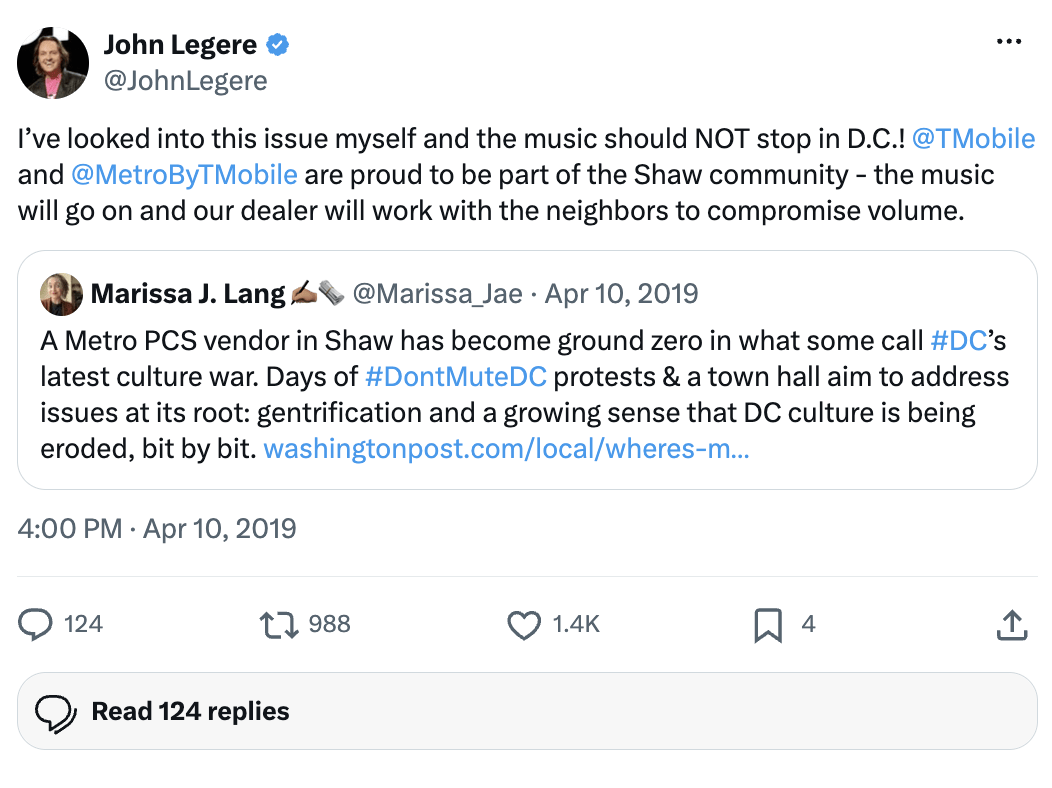
During her senior year at Howard in 2019 while wrapping up her English degree, Broomfield noticed something was off as she walked past the old MetroPCS store near campus at 7th Street and Florida Avenue in the Shaw neighborhood. The go-go music she had always heard coming from the store, a comforting sound that reminded her she was back at Howard, was quiet, which was literally unheard of. She didn’t think much of it, reasoning the store’s speakers weren’t working until she learned more on social media.
“I went on Twitter (now X) and saw someone talking about the issues of gentrification in the Shaw area,” Broomfield explained. “In the five years I had been at Howard, the shift was crazy. I was seeing way less Black people in that area and a lot more white people, a lot more construction on the homes, and a lot of people walking their dogs on Howard’s campus as if it’s a park. I did my research and found out that the residents of the building across the street from MetroPCS were complaining about the music. They were just complaining because they didn’t want to hear it.”
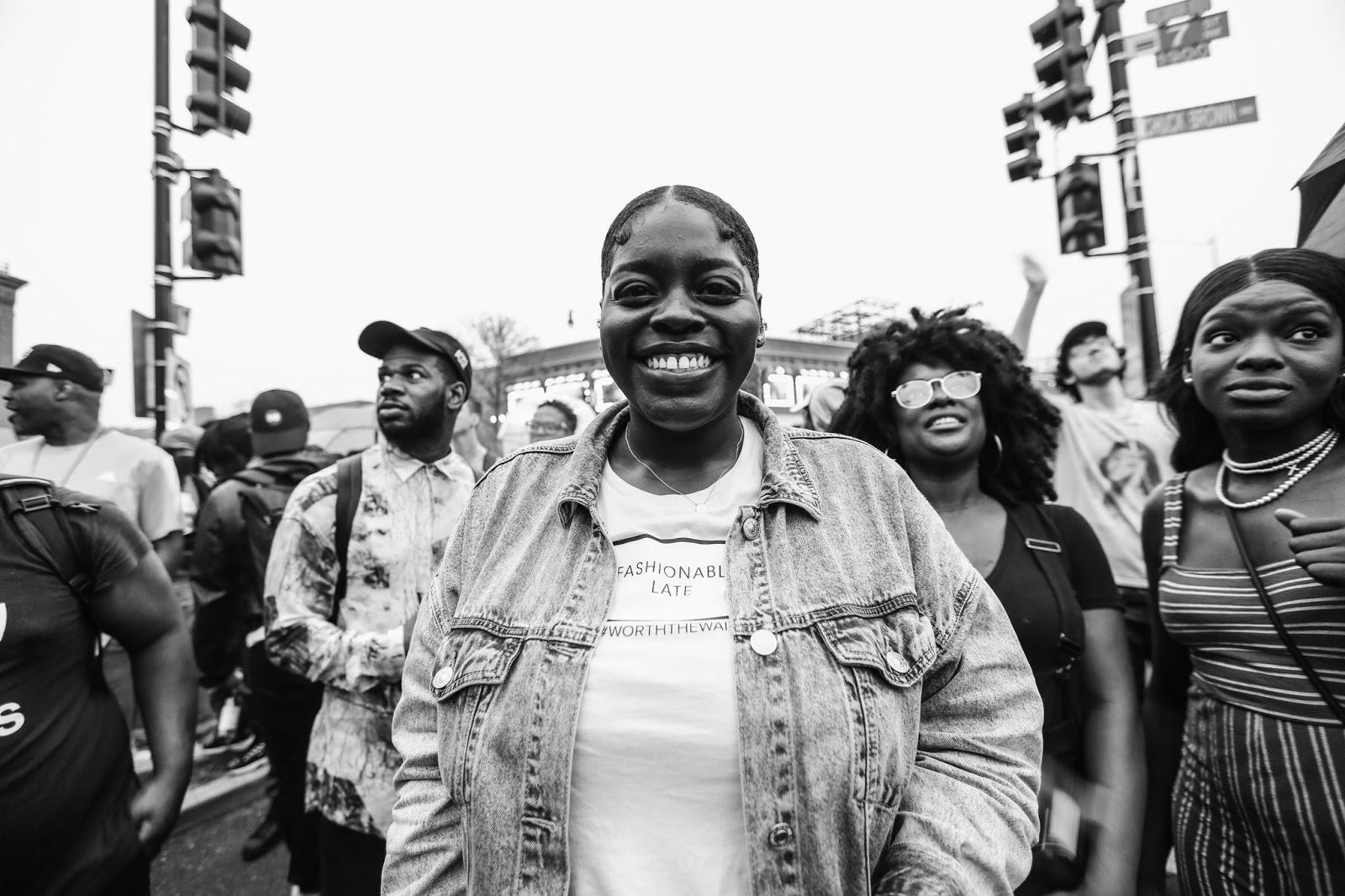
She learned the store was receiving threats of getting shut down and headed back to Twitter to speak against what was happening. When she woke up the next morning, she saw she went viral. She and other Howard students decided there should be a hashtag to pull together what was happening.
“We started thinking and I started to think about my own experiences as a Black woman, tall and thick, and all the times I allowed myself to be silenced,” said Broomfield. “They Can’t Mute Us” was suggested initially before she landed on the “Don’t Mute DC” hashtag. “I thought of the word ‘mute’ because when I think of the word mute, I think of a TV. You can mute it, but you can still see what’s going on. ‘Oh, you all think you’re just going to shut that up? No, you need to hear it.’ We need to hear what’s going on around us. I said ‘what about Don’t Mute DC’ and it took off.”
Broomfield never imagined the hashtag would explode like it did. “I was just in a space where I wanted to speak my mind and let people know what was going on. It was never with the purpose of ‘Oh, I want to start a thing.’ At the time, I was dealing with some real social anxiety, so that genuinely was not my goal. I wanted people to know about it so we could help turn the music back on.”
Her smartphone was activated non-stop with calls and texts for interview requests all while she was busy preparing for finals. It was all overwhelming, so Broomfield partnered with Moten and Hopkinson to help her navigate what was happening. The pairing worked since they were more deeply steeped in the city and its gentrification issues than Newark, New Jersey native Broomfield.
“‘[Hopkinson] said ‘Let’s work together, let’s get you to do these interviews with people we trust and we know will get the word out there in an honest way,” said Broomfield. “I felt how honest they were, and I decided to work with them. I'm not from D.C. and the last thing I wanted to do was do D.C. a disservice.”
Keeping her service to spirit strong, Broomfield is currently a program director for Girl Scouts Heart of New Jersey.
Immortalizing Go-Go
When Moten first told Hopkinson back in 2009 about the need for a go-go museum in D.C., she dismissed the thought. “He was just running his mouth, saying people don’t respect go-go and that’s why we need a museum. I thought it was an outlandish idea,” Hopkinson said.
Fast forward a decade later, and the idea started taking on its earliest shape with key activations. One of them was a 2020 telethon with WPGC and Don’t Mute DC to benefit the Go-Go Museum & Café, which took place at the former MetroPCS store where the Don’t Mute DC movement was born. “I walked down there (from Howard) with my colleague Carolyn Malachi. It was the most incredible thing I’ve ever seen. They raised over $17,000 dollars. But to just see people come with crumbled $5 bills in their hands, and people pulling over to the side of the road saying ‘Yeah, we want a museum.’ Then the pandemic happened.”
Hopkinson added that the museum shifted to different digital activations, often revolving around public policy issues, to bring awareness and fundraising to the movement. Her Ph.D. students at Howard were extremely crucial in getting those activations moving forward. “That museum wouldn’t be there without them. We did get some resources, but it’s never enough. Being able to hire the grad students using grant money was just invaluable and really good training. People like to work with people at Howard. It was a really powerful thing.”
Those activations “kept the pressure on the city for the city to do what we needed the city to do. We needed money, investment, people, archives, and infrastructure. Everything I said we needed, they’ve done.”
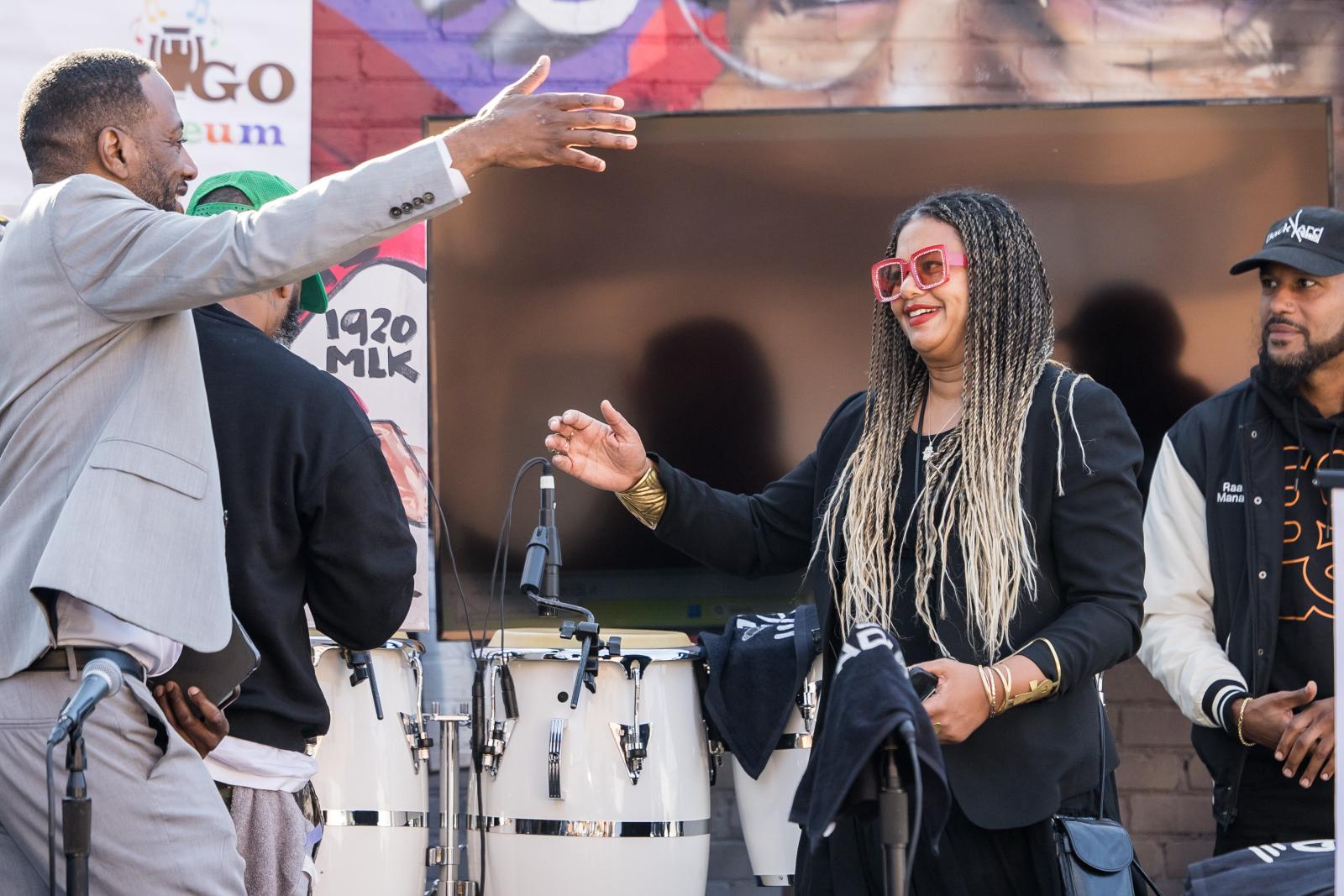
The museum opened Feb. 19, 2025, exactly five years after go-go was named the official music of Washington, D.C.
As founding chief curator at the museum, Hopkinson said her heaviest lifting came during the pre-opening period when she oversaw everything from the design team to the tech team to managing major partnerships. She also created global opportunities to connect with go-go.
Hopkinson, who currently is an associate professor at American University, is able to step back a bit from the museum and come on as needed. Right now, she’s currently curating an exchange with artists from Asheville, North Carolina on public policy and advice on how to get a city to invest in Black businesses the way Washington, D.C. invested in the museum.
“It was a miracle. They said it would take $8 million,” she said of initial projections to open the museum. “We only got $3 million, and we still did it. I have to credit my position at Howard and the association I had with my students there and being able to do a lot more with less.”
Go-go Goes to School
Watching her students grappling with virtual learning early during the COVID-19 pandemic, Howard assistant professor Carolyn Malachi came up with a solution – introducing go-go into the curriculum, but in a non-traditional way. Malachi teaches audio production and engineering courses with a focus on immersive media in the university’s Cathy Hughes School of Communications. She’s also assistant chair of the Department of Media, Journalism and Film in the school.
“We were all alone and studying in these virtual environments,” said Malachi. “I wanted to bring them something that was interactive to help them feel they could escape their homes and be a part of community during those times.” Malachi devised two new courses, Multimedia Audio Production and Music in Media, that incorporated go-go from unexpected angles. She was inspired by the research of Allie Martin, an ethnomusicologist and Dartmouth College professor, who studied the sound of gentrification in several areas including Georgia and Florida Avenues, the corner from which go-go music had famously emanated.
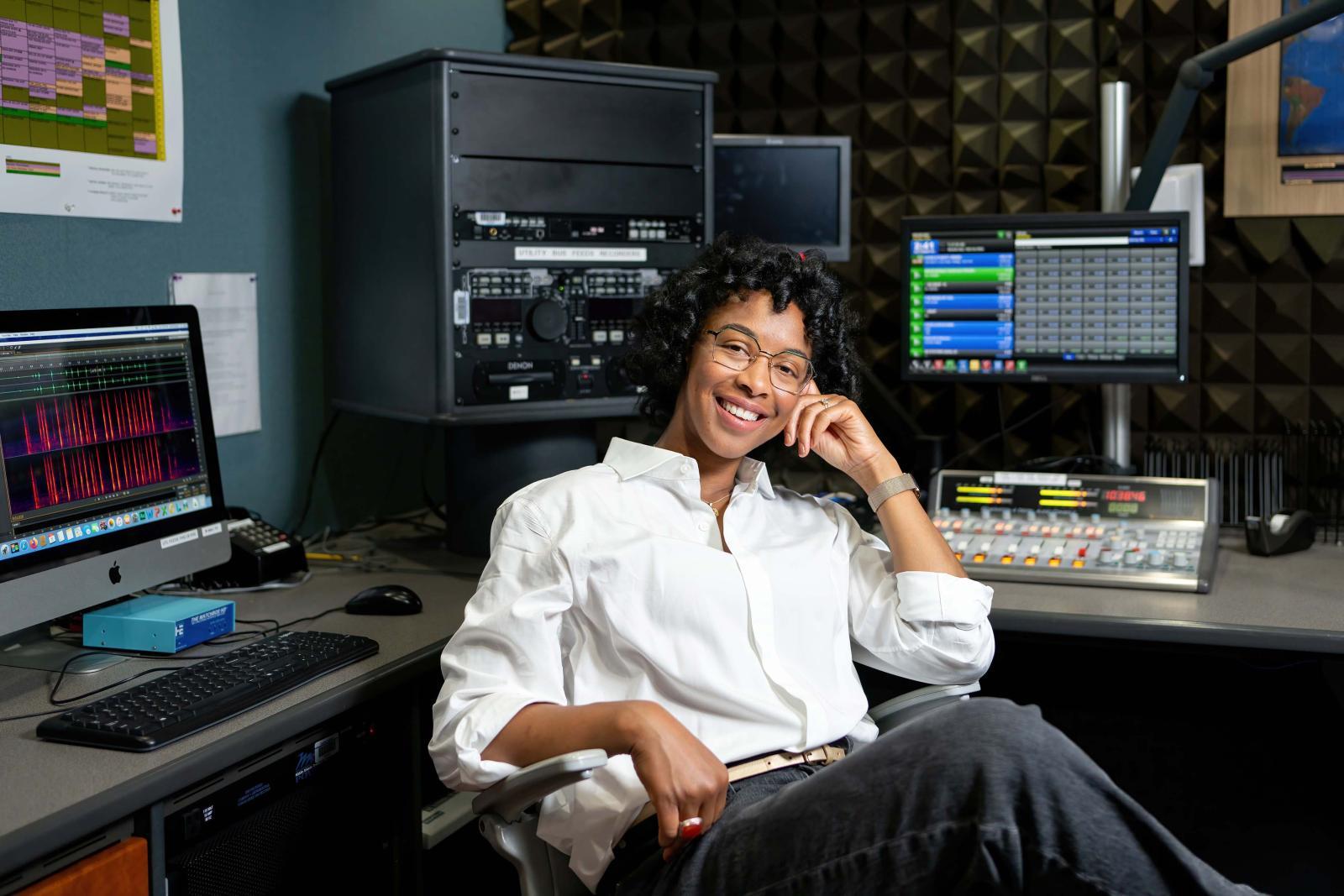
“I’ve had my students listen to the sound of gentrification as the result of her research, understanding that go-go music is part of the native soundscape of Washington, D.C.,” Malachi explained. “There were critical listening exercises that involved not just listening to the music itself, but how the sound of the drums, the sound of the percussion, and the sound of the lead talker interacts with the physical properties, with the space that we are all occupying together.”
She added that the lessons also bring forth an understanding of the critical elements of go-go, not necessarily from a production standpoint but from a technical, critical listening standpoint. The lessons are “helping students analyze genre and understand composition, and put them in the place of an engineer ... We’re using go-go as a means for students to understand the unique characteristics of the genre, and why we look at that through the audio program is because eventually after a piece of music is composed and arranged and produced, the engineer has to refine the creative to ensure it communicates well with the listener, understand what has to take priority and when.”
Malachi will incorporate more go-go into the curriculum in her own special ways. She’s looking forward to an Advanced Audio Production Capstone that will create a Dolby Atmos (immersive spacial audio technology) mix of a go-go record. “We are privileged in the Cathy Hughes School of Communications audio sequence to have the very first Dolby Atmos studio at an HBCU. It’s very exciting. Being in D.C., it’s especially a privilege to potentially work with a go-go record and put the listener inside of a real go-go. Imagine listening from the perspective of the crowd, but at home,” she said. “Students coming in this year as first-year audio students will be doing this work by the time they get to their Advance Audio production class in their senior year.”
The Grammy-nominated Malachi has worked in go-go off campus with her 2016 song “We Like Money” featuring Michelle Blackwell, inspired in part by Brown’s “We Need Some Money.” She also co-wrote Brown’s “Best in Me” and sang background vocals on his “Beautiful Life.”
Chuck Brown...in Black and White
Something never sat right about the aftermath of go-go legend Chuck Brown’s death in 2012 for author Sundiata Ramin.
Ramin, a distribution supervisor at Howard University Hospital and director of tours at the Go-Go Museum and Café, said there has been very little documentation of Brown’s life since his death, and that it is sorely needed. This inspired him to write “Soul Searcher: Life and Legend of Chuck Brown, Godfather of Go-Go.”
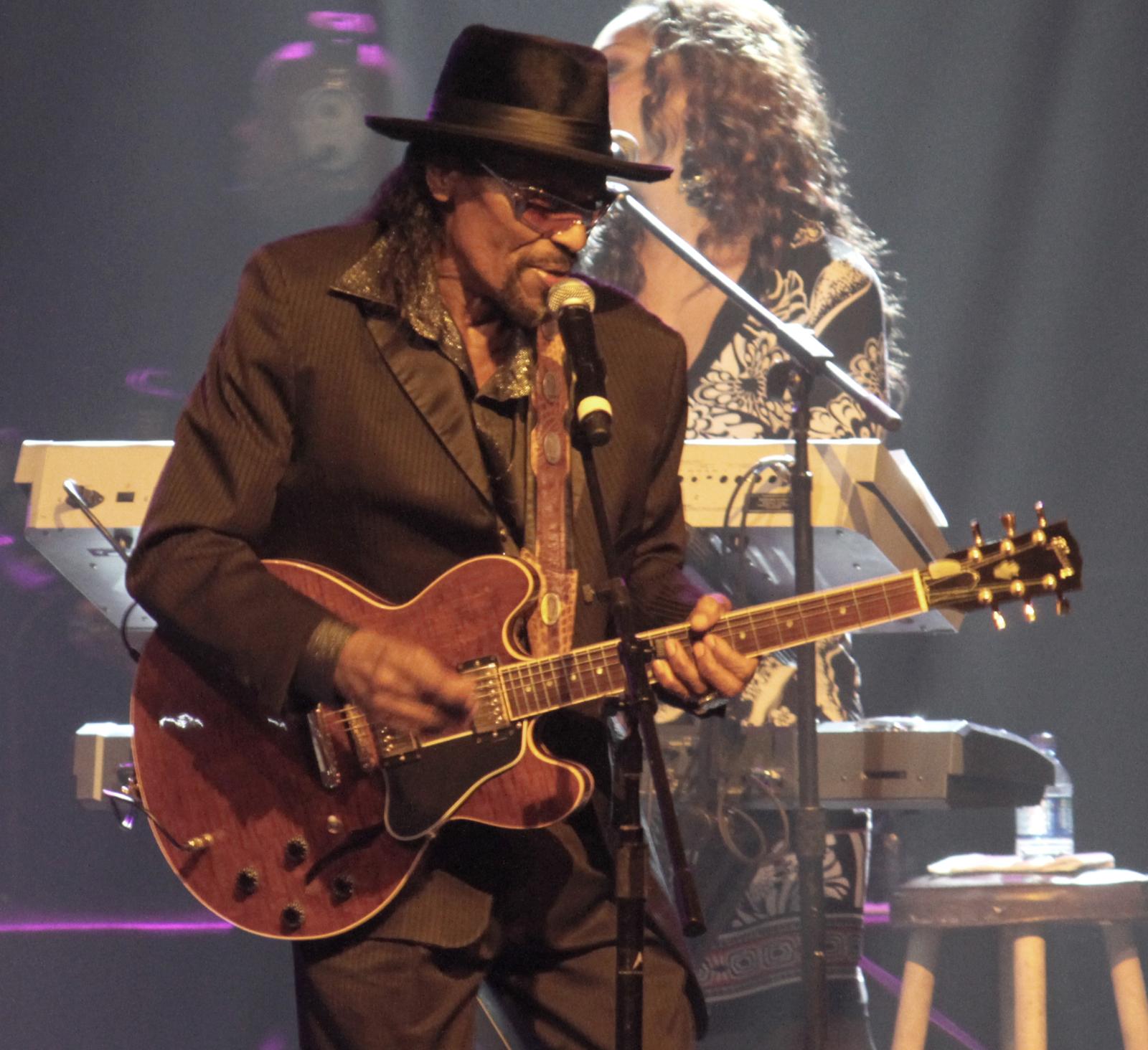
“This book is long overdue. It should have been written years ago,” said Ramin. “There’s no textbook in schools, no documentary, and no movie. Chuck has been gone for 14 years. I said the time is right. It’s 50 years of go-go. Why would we miss the opportunity to do this? I really believe God and the ancestors placed me in this position of becoming like a guardian of this culture at the museum. It legitimized my ability to write the book.”
Ramin also felt that including Brown while educating visitors at the Go-Go Museum & Café every week wasn’t nearly enough Brown. “I found that in teaching about Brown for 15 minutes, 20 minutes, it did him a disservice because you’re talking about a career of 40 year-plus. To get to the gist of him, you have to read about this man’s life. While doing this, I realized I had no books to refer to, no books exclusively about Chuck Brown’s life. I said I’m going to write the book.”
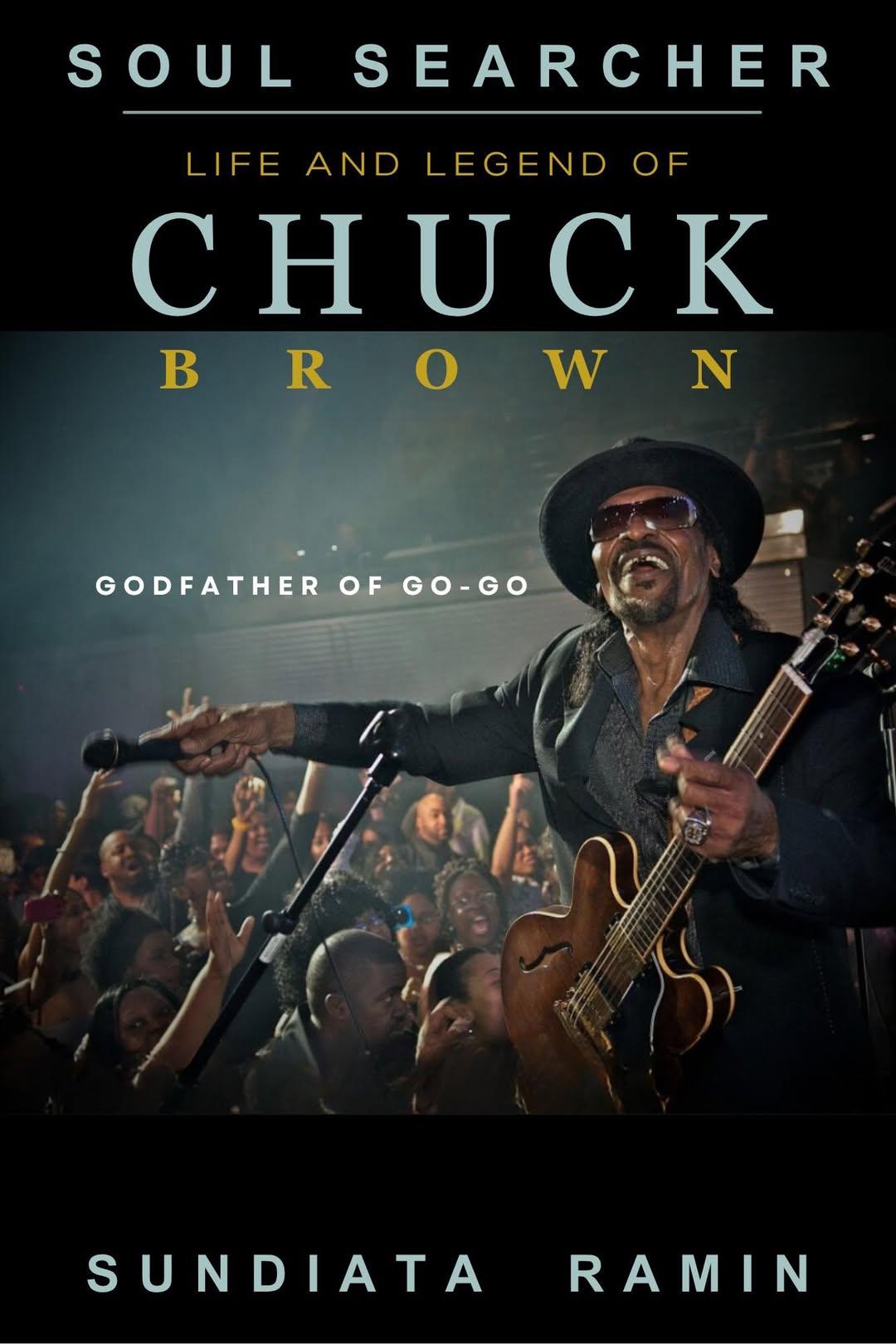
Ramin said the book only him five months to write, though 40 years of preparation was involved. He was a bookstore owner for ten years, and names famous authors such as Eric Jerome Dickey, Sonia Sanchez, Terry McMillan, Iyanla Vanzant, Michael Baisden and the late E. Lynn Harris as friends. Another friend is publisher and printer Paul Coates, father of Ta-Nehisi Coates, who printed the book for him. The book is distributed by IngramSpark. “It was almost seamless the way the book came together. I had access to information and elders in the community who were willing to talk. To have that knowledge made it easier for me to get the book published, and I’m already working on my second book.”
“Soul Searcher: Life and Legend of Chuck Brown, Godfather of Go-Go” focuses on the legend as an innovator, creator, and inspiration and relies on public records and interviews (Brown’s family was not involved). The book is written with young people in mind, Ramin explained, and he hopes the book will land in the District of Columbia Public Schools system.
Ramin had the opportunity to see Brown perform many times at the Masonic Temple while growing up, but he took it to the next level in 1991 while living in New York City. He attended Brown’s show at Tramps and made his way to Brown between sets. He introduced himself.
“I said ‘What’s going on Chuck, my name is Eric and I’m from Deanwood.’ He said ‘Ha ha, that’s my part of town.’” They chatted for a while, and he said Brown shouted him out during the next set during the song “Harlem Nocturne,” saying “Ladies and gentlemen, let’s do it for Eric from Deanwood.” That song and that performance was recorded on an album called “This is a Journey...Into Time.”
“When he not only said my name but recorded it and put it on album, I felt bigger than life. It was something magical. It was a real connection for me.”
Go-Go is All in the Family
Nina Angela Mercer (B.A.’95) considers her father John Mercer an unsung hero in the world of go-go. The late John Mercer (B.A. ‘70, J.D. ‘73) was a longtime figure on the go-go scene largely as an entertainment lawyer, talent manager, and more for many acts including E.U. and the classic indie go-go label T.T.E.D. He was also a Howard professor teaching Entertainment Law beginning in the 1990s.
“I would say my father was an unsung hero in relation to a lot of things. He comes from that generation of Black men who weren’t looking for all the clicks and the likes, and you didn’t have to know everything that he did. Some of the things he did I can’t even say he did. Sometimes people like that aren’t looking for their names to be in lights,” Mercer said. “Sometimes people like that in our culture are erased because they aren’t leading with a selfish drive. He understood it was about the art.”
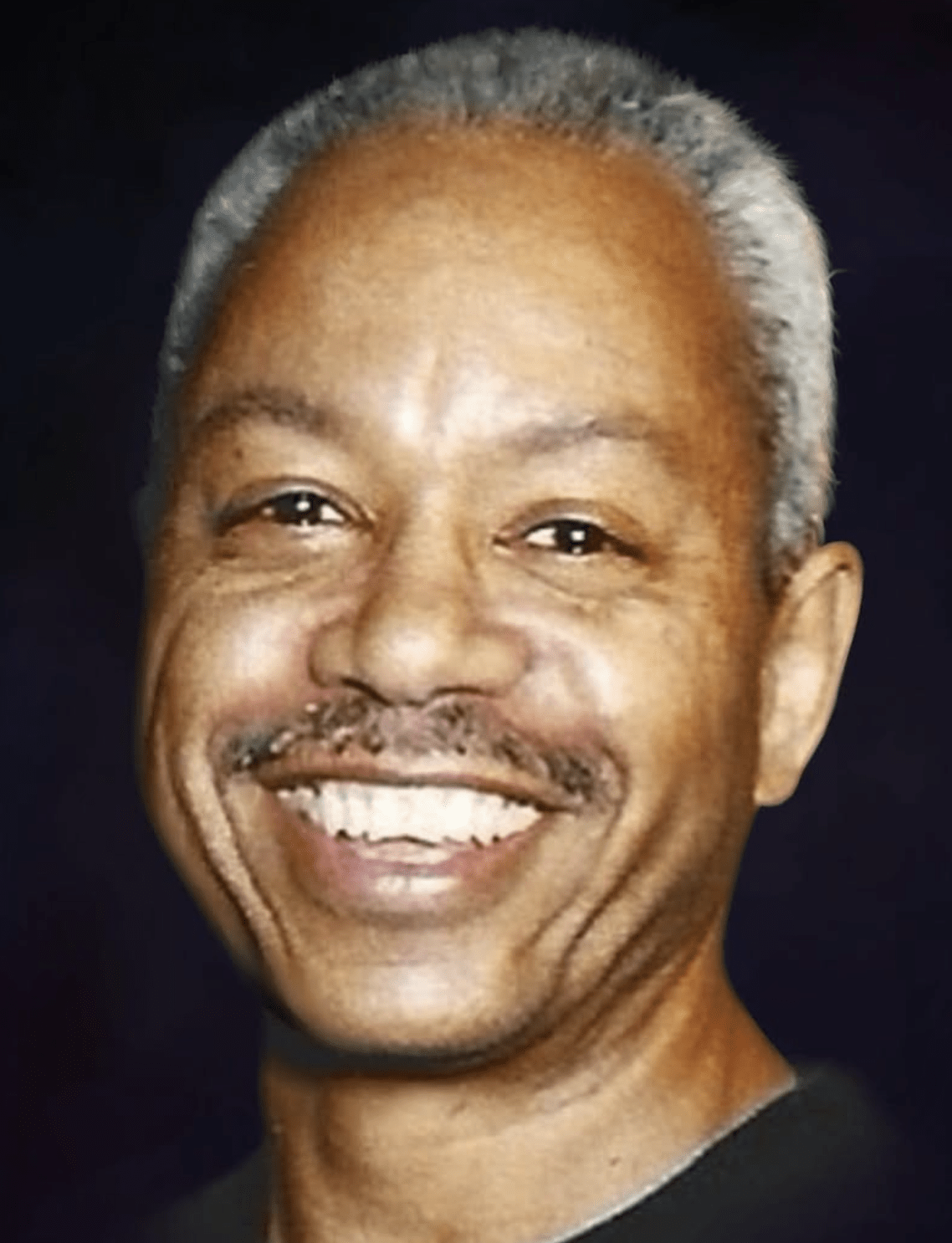
She said John Mercer, an advocate for the culture and community who served on the Go-Go Coalition, “was key to the E.U. being asked to record ‘Da Butt’ for ‘School Daze.’ He initiated the deal that made it possible.” He also led director Spike Lee and his production partner Monty Ross to the E.U. concert near Howard’s campus to see the band is action. “Spike was like ‘This sound has to be in my film. I don’t know if that story is always told with my father in it because he’s not a famous person. But my father was there and a part of that.”
John Mercer was honored with a go-go homegoing celebration at the Howard Theater after his death in 2024 and was also celebrated as part of the Go-Go Honors 2024 Inaugural Class presented by the Go-Go Museum & Café.
Mercer, an extra in “School Daze” who choreographed E.U.’s steps for the movie, built on her father’s go-go legacy with her theatrical production “Gypsy and the Bully Door,” which incorporates live go-go. She describes the production as “the epic quest of a Black woman coming into her own. It’s a journey of self-discovery, a journey of community and self, and how do we find that balance between what our community needs and what we need to do to make peace with that.”
Mercer is hesitant to call “Gypsy and the Bully Door” a musical as it has been described, referring to it as a “musically-inspired ritual choreodrama.” “There’s more spoken language than the traditional Broadway musical. It’s a style where I’m using go-go sound and song to forward the storytelling and structure.”
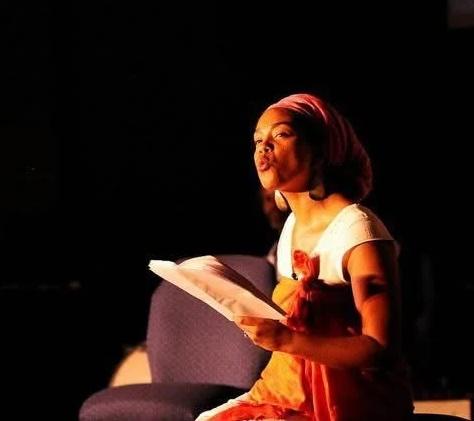
“Gypsy and the Bully Door” was first rolled out as part of the Capital Fringe Festival in 2011 at the Warehouse Theater. Though she recruited area go-go musicians to perform, she said the production didn’t fully work because the bands performed cover songs instead of original music she believed the production needed. This sent her back to the drawing board, and in 2012 she began writing new songs to propel the story. She was living in New York City at the time and hired New York musicians instead of D.C. musicians to save money. But when she mounted the show for the second time at Dumbo Sky in Brooklyn in 2013, the go-go music sounded too bluesy. She mounted the production one more time in 2023 at the Devine Studio Theatre, presented as an environmental staged reading.
She hopes to mount “Gypsy and the Bully Door” at least one more time to fully realize the project. “To date, I haven’t found the right partnership for it. There’s a demand for it. People really enjoy the show, but I'm still looking for the right home.”
Mercer won’t say “Gypsy and the Bully Door” was the first of its kind, but that it’s unique in the way it “celebrates the culture and elevates the culture in ways I have not seen anyone else do in D.C.”
All That Jazz, and Go-Go
While enrolled in Howard’s Jazz Studies program as an undergraduate in 2008, Elijah Jamal Balbed gigged all over the area in jazz big bands as well as one band that was markedly different. He was also a saxophonist with Chuck Brown and the Soul Searchers.
Some of the horn players in the big band also played in Brown’s band and pulled Balbed into the mix after another saxophonist dropped out. His first gig with Brown was at Blues Alley during his junior year at the university in 2010. “In high school I played in the Blues Alley Youth Orchestra, so this was a club I felt comfortable in. It was a go-go audience, but it wasn’t a go-go environment. I’d played Blues Alley with jazz bands and never saw Blues Alley like that with people on their feet dancing, partying. That being my first go-go gig was such a formidable experience. I was looking in awe at how music can connect with the audience in such a deep way. It was a good ramp-up to what I would experience later on,” Balbed said.
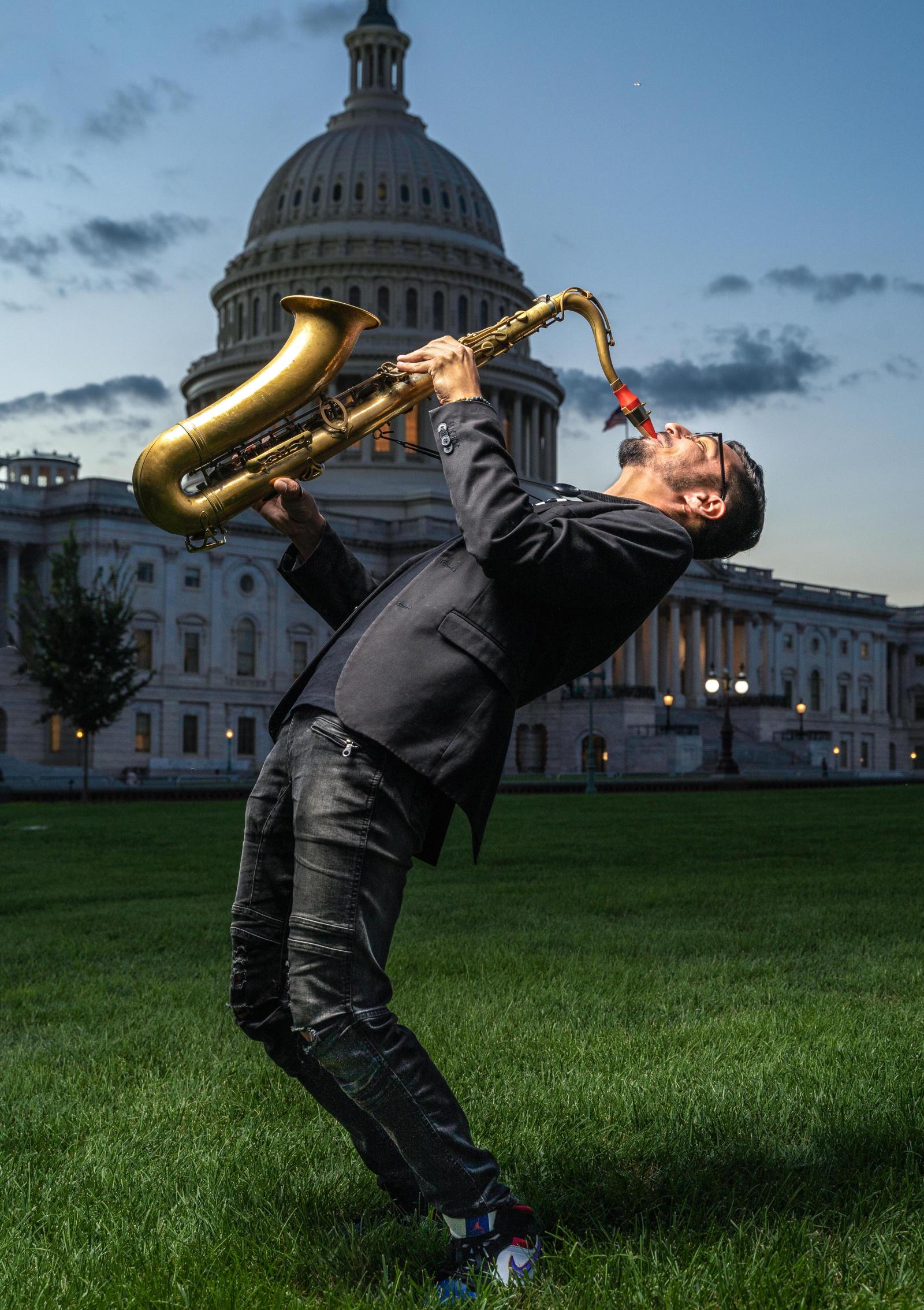
The following year, Brown performed at Howard’s Cramton Auditorium. Balbed received notification about the gig while he was in class and noted the call time for the show was shortly after his classes ended that day, meaning he’d have to rush from class to get in place at Cramton for the show. “That particular day I had big band class and everything was normal. I told two close friends that I was playing with Chuck on campus and I remember I tried to sneak them in. I didn’t realize the level of who I was playing with. I was with Chuck. If I wanted to get my friends in, it would have been fine,” says Balbed. “It was such a special moment.”
Balbed continues performing with the Chuck Brown Band, his longest stint with a band, but he has also been fronting the JoGo Project since 2014, which brings together the best of Balbed’s jazz and go-go worlds.
“I always felt a divide between my jazz world and my go-go world,” he said. “I knew these jazz musicians over here and these go-go cats over there. There were audiences I would only see at the jazz concerts or only see at the go-gos. I felt there could be more synergy. Chuck had jazz melodies and he covered jazz songs like ‘Moody’s Mood for Love,’ ‘Midnight Sun’ and ‘It Don’t Mean a Thing.’”
The JoGo Project has performed at Blues Alley, Takoma Station, the Strathmore, Kennedy Center, and won two Wammie Awards, first in 2019 for Best Go-Go Song for “Dear Draylen,” dedicated to Draylen Mason, a 17-year-old musician killed in a hate crime in Austin, Texas. The group won more recently for Best Funk Song for “JoGo Groove,” a tribute to the Soul Searchers era of Brown. The group followed its “Keeping the Faith Alive in 2025” EP with the singles “Creepin” and “Lovely Day.”
None of this would have likely been possible without Howard and Balbed’s chance encounters with Fred Irby, who founded the Howard University Jazz Ensemble. He said Irby was a frequent visitor to the Silver Spring record store when Balbed worked before college. “He would come into the story to buy sheet music and accessories and he would always ask if I was taking music seriously and what was I doing for college. Having grown up in the area, Howard immediately felt like home to me. And Mr. Irby seemed to really want me to join the Jazz Program.”
Keep Reading
-
 Culture Creators: Arts and Entertainment
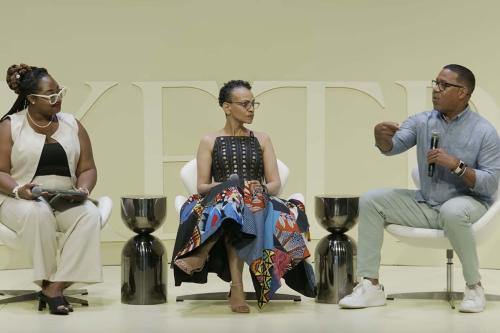
Howard University Professor and Jazz Musician Marcus Johnson Delivers Wisdom on Legacy, Entrepreneurship, AI at 2026 Essence Festival of Culture
Jul 10, 2026 7 minutes -
 Culture Creators: Arts and Entertainment
Walking in Rhythm: The Blackbyrds’ Enduring Legacy from Howard University to the International Stage
Jun 17, 2026 8 minutes
.jpg)