

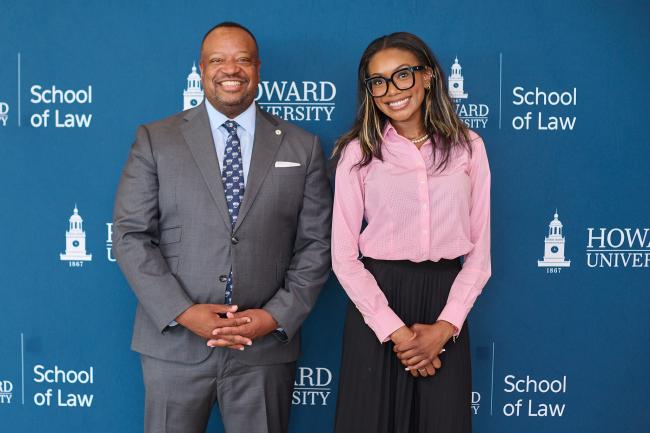
For graduating law student Madison Medard, the path to Howard University began — as the best stories do — with a tinge of internal conflict.
Before committing to Howard, she had already paid deposits to three other law schools. Each offered possibility and represented a serious future. But one conversation with a future classmate changed the course of her legal education.
After attending a virtual “Bison Check-In” for admitted students, Medard did what she jokingly describes as the kind of research only a future lawyer would do: she looked up everyone from the video conference on LinkedIn.
One student, who had experience with another law school she was considering, urged her to reconsider. His message was simple: “Howard. It’s only Howard.”
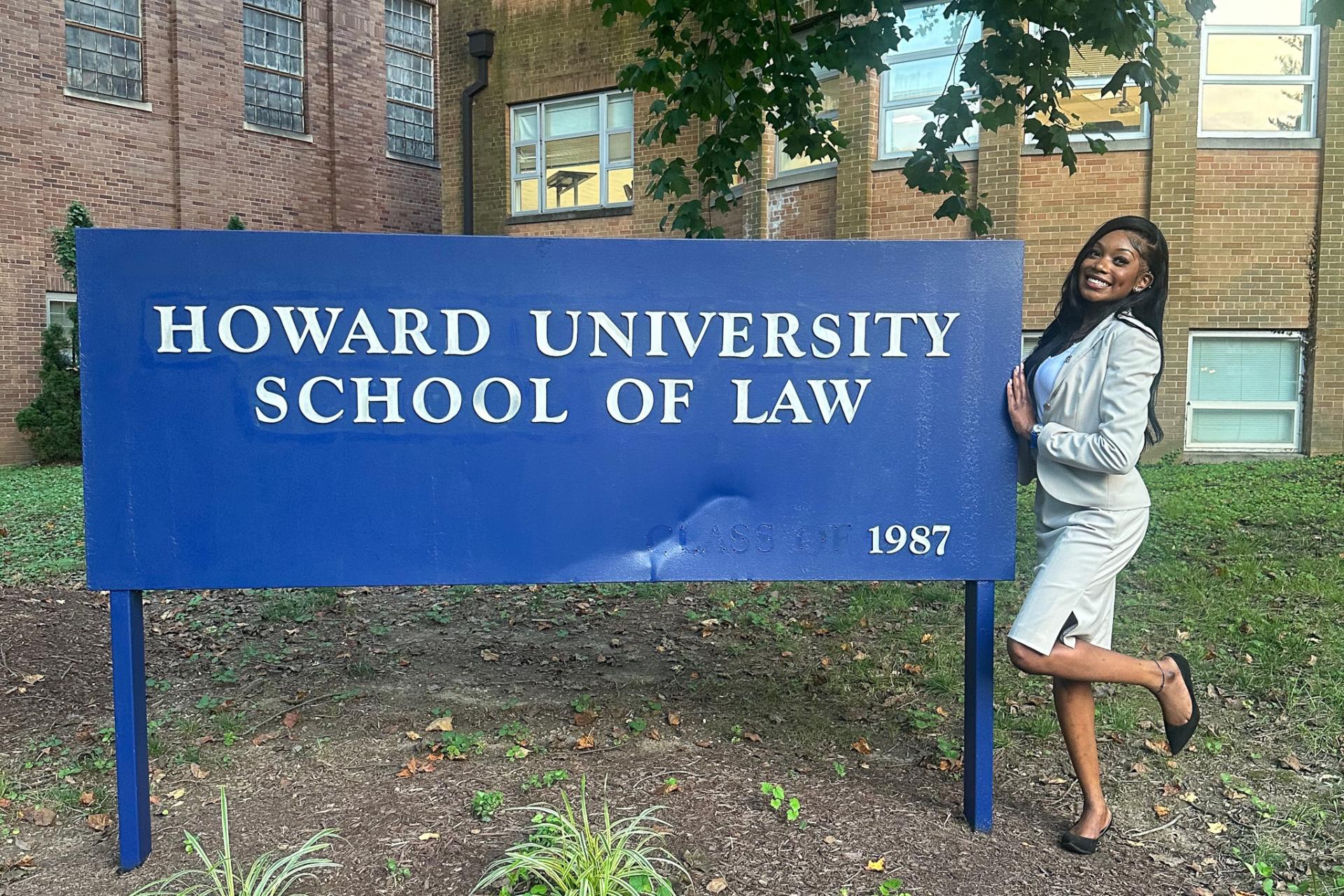
What followed was not merely an enrollment change; it was an alignment of purpose. At the Howard University School of Law (HUSL), Medard found what she had been seeking all along: rigorous legal training rooted in history, advocacy, and impact.
Howard. It’s only Howard.
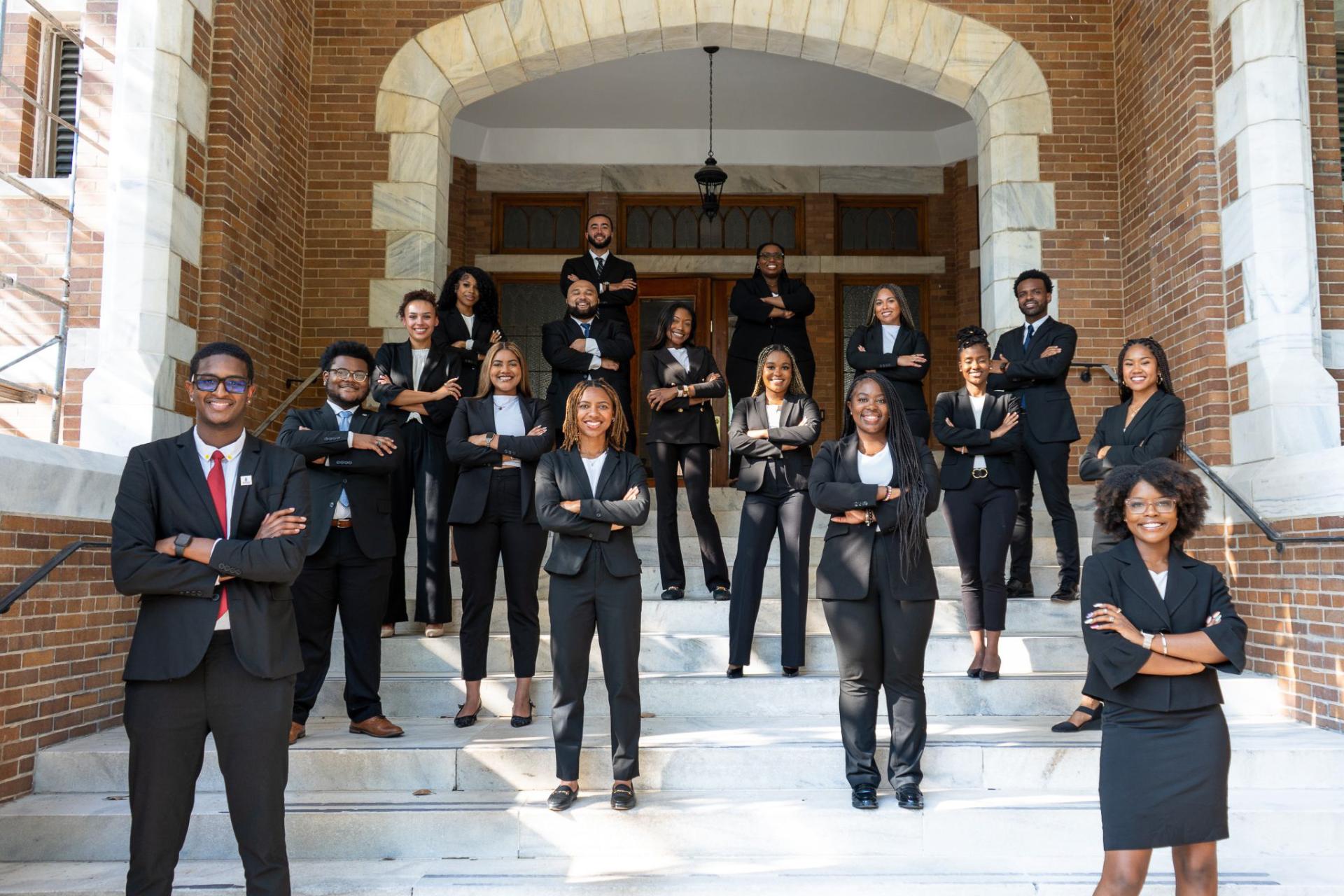
Medard with the School of Law’s Huver I. Brown Trial Advocacy Team. Medard served as its vice president for the 2025-2026 academic year.
Pride, Purpose, and Plans
Medard credits her support system with helping her remain well-balanced amidst the law school crucible. A proud New Yorker, she stayed close to home, friends, and family throughout her time at Howard.
During her 1L year, when finals kept her from returning to New York for Thanksgiving, one friend traveled from Long Island to Washington, D.C., carrying trays of food, so Medard would not miss the comforts of home.
“Even thinking about that just brings me so much joy,” she smiled.
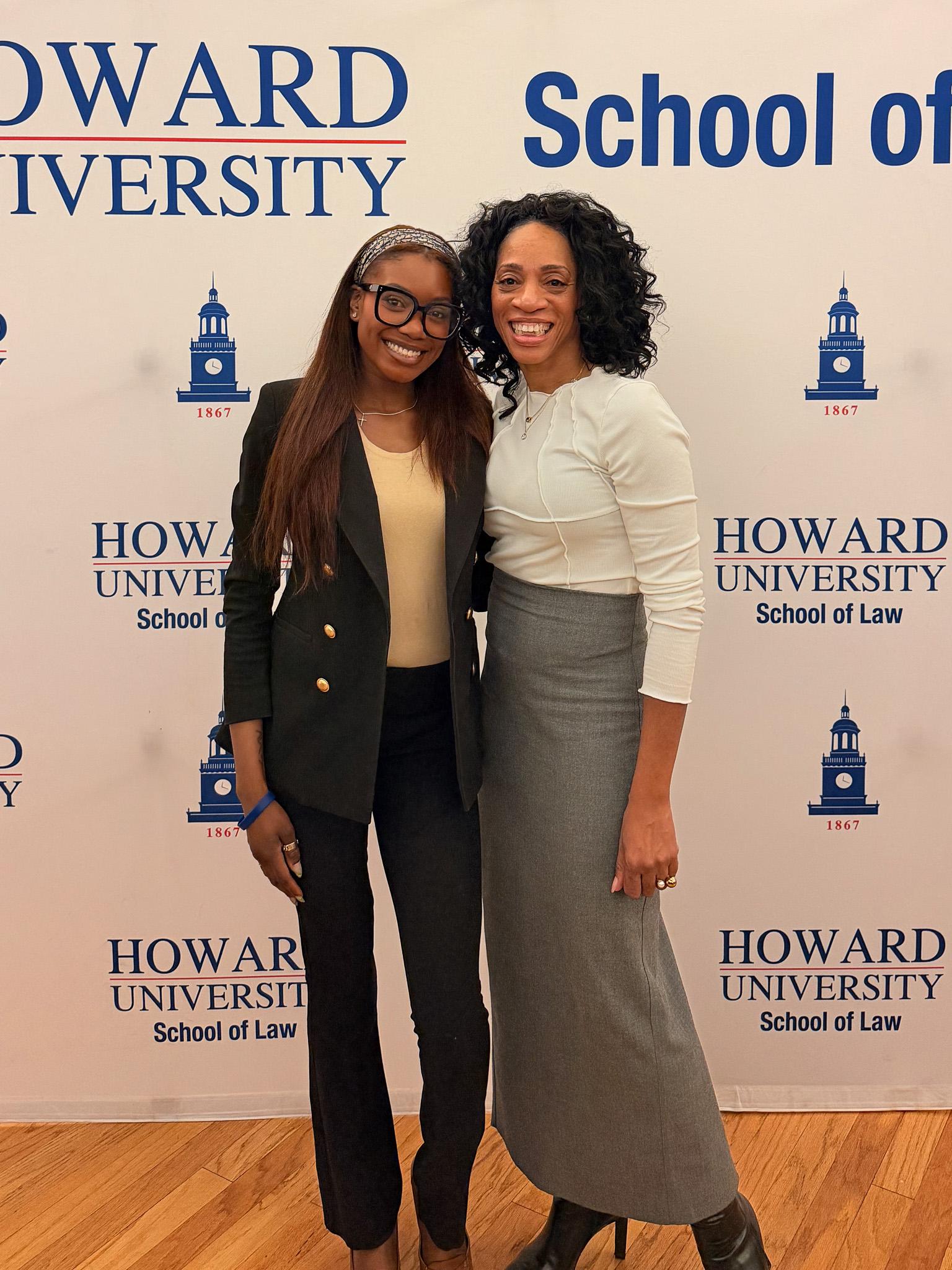
Those gestures sustained her. So did the realization that law school, while demanding, was not the entirety of life. Medard learned to protect her mental health and keep a proper perspective.
“Everyone thinks that it’s that black and white, when it’s really not,” she said. “You can always try to find that middle ground. That’s what I was able to do, and that was really helpful for me.”
But perhaps her greatest takeaway from Howard was a deepened sense of identity. Medard said Howard Law gave her a fuller understanding of Blackness, community, and belonging. She found herself surrounded by the breadth of Black experience — classmates with diverse backgrounds, passions, and ways of engaging with the world.
“I am so proud to be who I am,” Medard said. “I’m so proud to be Black. I’m so proud to be a Howard alumna.”
That pride will accompany her into the next stage of her journey. Following graduation, Medard will sit for the bar exam this summer before returning to Boies Schiller Flexner in New York. In 2028, she will clerk for The Honorable LaShann DeArcy Hall (J.D. ’00) in the Eastern District of New York. After that, she is considering a path that may include the U.S. Department of Justice, a pivot to private practice, or whatever opportunity best positions her to achieve her ultimate goal.
Wherever she goes, Medard will carry Howard Law’s imprint with her: the belief that legal scholarship and practice must be animated by service, history, and the pursuit of justice.
Keep Reading
-
 Legacy and Lineage
Perfect Performance: Nearly 200 Howard University Class of 2026 Graduates Earned a 4.0 Grade Point Average
Jun 22, 2026 11 minutes -
 News
NewsHoward University Alum Jayson Johnson Named to 2026 Cohort of Knight-Hennessy Scholars
May 19, 2026 2 minutes -
 *Legacy and History
Howard University 9/11 Initiative Unites Students with Veterans During 3 Days of Service, Reflection and Awareness
Sep 14, 2026 10 minutes