

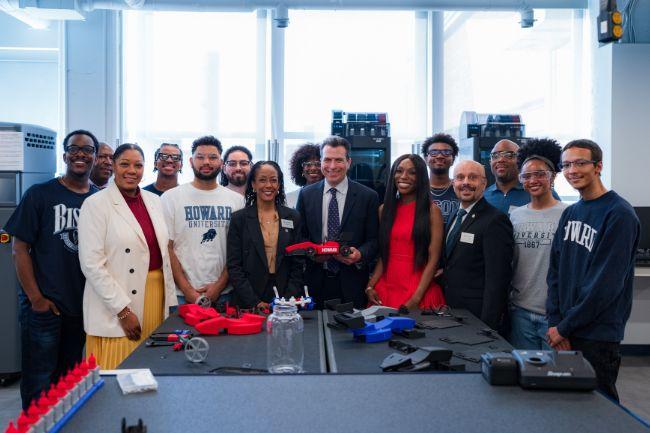
On April 16, Howard University and Autodesk celebrated the expansion of their longstanding partnership with the announcement of a $1.95 million unrestricted donation to support the development of a construction engineering and management program in the university’s College of Engineering and Architecture (CEA).
The donation made it possible to create a makerspace powered by artificial intelligence (AI) design and digital fabrication — where Howard students can access the same tools and technology used by industry professionals — and programming that prepares them for careers in the quickly evolving fields of architecture, engineering, design, and construction.
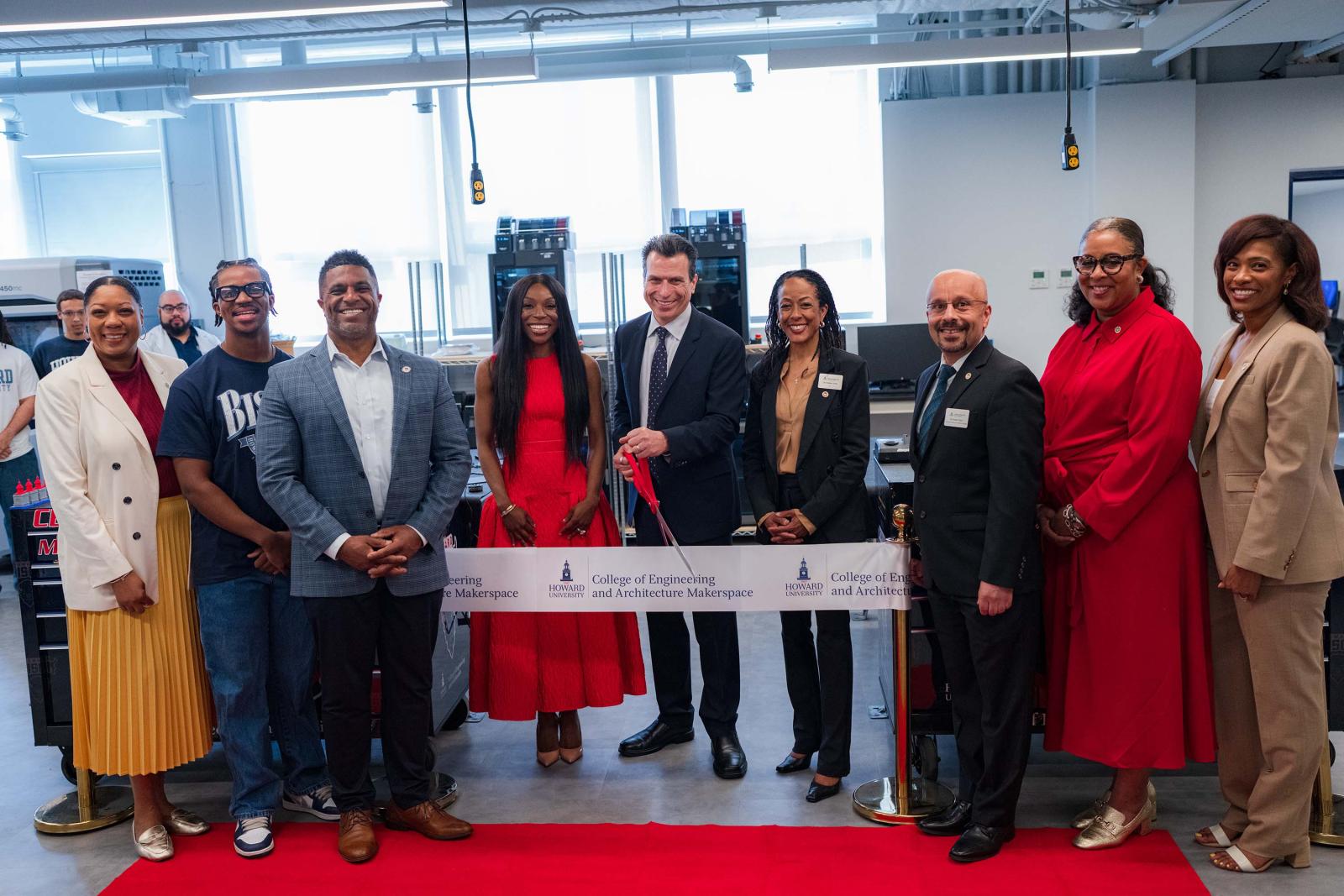
“Our purpose at Autodesk is to design and make a better world for all,” said Dara Treseder, chief marketing officer at Autodesk and a CEA Board of Visitors member. “It’s really important to us that our technology is being used to design and make for the communities that we live and work in. We think that it is important, that the people that are designing and making, are representative of those communities.”
Treseder and Autodesk President and CEO Andrew Anagnost celebrated the opening of the CEA Makerspace with a tour of the space and met some of the students to see what they’ve built. The Autodesk team discussed their longstanding partnership between the university.
“It’s not a one-time thing,” said Treseder. “We have been working with Howard for several years to make this vision a reality. Creating a space like this allows us to make that purpose a reality.”
Autodesk partners with more than 160,000 schools and educational institutions around the world, according to Treseder, with more than 150 million students and educators using their software. The CMO stressed how excited the company is to continue its tradition working with Howard.
“We’re proud of Howard being the first HBCU, even only HBCU, with that R1 research institution designation,” she added. When asked if she was equally excited to welcome a future Howard graduate to the Autodesk team, she said, “We have Howard students working at Autodesk and we’re excited to continue that.”
Makerspace and The Students Inventions
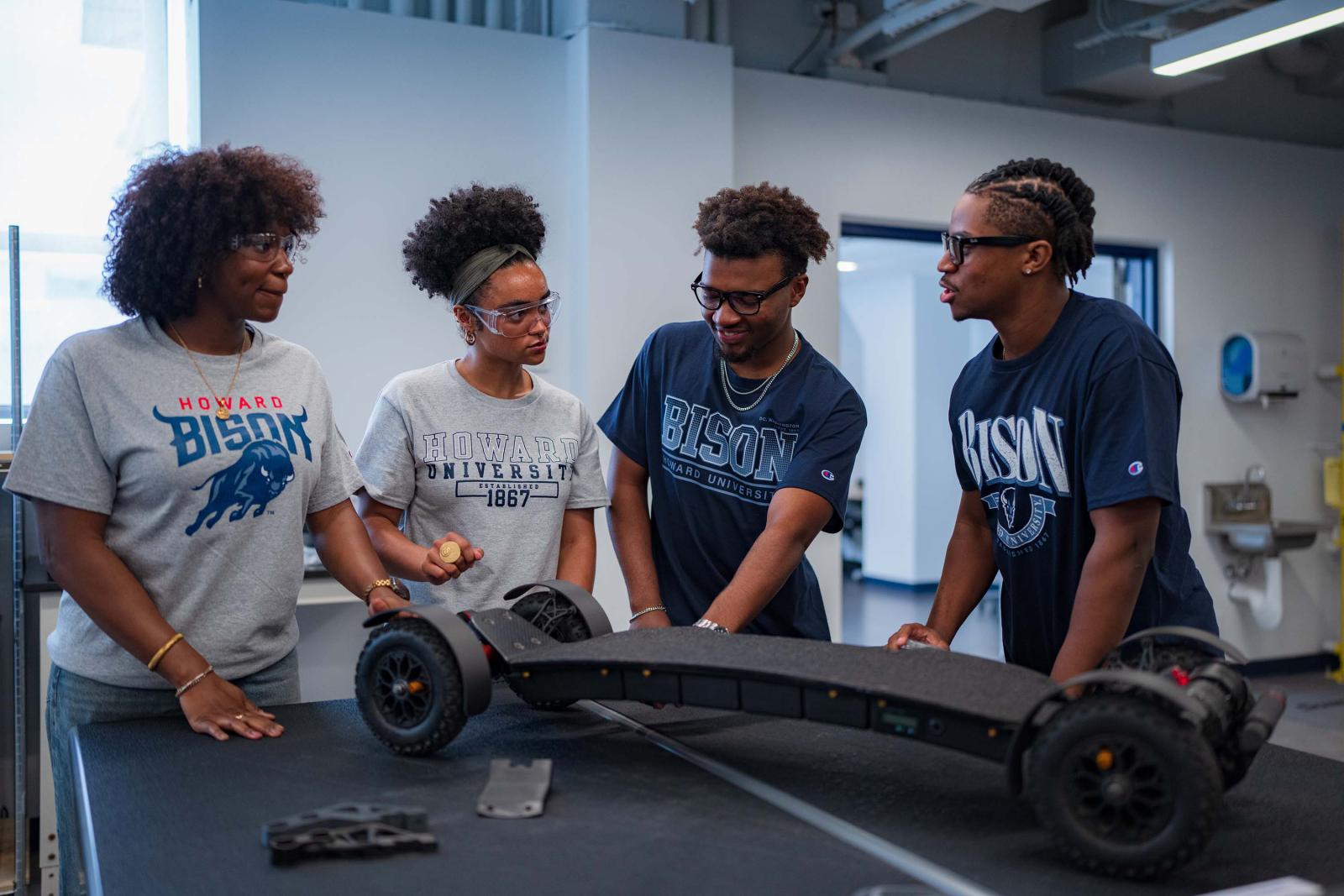
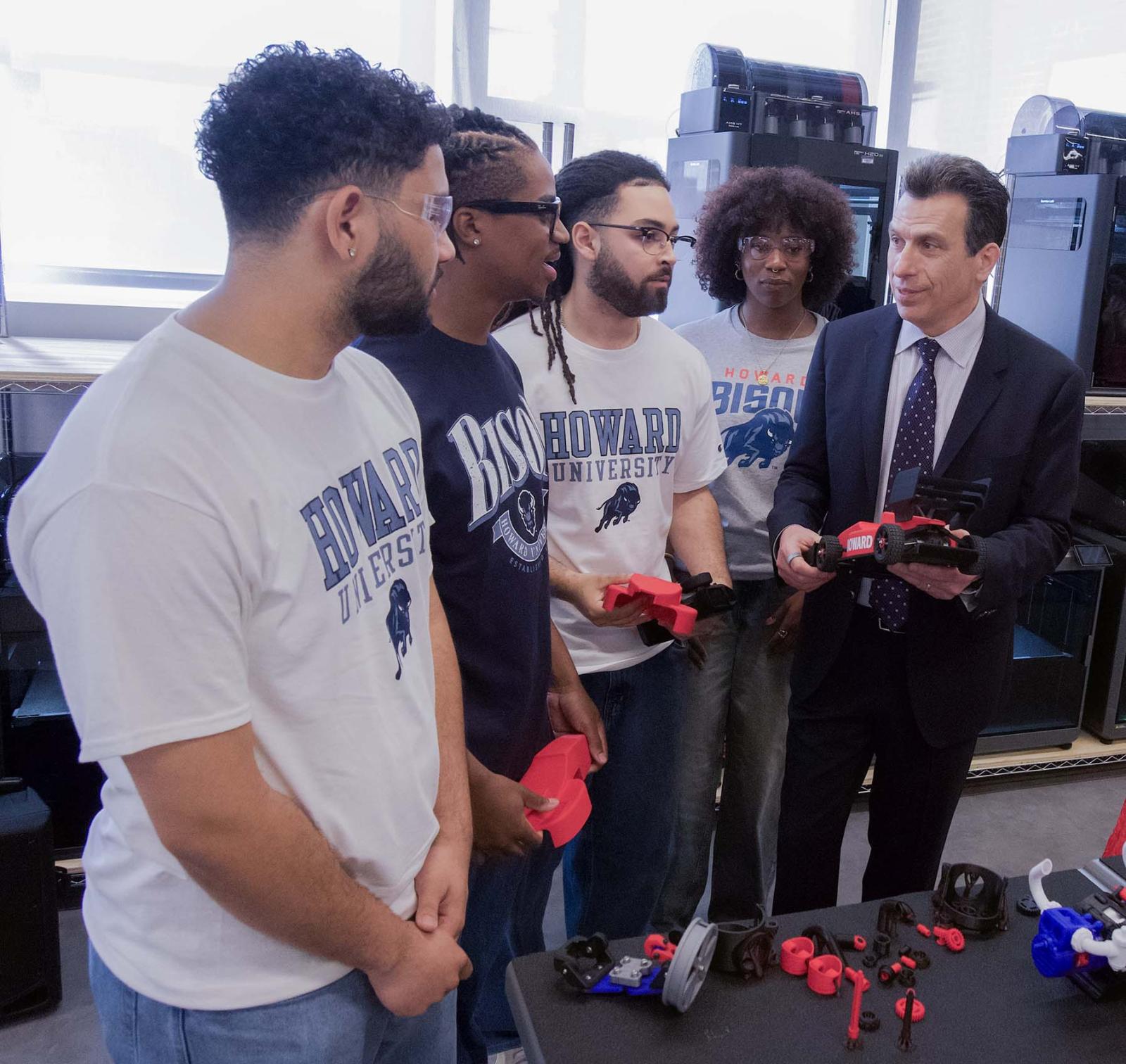
Students demonstrated projects they have worked on in the space utilizing Autodesk technology and tools, such as 3D printing.
For example, on display was a skateboard and remote-controlled car created with generative design, fusion, and AI to optimize their parts and materials. Students explained to Treseder the different steps they took along the way and shared the challenges and testing they participated in to make sure the car looked good and was light weight.
“The landscape of jobs are changing,” Treseder said. “The U.S. construction industry alone is a $2 trillion sector. These students are starting to think about those things that they’re learning, and starting to apply it in very tangible ways that would not only allow them to get those jobs of the future, but will enable them to start succeeding on day one.”
Before the ceremony, mechanical engineering major Justin Smith explained the significance of building the car.
“Our team car is more than just a project,” Smith said. “It’s a small-scale prototype of what Howard University’s Formula SAE car will become or will look like.”
Formula SAE is an international collegiate engineering competition organized by SAE International where student teams design, fabricate, and compete with small, formula-style race cars.
Students are responsible for building everything from the ground up, which the team will be doing in the new CEA Makerspace. This project is a source of pride for the Autodesk exec.
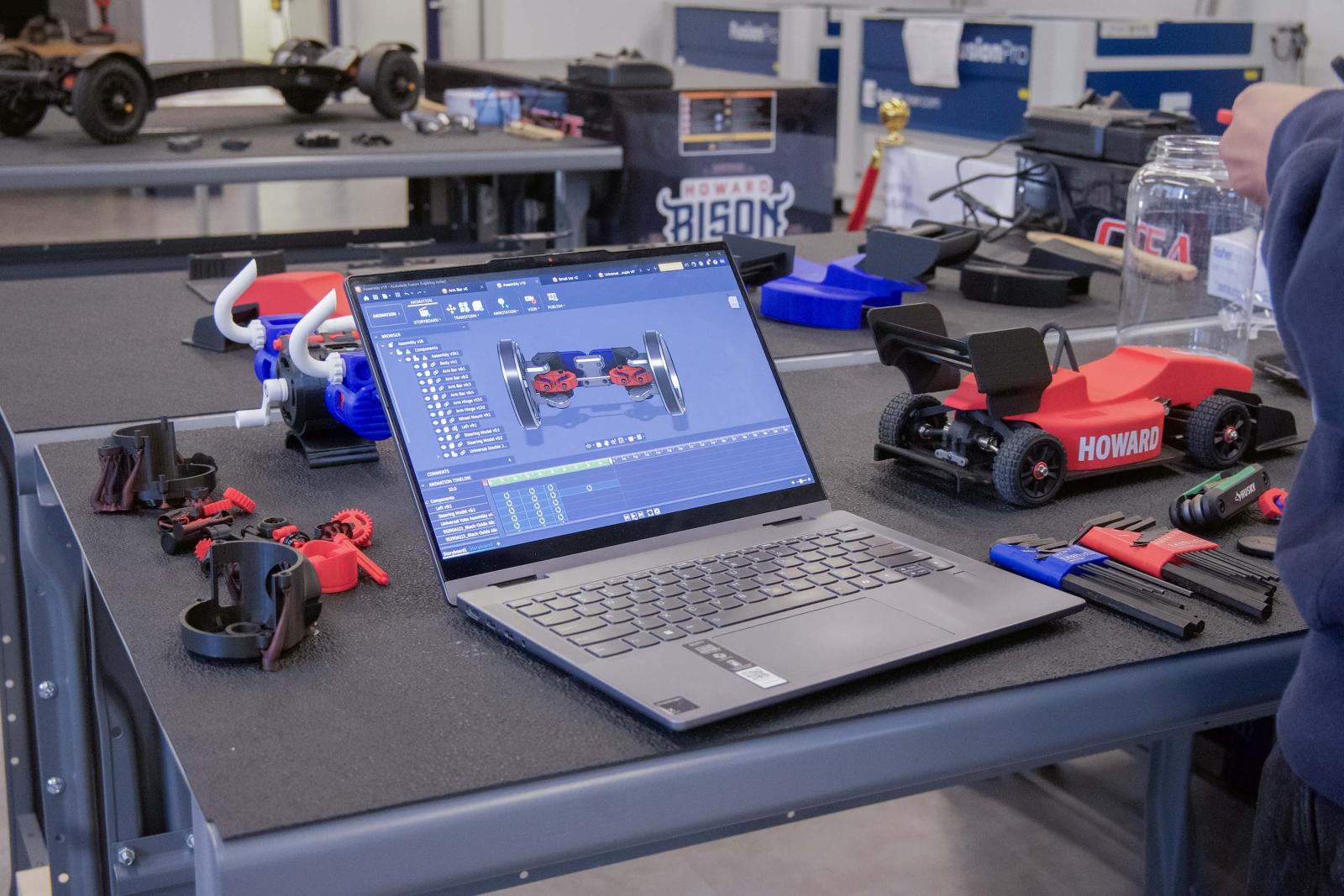
“I was really proud to see what the students have built in such a short period of time,” said Treseder. “In just a few weeks, they have already started to make this space a tangible part of their learning experience, so that they are ready for the jobs of the future.”
“I’ve spoken to students that have worked on everything from the Formula One car to the electric skateboard,” Treseder noted. “I spoke to students working with generative design and fusion, starting to utilize AI to bring their visions to reality.”
A Donation That’s Anything but Minor
During the ceremony, Anagnost spoke to the industry’s current realities and the growing societal needs. He mentioned capacity and workforce challenges, that the industry has changed rapidly, and in five years will again be “dramatically different” as “digital construction, AI enabled tools, virtual design, [and] digital training” are no longer future concepts.
“These are day-to-day ways that people work, and they’re transforming how everything is built today,” said Anagnost. “Meanwhile, schools like Howard need to keep pace with these changes. So, the work that we’re doing today is incredibly important. The challenge is clear, but the opportunities are also out there. And these opportunities are not just needing more workers. We need a new generation of highly skilled, tech-enabled, diverse talent to really bring the industry forward.”
The Autodesk CEO later announced, to cheers from attendees, the company’s latest commitment to that generation with a $1.95 million donation to “help [Howard] establish a minor in Construction Engineering Management.”
“This is an investment about equipping students with the interdisciplinary skills they need to succeed in the future role and future workforce,” said Anagnost. “It helps Howard lead in preparing students for a nearly $2 trillion industry that’s important in the entire world. We believe the future construction must be more innovative, it’s got to be more inclusive, and it’s got to be more connected to technology than ever before. We need new homes. We need new bridges, we need new roads, we need new infrastructure of all kinds.”
“The talented students at Howard University will build our future,” Anagnost continued, “and Autodesk is honored to play a role in ensuring that they have the resources and the latest technology to forge meaningful career paths.”
Top image courtesy of Autodesk.
Keep Reading
-
 Epiphanies, Discovery, and Research
New Programs in AI, Microchip Design, and Construction Engineering Management Aggressively Prepare Howard Students for Fields Driven By Evolving Technologies
Jun 22, 2026 4 minutes -
 Artificial Intelligence
Demystifying AI: The College of Engineering and Architecture’s AI Tinkery Series Advances Practical AI Fluency
Jun 22, 2026 4 minutes -
 Lineage: Howard Students and Alumni
Who’s Bad? Howard University Alum Marci Rodgers, a True Thriller as ‘Michael’ Movie Costume Designer
Jul 16, 2026 8 minutes