
Howard University chemical engineering Associate Professor Solmaz Tabtabaei, Ph.D., recently received an NSF award through the Excellence in Research program to fill essential data gaps in biotechnology research.
The $613,000 award will span over the course of three years, during which Tabtabaei and her College of Engineering and Architecture (CEA) student research team will explore dry fractionation as a sustainable and environmentally responsible alternative to chemical-based conventional separation methods used to break down agricultural residues prior to biofuel production.
Dry fractionation is an environmentally friendly method that separates material particles without using liquids, heat, or mechanical forces.
A key first step in biotechnology is efficiently and selectively breaking down agricultural residues, which are made of complex plant materials. Agricultural residues are composed of over 70% sugar elements that can be converted into bioethanol through chemical processes.
Naturally resistant to breakdown, these complex plant materials make biofuel production challenging. To access the sugars, chemical pretreatments are used to separate the main components, but these processes consume large amounts of water, chemicals and solvents, often damaging plant structures and producing harmful waste that threatens water quality.
“My research team is set to pioneer the future of bio-separation techniques that eliminate the need for water or chemicals, create zero waste, and transform biomass residues into high-value lignin-based nanofibers and biofuel feedstocks,” said Tabtabaei.
Tabatabaei and her team are creating a sustainable separation process for biomass residues that will eliminate the need for chemicals and water and generate zero waste, all while preserving the structural integrity of their constituent biopolymers.
The CEA researchers are working on a breakthrough in biotechnology research to help increase the production of biofuel feedstocks and nanofibers, both of which play eco-friendly roles in renewable energy applications. Biofuels are considered a renewable and environmentally sustainable energy source and a viable and cost-effective alternative to fossil fuels.
Results from the project could enable U.S. biorefineries to make special plant-based nanofibers at a significantly reduced cost compared with current methods.
The project will provide real-world experience to Howard University undergraduate and graduate students in research, communication, and mentorship, as well as industry feedback from mentors to make learning more relevant to modern bioprocessing needs.
Additionally, the project will promote public engagement and STEM education through outreach activities like creating educational videos and other valuable resources for students. By building stronger ties between universities and the biorefinery industry, the research will support innovation and collaboration that can drive sustainable technology development.
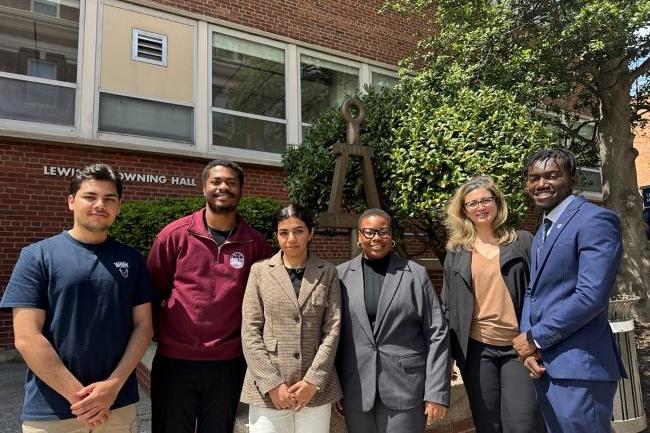
Pictured: Tabtabaei with her CEA chemical engineering student researchers: Lotus Khanal, Divinegift Chimere, Sama Ghadiri Gargari, Hadeia Liburd, Solmaz Tabtabaei, and Gideon Boadu.
Keep Reading
-
 Artificial Intelligence
Howard University Researcher Kamilah Woodson Develops A.I.-Powered Platform to Expand Mental Health Support for Students
Jul 31, 2026 6 minutes -
 *Research and Discovery
Howard University Lecture to Explore the Mysteries of an Accelerating Universe
Aug 13, 2026 2 minutes